Original: $221.68
-70%$221.68
$66.50The Story
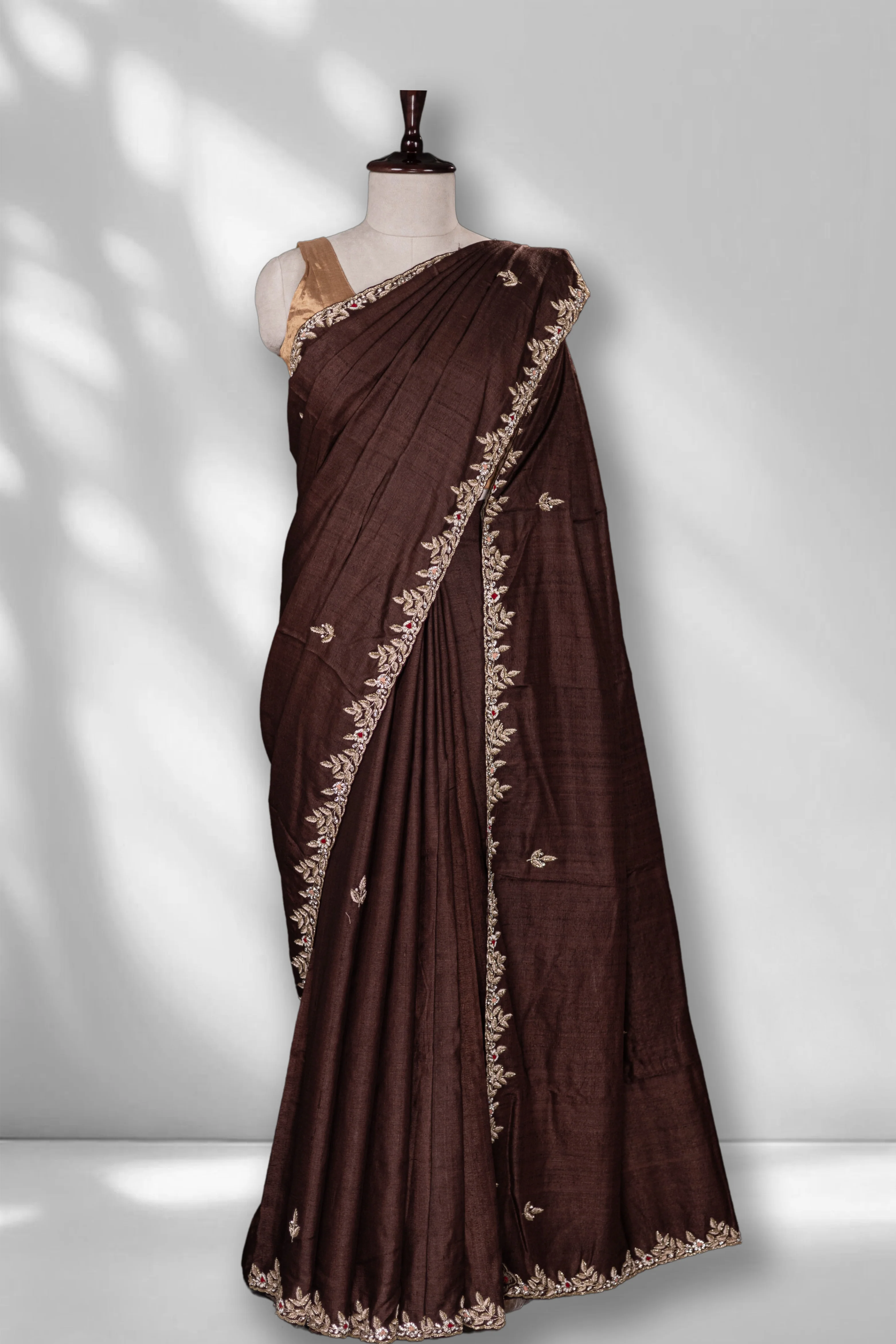
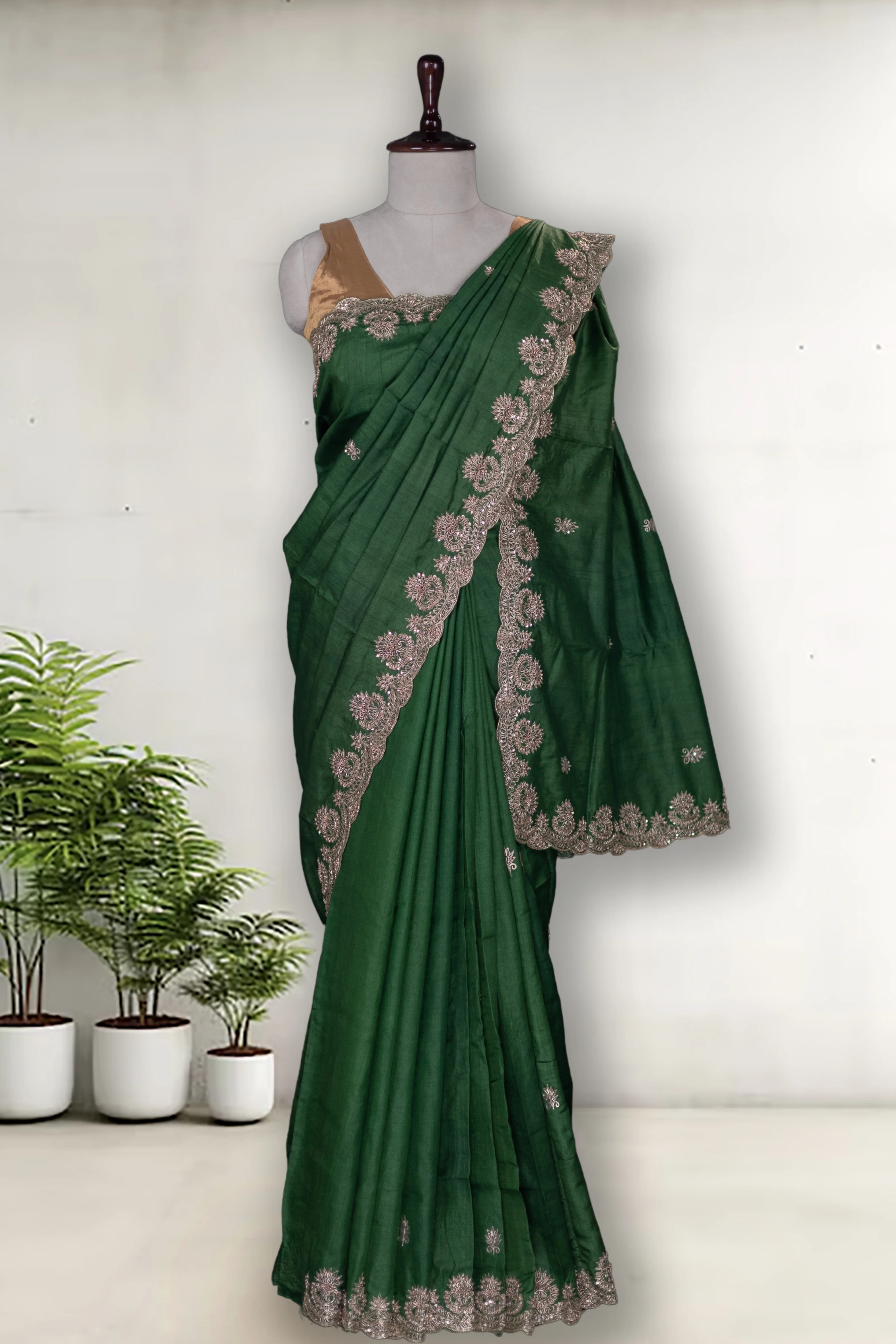
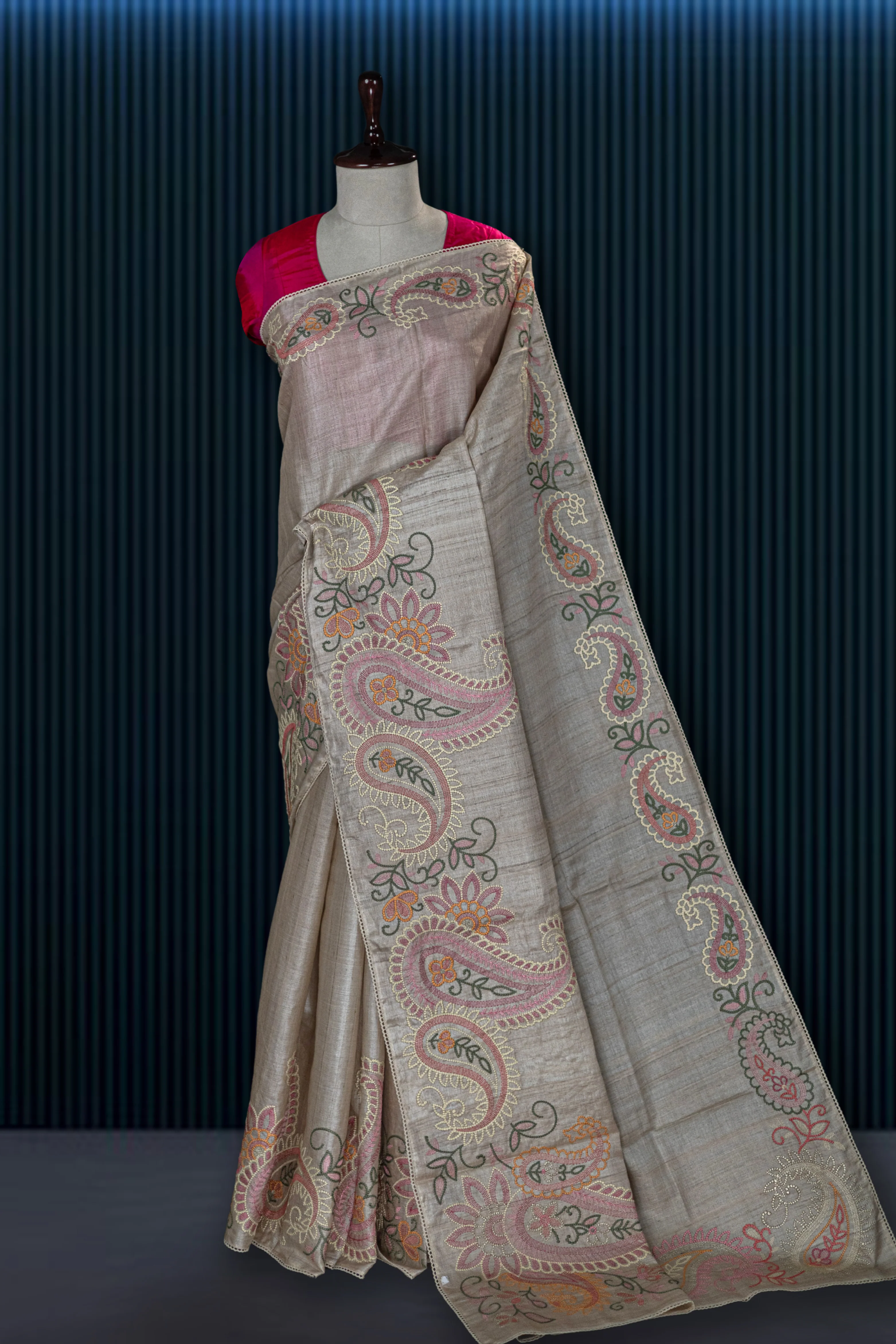
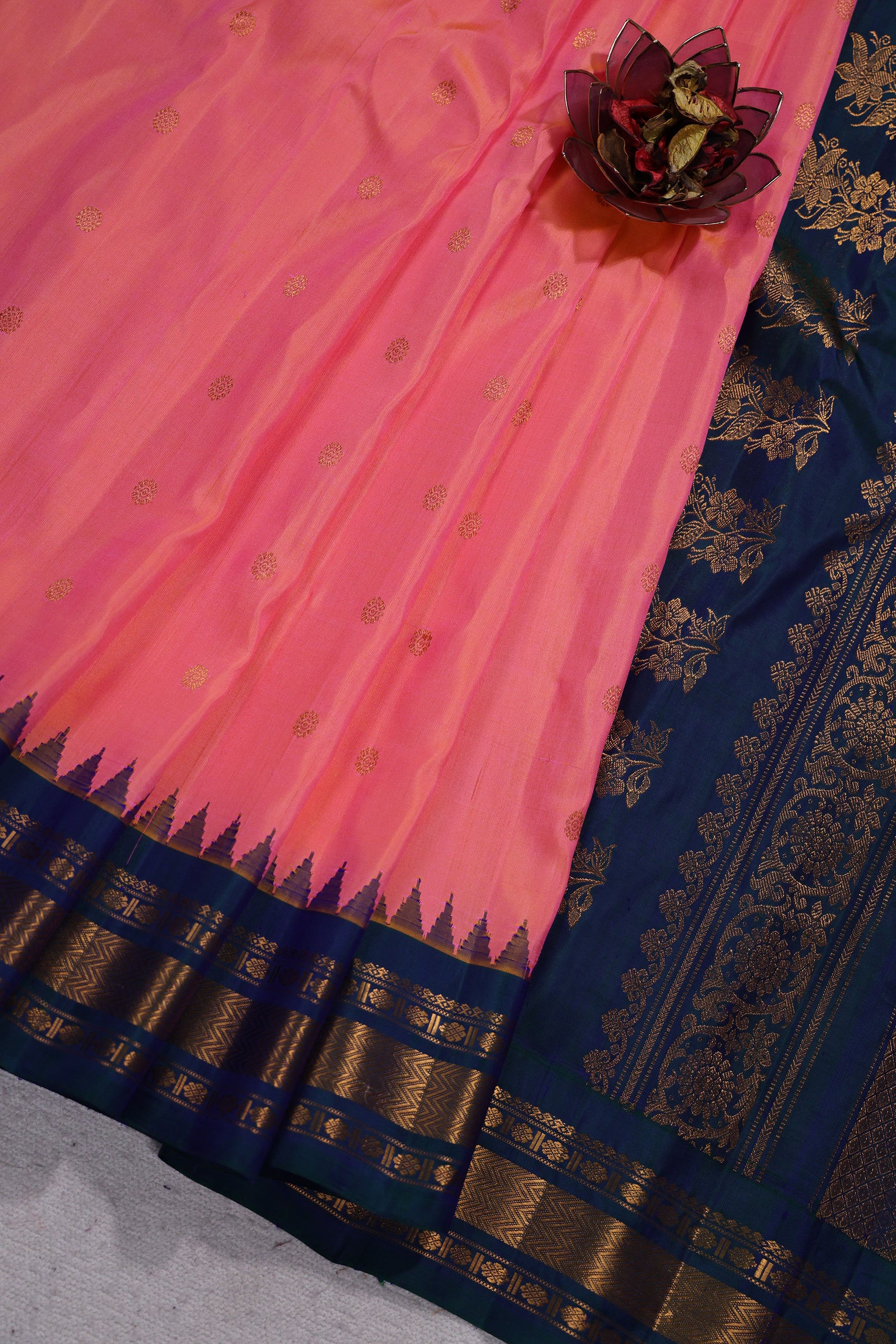
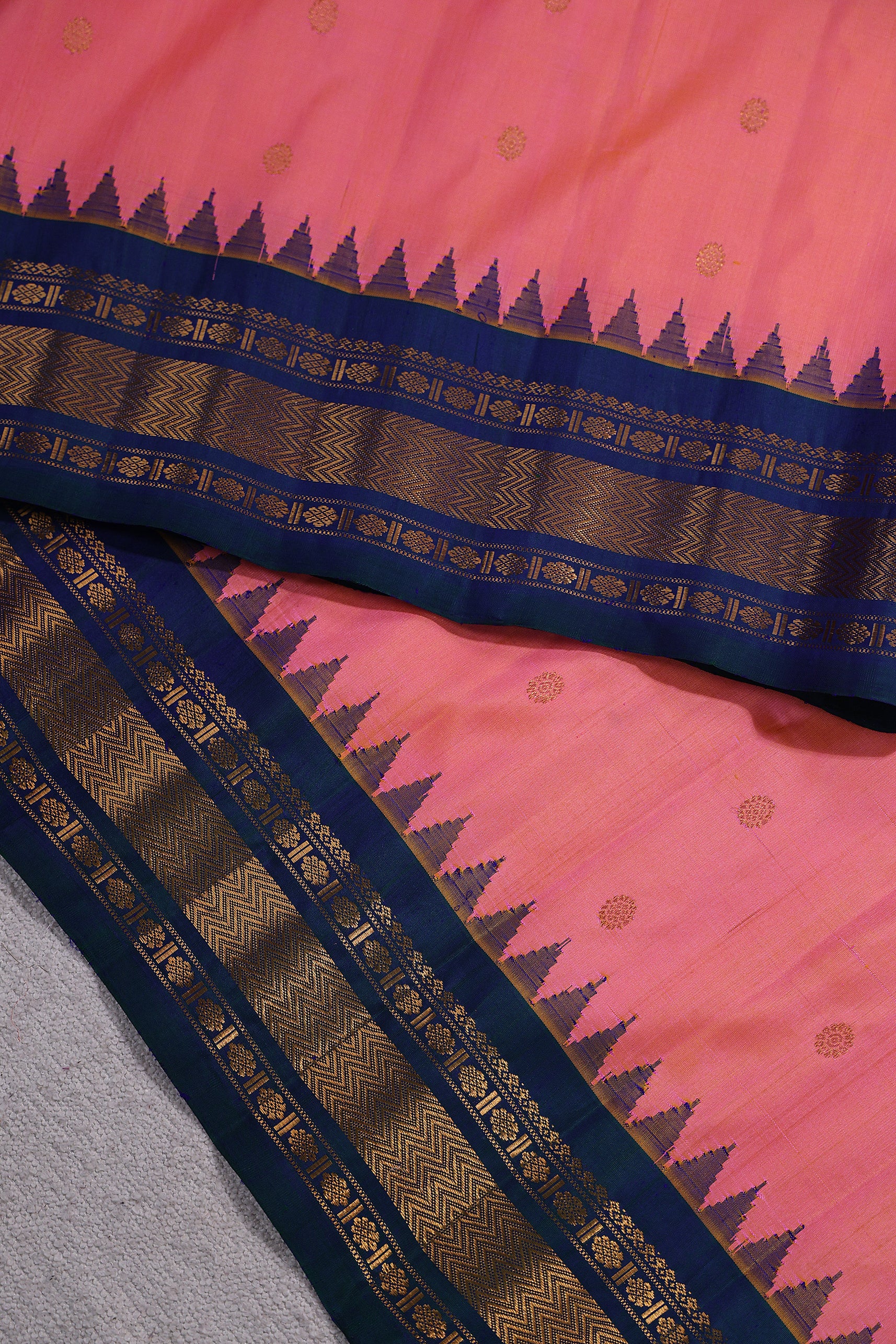
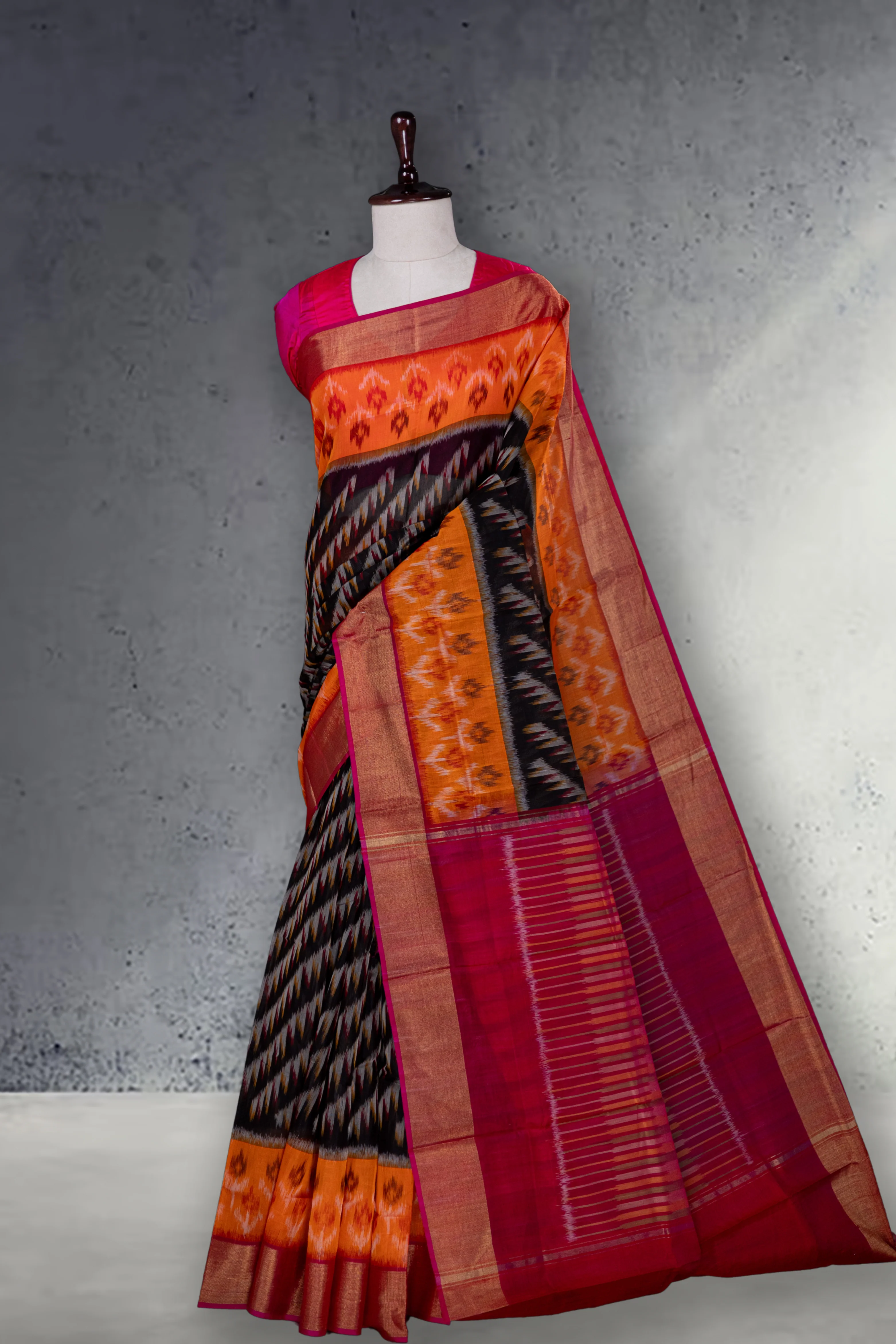
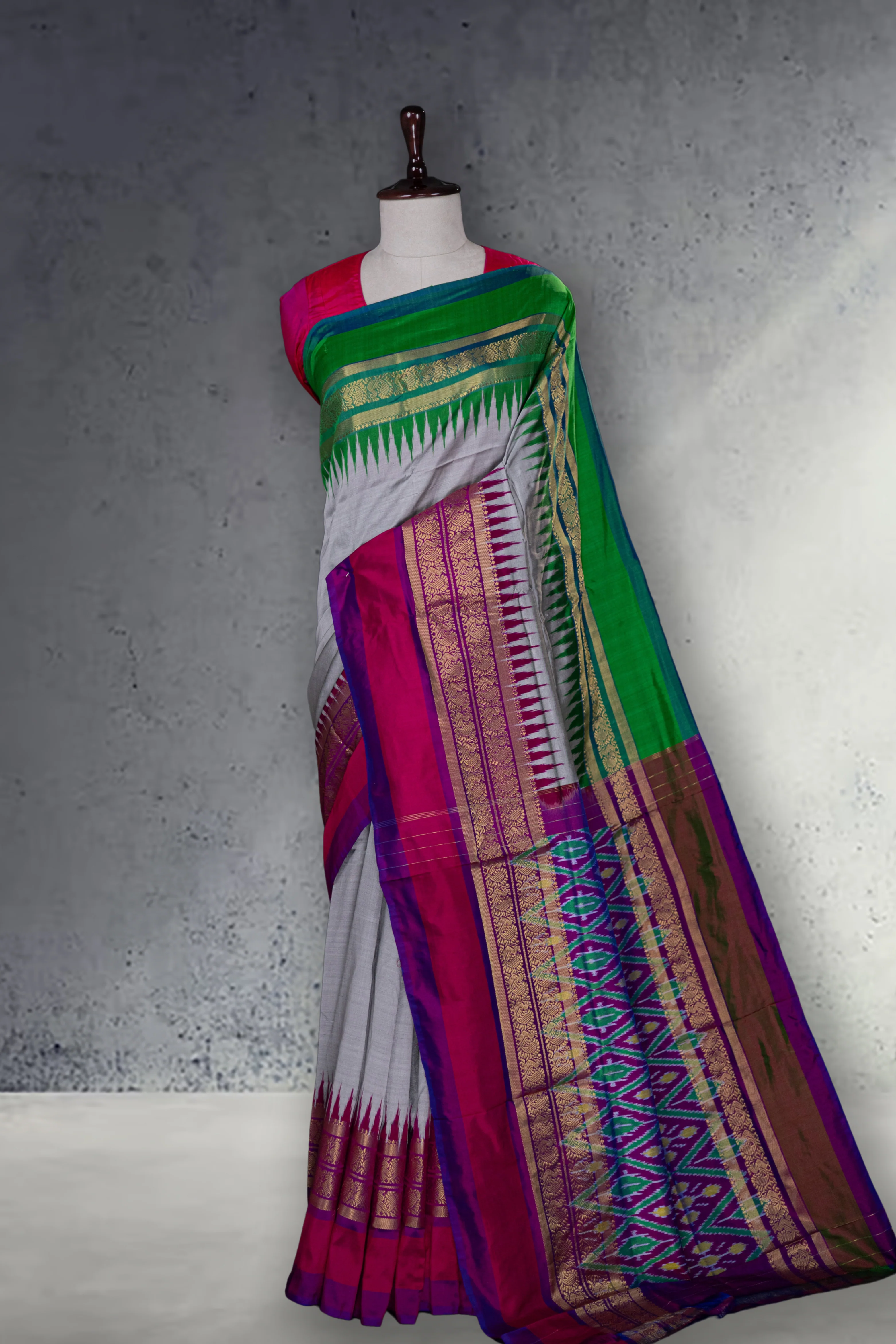
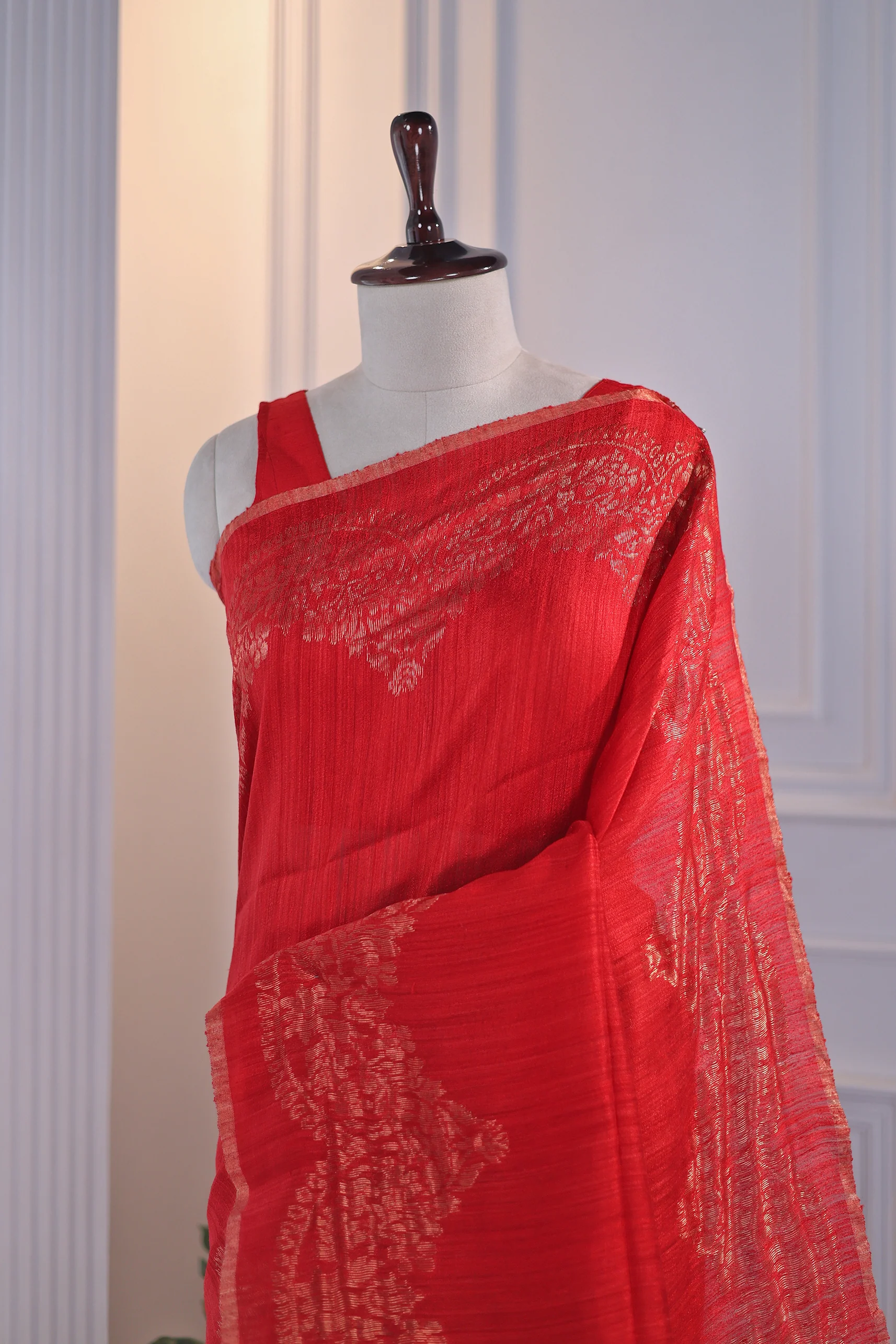
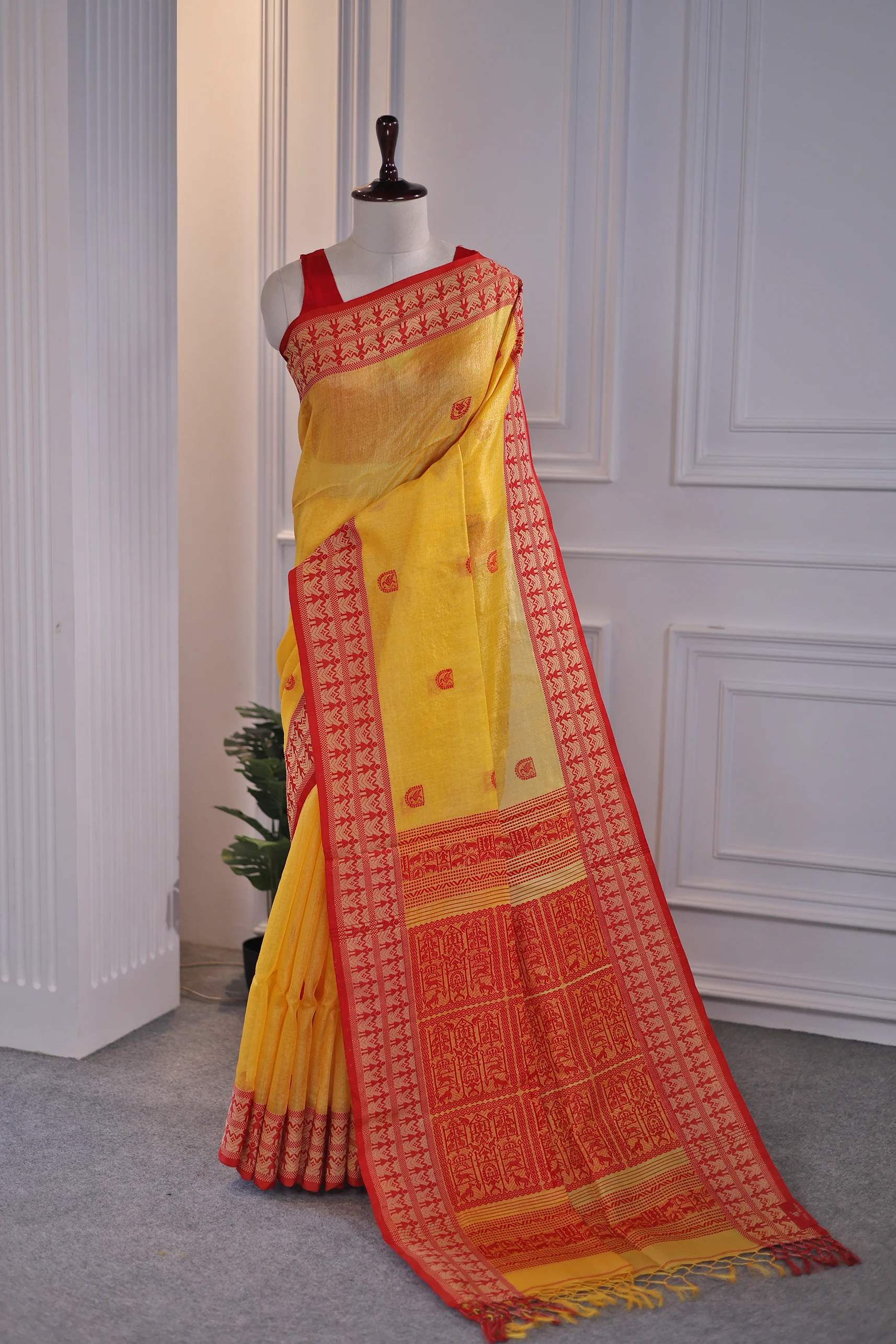
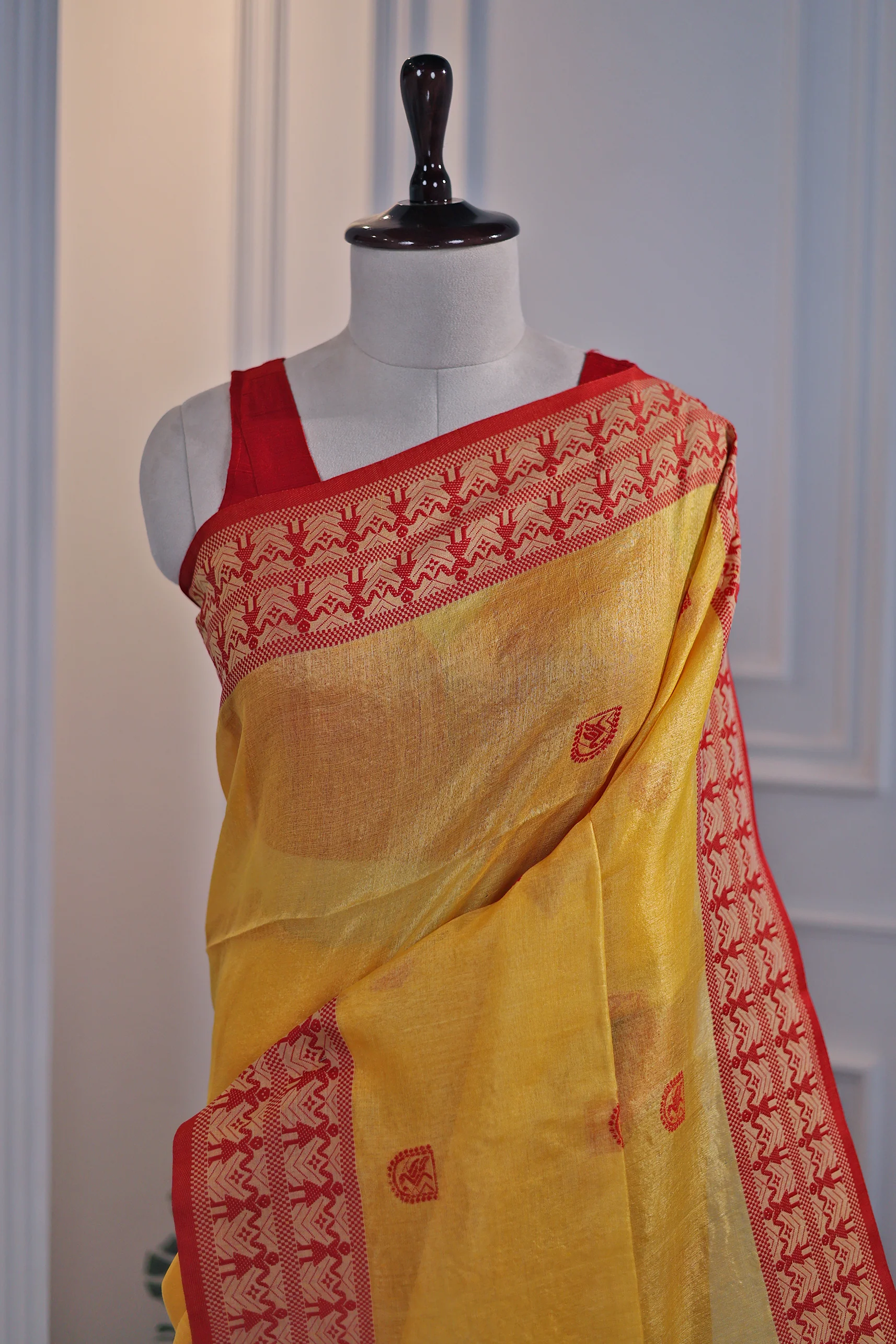
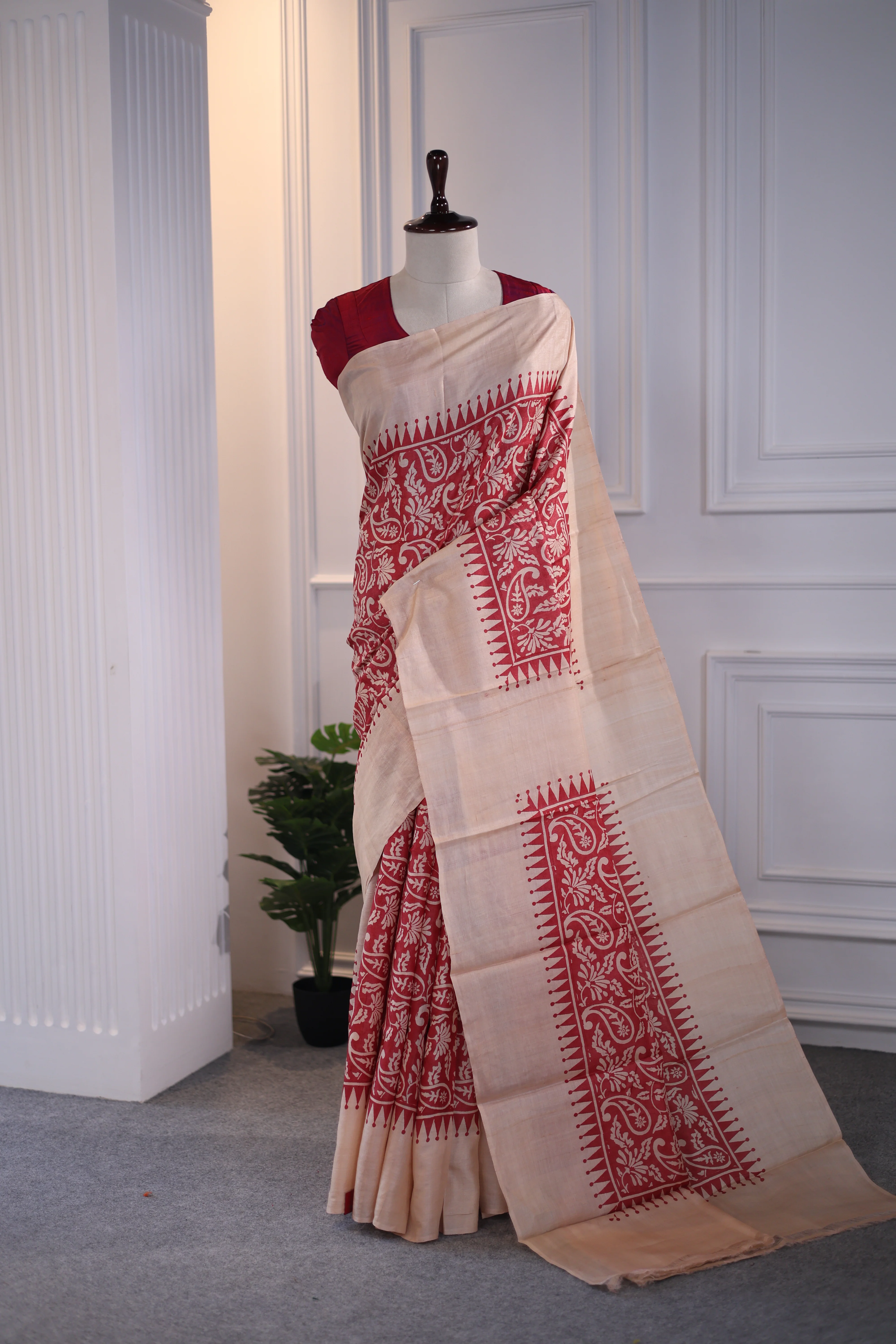
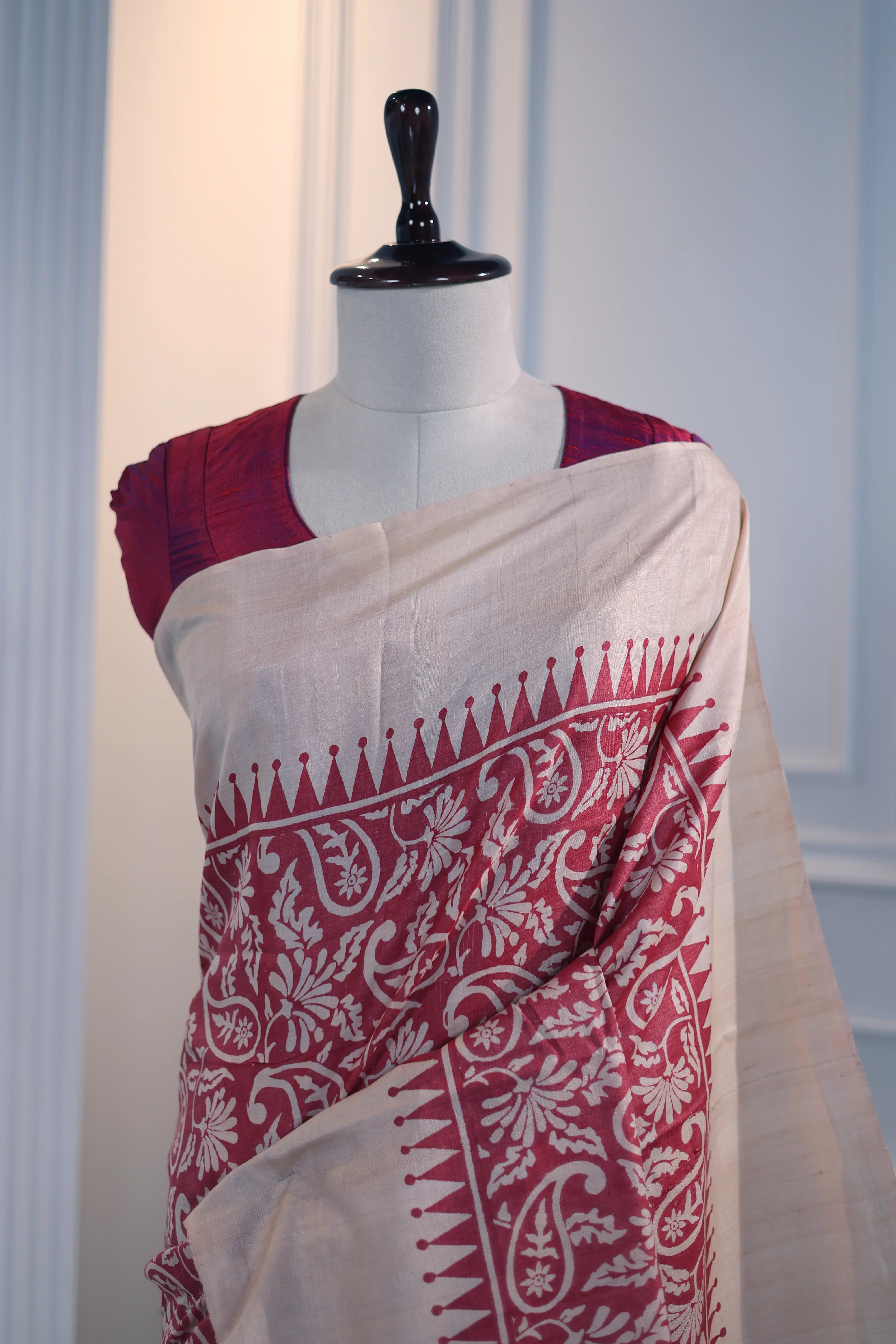
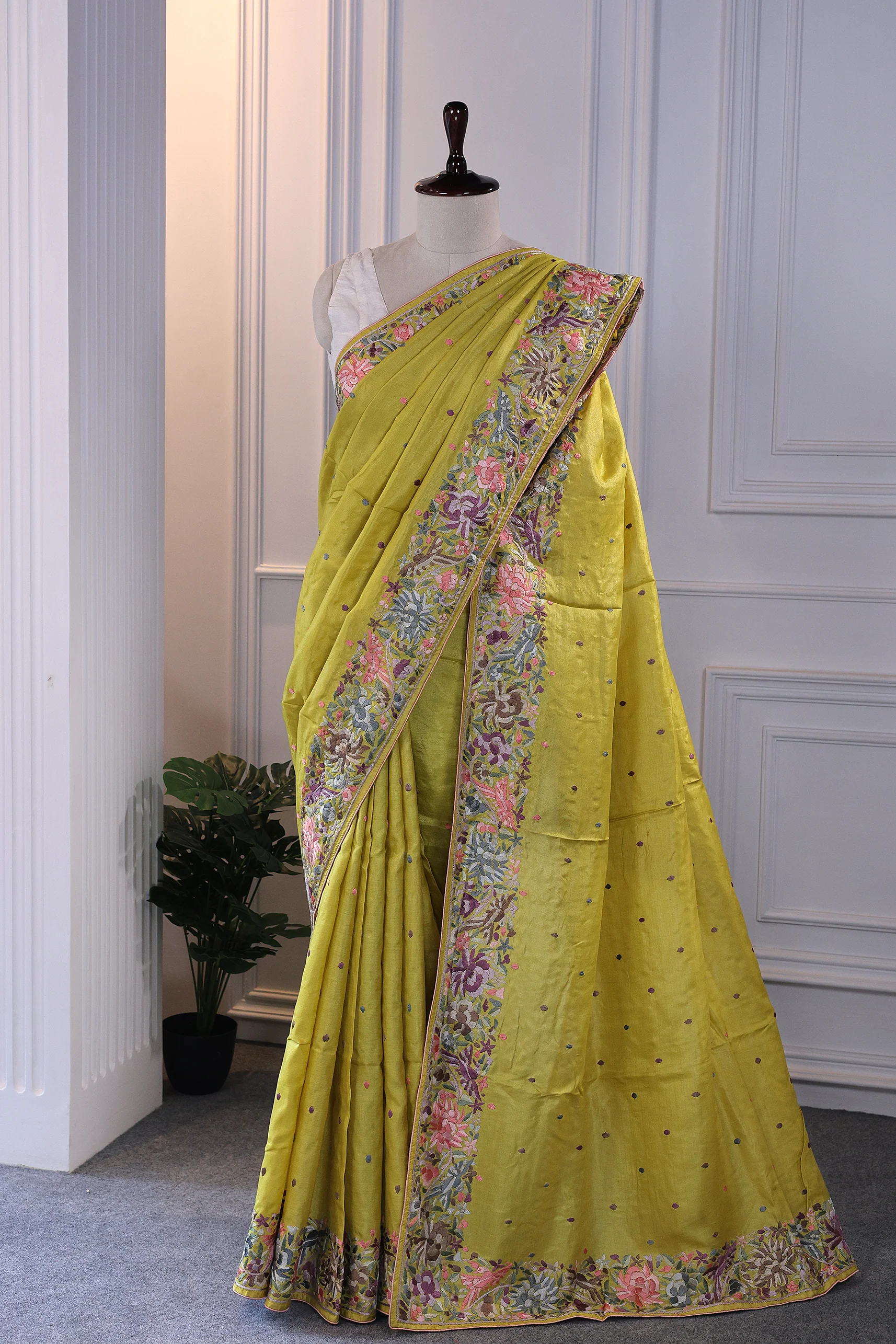
A Tussar Parsi Gara saree is a stunning fusion of two rich Indian textile traditions — Tussar silk and Parsi Gara embroidery. This combination creates a saree that is not only visually striking but also culturally significant. Here’s a deeper look at what makes a Tussar Parsi Gara saree unique:
1. Tussar Silk:
-
Tussar silk, also known as Kosa silk, is a type of wild silk that is produced by silkworms feeding on the leaves of various trees like the oak. Unlike mulberry silk, which is cultivated from domesticated silkworms, Tussar silk is more textured and has a slightly coarse feel.
-
Tussar silk is valued for its natural golden hue, making it look rich and earthy. It has a beautiful drape, which is softer and more breathable compared to other silks. This gives it an understated elegance, and it is often chosen for traditional and ceremonial garments.
2. Parsi Gara Embroidery:
-
Gara embroidery is an intricate, colorful, and highly detailed form of needlework traditionally done by the Parsi community in India. It is known for its delicate, floral, and often stylized motifs.
-
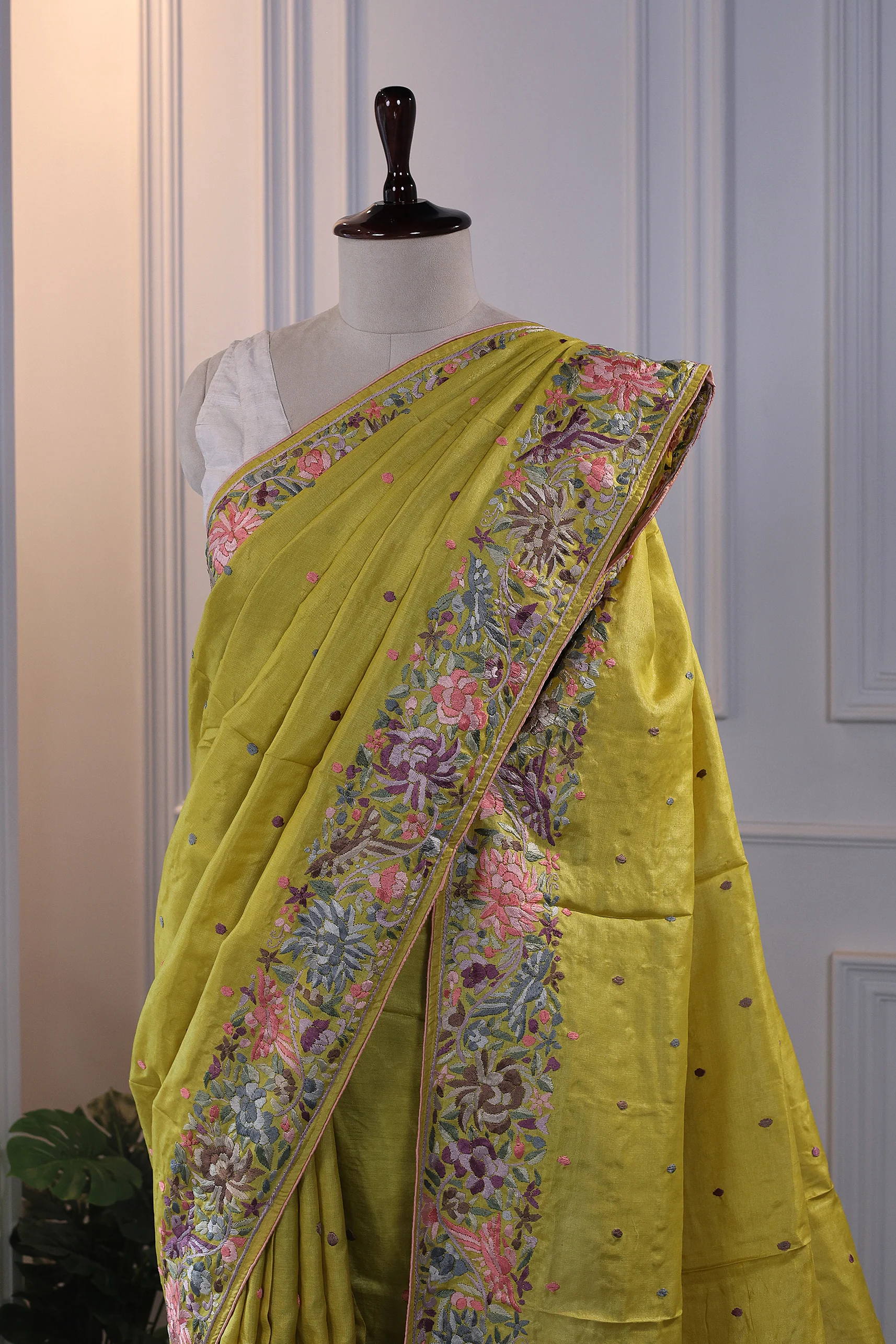
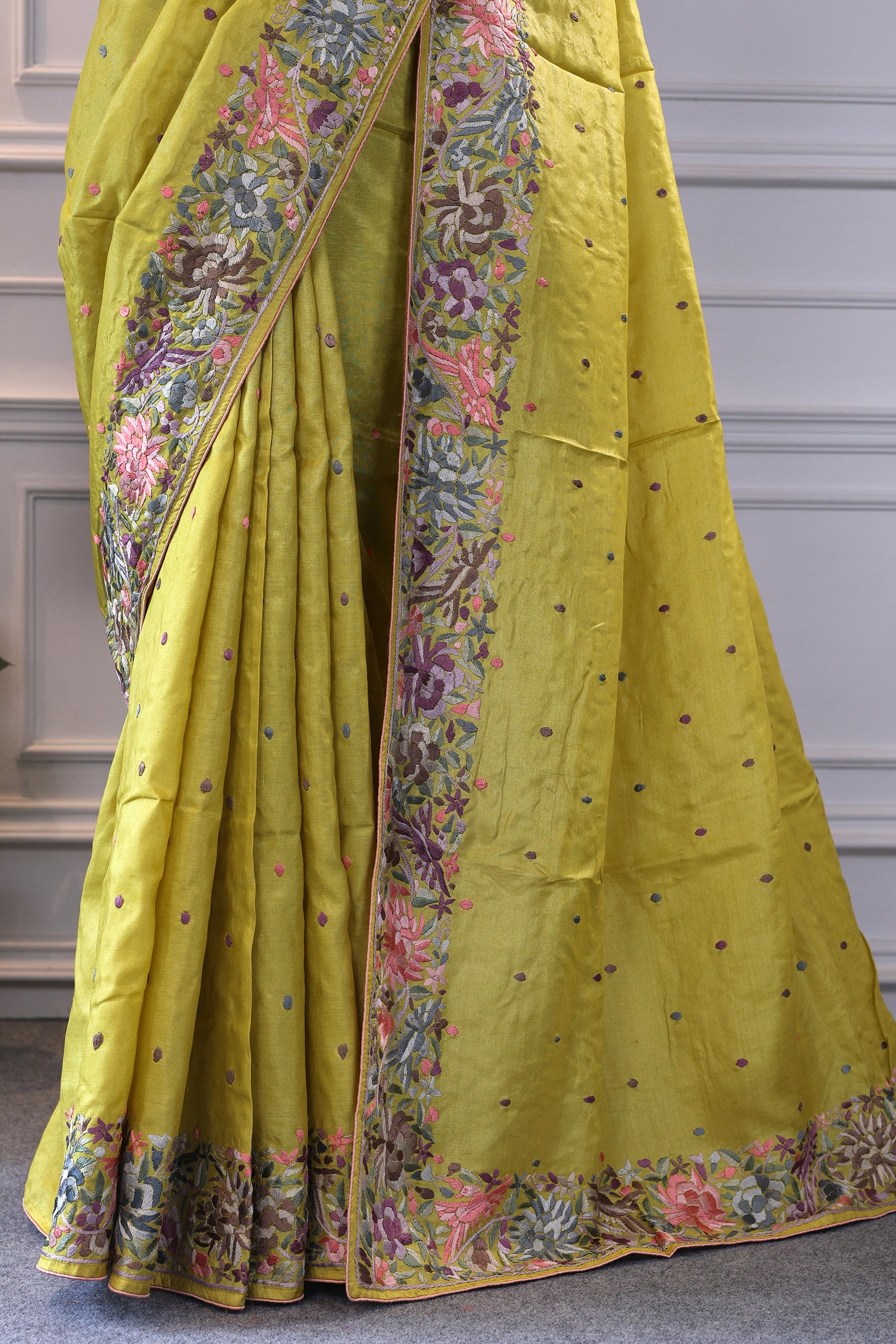
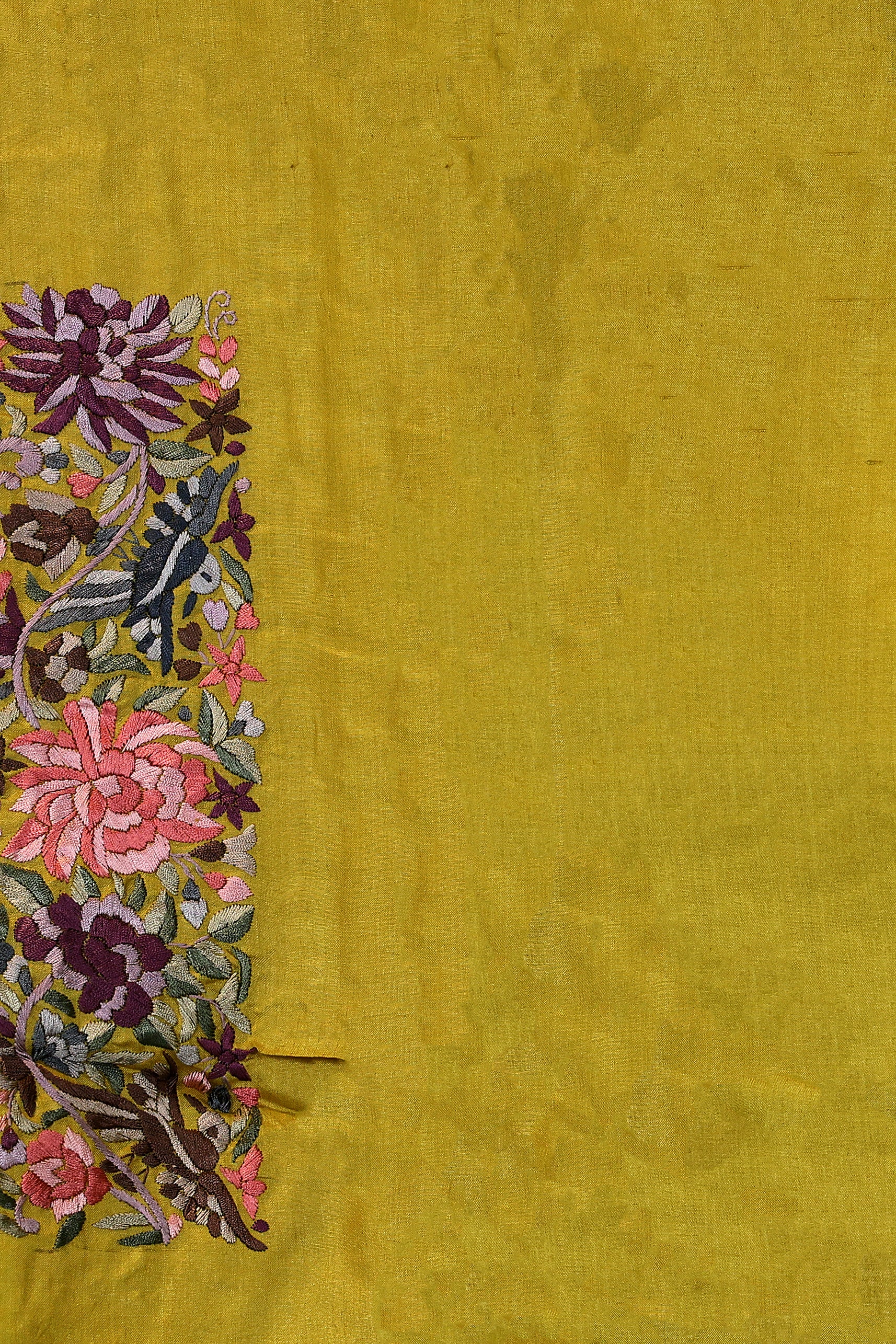
The designs are usually inspired by nature — flowers, birds, and other elements — with rich colors like deep reds, greens, golds, and blues. The embroidery is often done using silk threads, and it can incorporate zari (metallic thread) for an added shimmer. The embroidery is done using techniques like crewelwork, where threads are looped to create a raised effect.
-
Historically, Parsi Gara sarees were hand-embroidered by skilled artisans, and each piece could take weeks or even months to complete. These sarees were often passed down through generations.
3. Tussar Parsi Gara Saree:
-
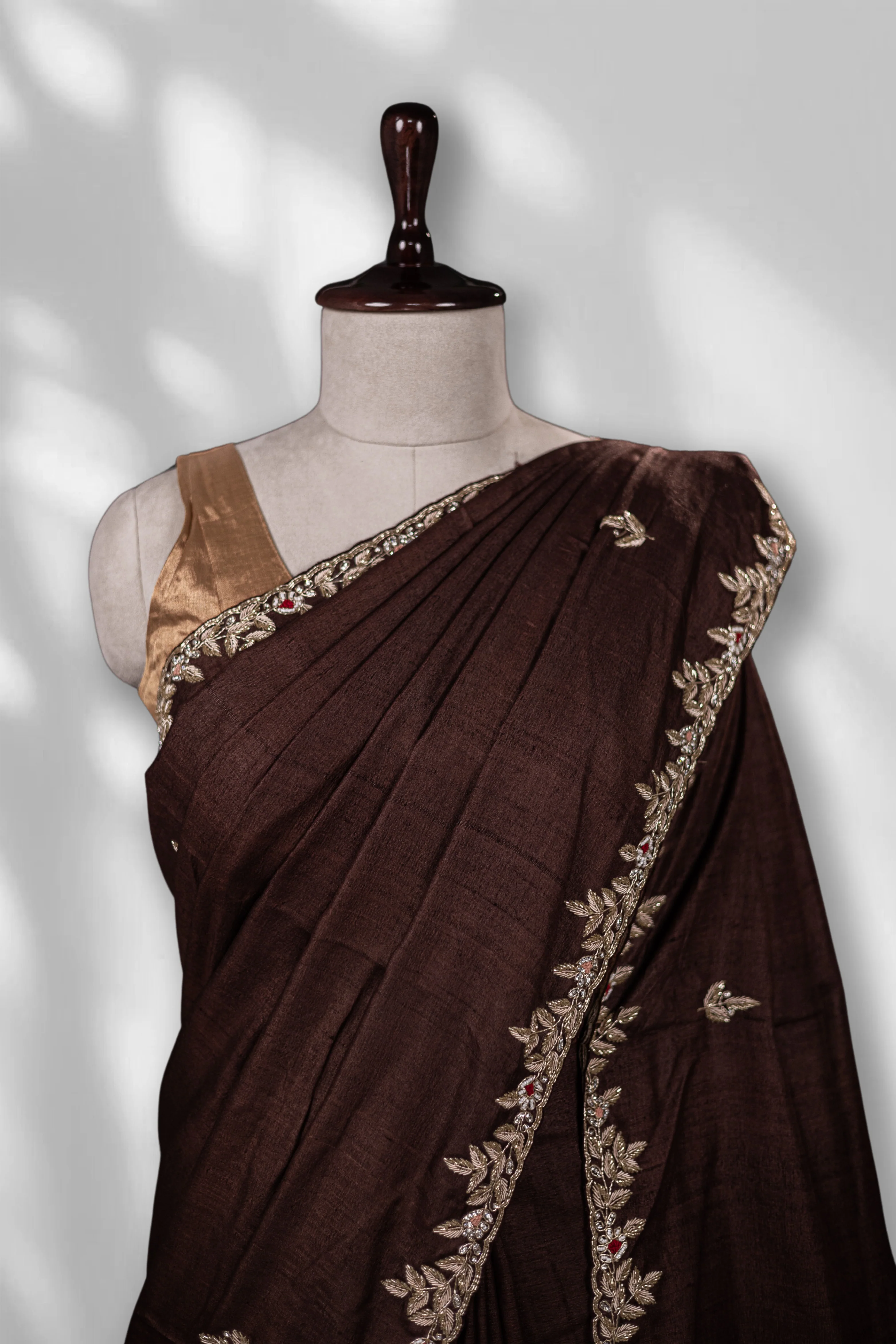
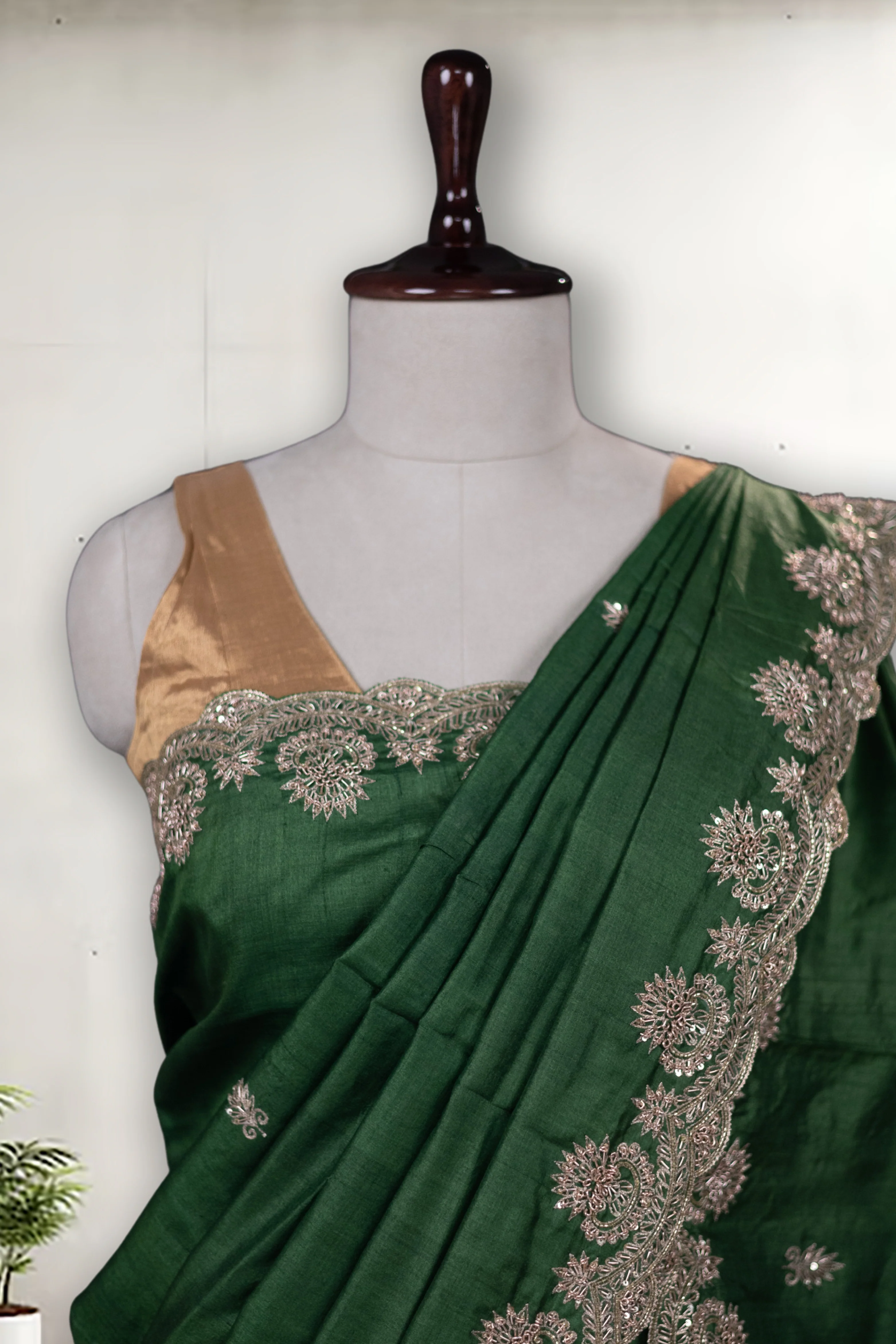
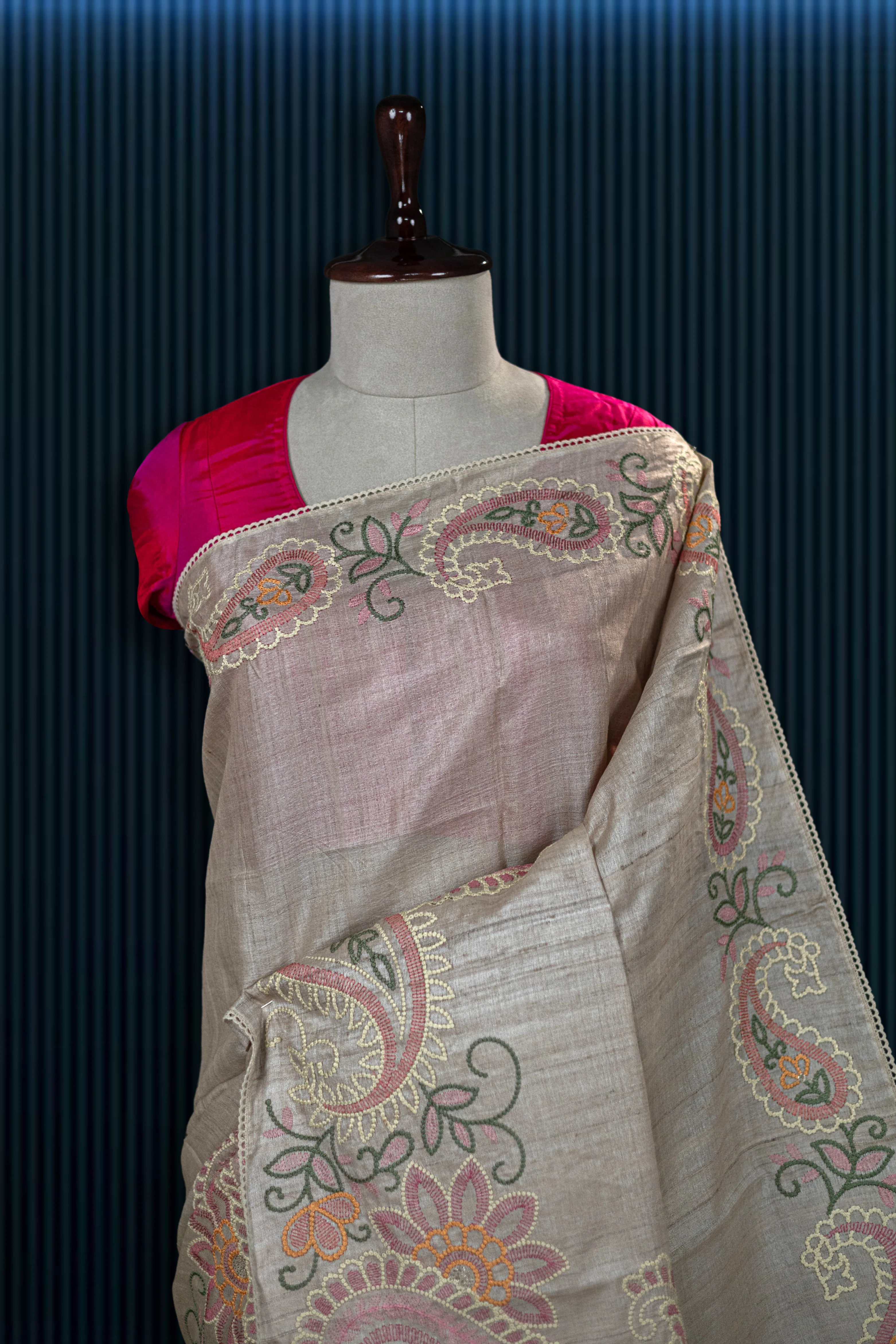
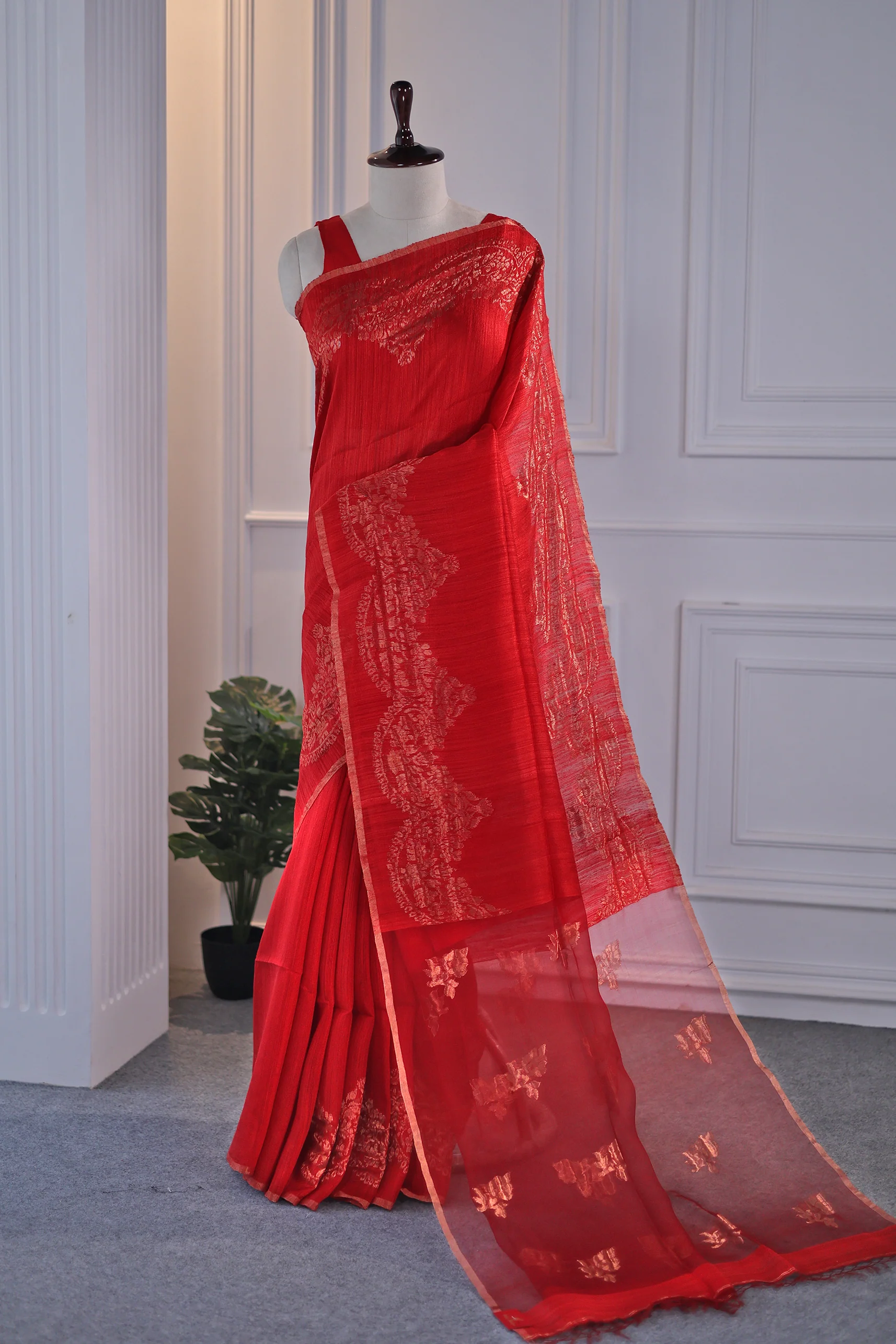
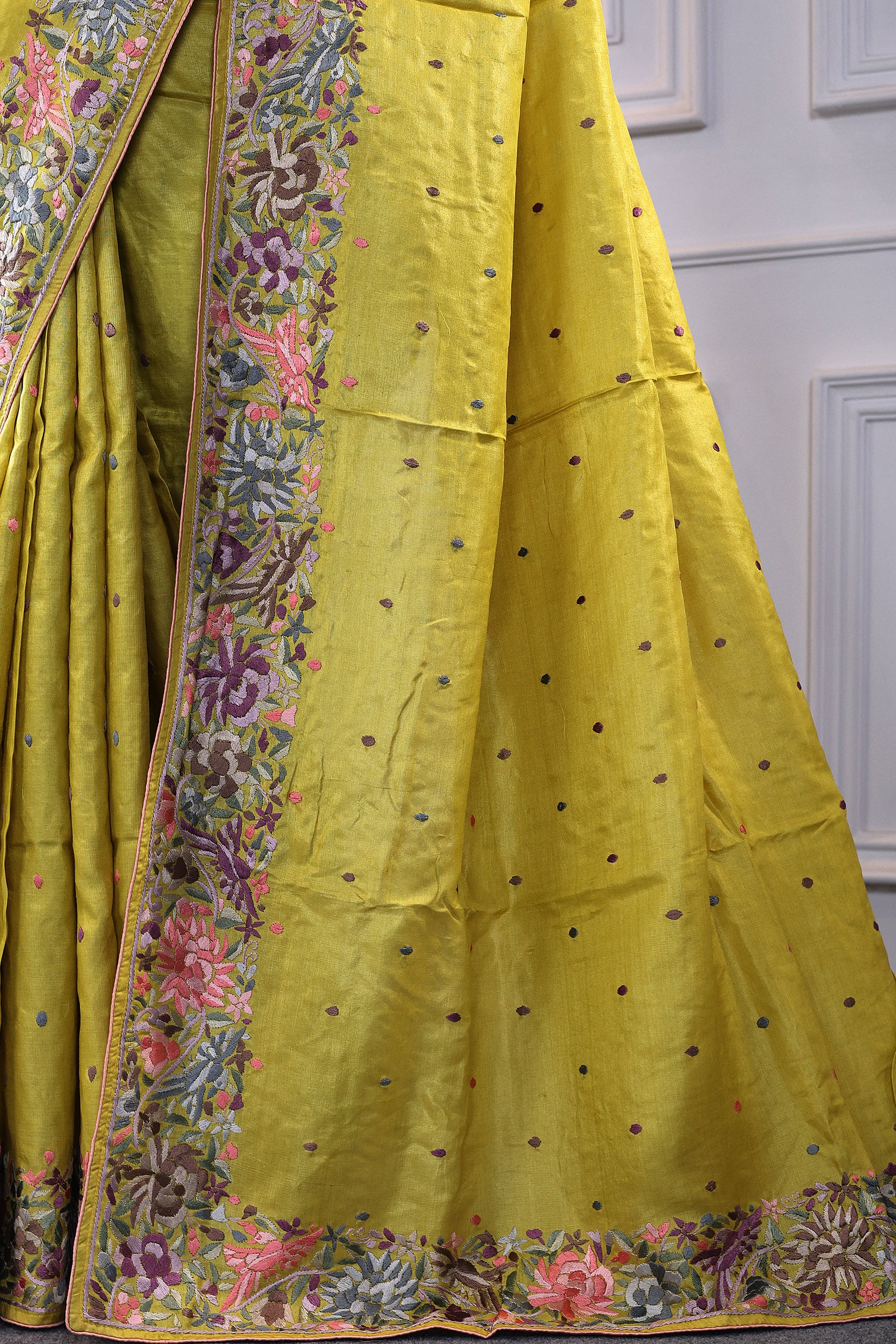
When Tussar silk is used as the base fabric for a Parsi Gara embroidery saree, it creates a beautiful blend of natural texture with intricate craftsmanship. The natural sheen of Tussar silk provides a subtle background for the rich, vibrant, and detailed Gara embroidery, making it a stunning and luxurious garment.
-
The embroidery is usually concentrated on the pallu (the end piece of the saree) and the borders, with some designs spilling over the body of the saree. The motifs are often floral, including peacocks, roses, and other nature-inspired elements, with stylized patterns unique to the Parsi community.
-
The combination of Tussar silk's natural golden hue and the colorful, vivid embroidery gives the saree a luxurious yet earthy feel, making it perfect for festive occasions, weddings, and other important events.
4. Occasions:
-
A Tussar Parsi Gara saree is often worn for special occasions such as weddings, religious ceremonies, and family celebrations. Its intricate design and luxurious fabric make it a choice piece for those who want to stand out while still respecting tradition.
-
The rich texture of Tussar silk and the beautiful embroidery make it ideal for evening functions or formal occasions where a certain level of grandeur is desired.
5. Drape and Feel:
-
The drape of a Tussar Parsi Gara saree is fluid and soft, thanks to the light yet sturdy nature of Tussar silk. It has a slightly matte finish compared to the high gloss of other silks, giving it an elegant, understated beauty.
-
The embroidery adds a textural contrast to the smooth silk, and the colors of the embroidery pop against the neutral or golden backdrop of the silk.
Conclusion:
A Tussar Parsi Gara saree is a masterpiece that combines the natural beauty of Tussar silk with the intricate and symbolic artistry of Parsi Gara embroidery. This combination makes it a perfect choice for those looking for a traditional yet visually captivating saree that speaks to both elegance and heritage. It’s ideal for brides, bridesmaids, or anyone looking for a saree that embodies both cultural richness and timeless beauty.
Details & Craftsmanship
Every detail has been carefully considered to bring you the perfect product.
Details & Craftsmanship
Every detail has been carefully considered to bring you the perfect product.
Details & Craftsmanship
Every detail has been carefully considered to bring you the perfect product.
Details & Craftsmanship
Every detail has been carefully considered to bring you the perfect product.
Description
A Tussar Parsi Gara saree is a stunning fusion of two rich Indian textile traditions — Tussar silk and Parsi Gara embroidery. This combination creates a saree that is not only visually striking but also culturally significant. Here’s a deeper look at what makes a Tussar Parsi Gara saree unique:
1. Tussar Silk:
-
Tussar silk, also known as Kosa silk, is a type of wild silk that is produced by silkworms feeding on the leaves of various trees like the oak. Unlike mulberry silk, which is cultivated from domesticated silkworms, Tussar silk is more textured and has a slightly coarse feel.
-
Tussar silk is valued for its natural golden hue, making it look rich and earthy. It has a beautiful drape, which is softer and more breathable compared to other silks. This gives it an understated elegance, and it is often chosen for traditional and ceremonial garments.
2. Parsi Gara Embroidery:
-
Gara embroidery is an intricate, colorful, and highly detailed form of needlework traditionally done by the Parsi community in India. It is known for its delicate, floral, and often stylized motifs.
-
The designs are usually inspired by nature — flowers, birds, and other elements — with rich colors like deep reds, greens, golds, and blues. The embroidery is often done using silk threads, and it can incorporate zari (metallic thread) for an added shimmer. The embroidery is done using techniques like crewelwork, where threads are looped to create a raised effect.
-
Historically, Parsi Gara sarees were hand-embroidered by skilled artisans, and each piece could take weeks or even months to complete. These sarees were often passed down through generations.
3. Tussar Parsi Gara Saree:
-
When Tussar silk is used as the base fabric for a Parsi Gara embroidery saree, it creates a beautiful blend of natural texture with intricate craftsmanship. The natural sheen of Tussar silk provides a subtle background for the rich, vibrant, and detailed Gara embroidery, making it a stunning and luxurious garment.
-
The embroidery is usually concentrated on the pallu (the end piece of the saree) and the borders, with some designs spilling over the body of the saree. The motifs are often floral, including peacocks, roses, and other nature-inspired elements, with stylized patterns unique to the Parsi community.
-
The combination of Tussar silk's natural golden hue and the colorful, vivid embroidery gives the saree a luxurious yet earthy feel, making it perfect for festive occasions, weddings, and other important events.
4. Occasions:
-
A Tussar Parsi Gara saree is often worn for special occasions such as weddings, religious ceremonies, and family celebrations. Its intricate design and luxurious fabric make it a choice piece for those who want to stand out while still respecting tradition.
-
The rich texture of Tussar silk and the beautiful embroidery make it ideal for evening functions or formal occasions where a certain level of grandeur is desired.
5. Drape and Feel:
-
The drape of a Tussar Parsi Gara saree is fluid and soft, thanks to the light yet sturdy nature of Tussar silk. It has a slightly matte finish compared to the high gloss of other silks, giving it an elegant, understated beauty.
-
The embroidery adds a textural contrast to the smooth silk, and the colors of the embroidery pop against the neutral or golden backdrop of the silk.
Conclusion:
A Tussar Parsi Gara saree is a masterpiece that combines the natural beauty of Tussar silk with the intricate and symbolic artistry of Parsi Gara embroidery. This combination makes it a perfect choice for those looking for a traditional yet visually captivating saree that speaks to both elegance and heritage. It’s ideal for brides, bridesmaids, or anyone looking for a saree that embodies both cultural richness and timeless beauty.