The Story
Here’s a detailed description of a Silk Batik Saree, combining artistic handcrafting with the elegance of pure silk:
🧵 Silk Batik Saree – Overview
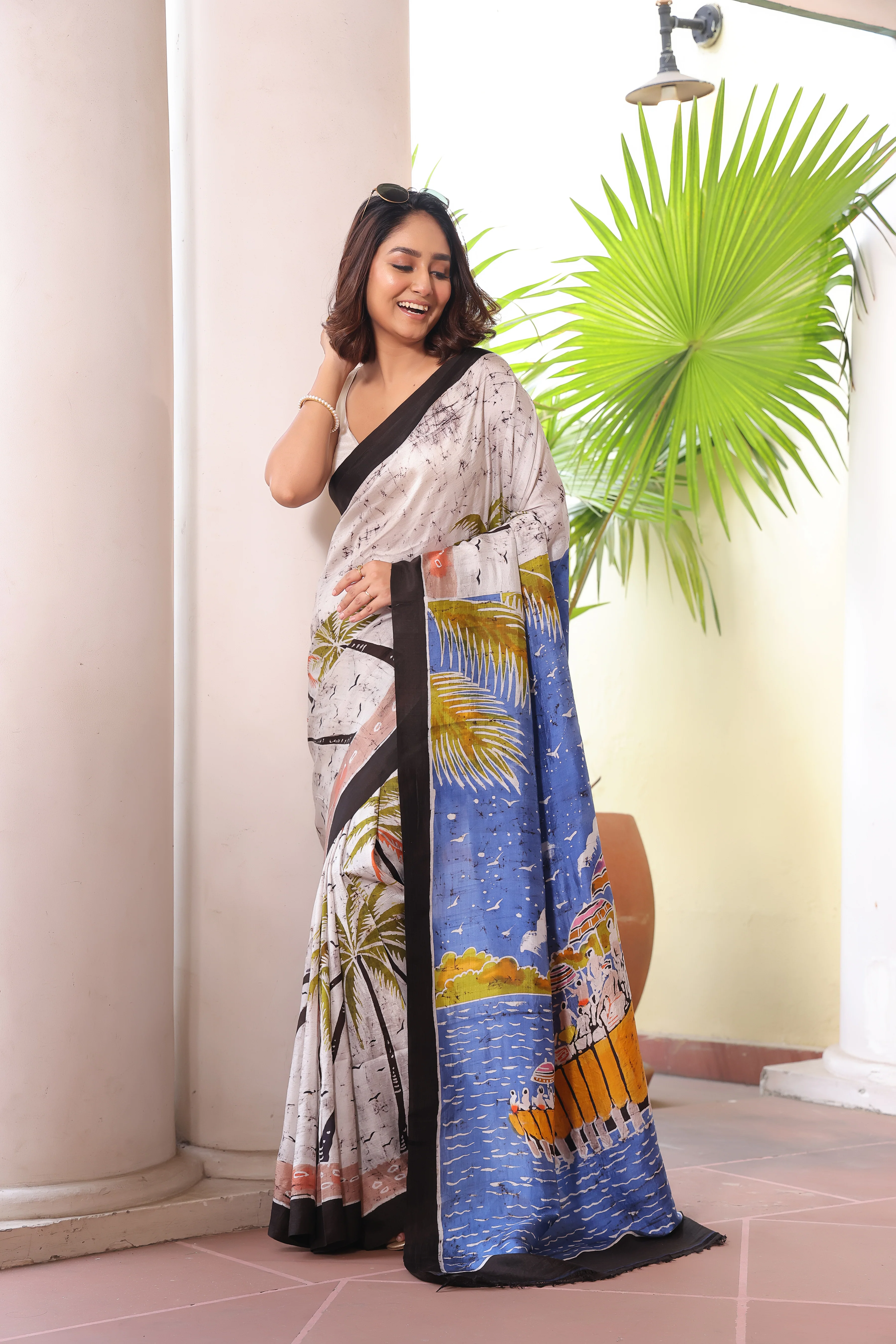
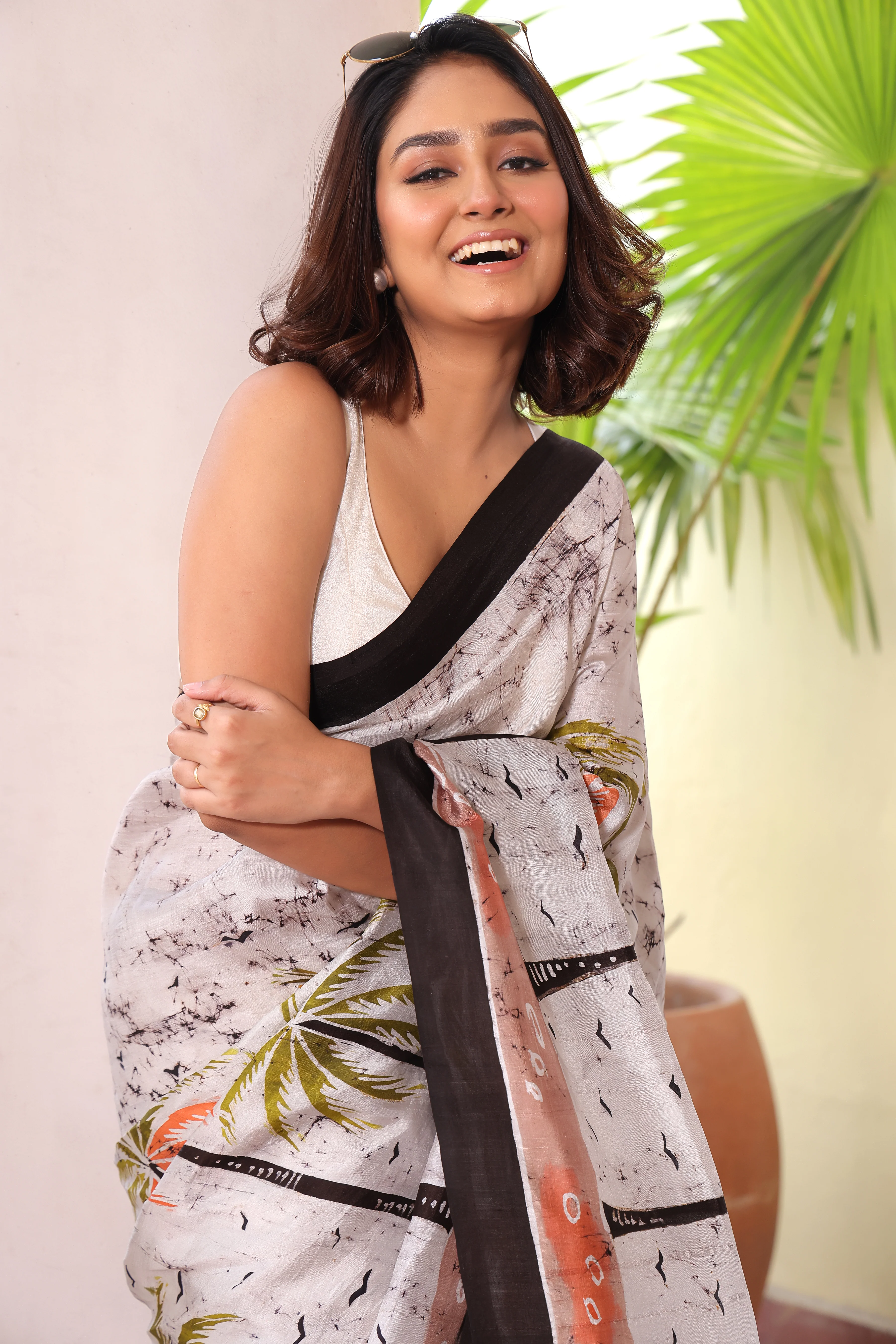
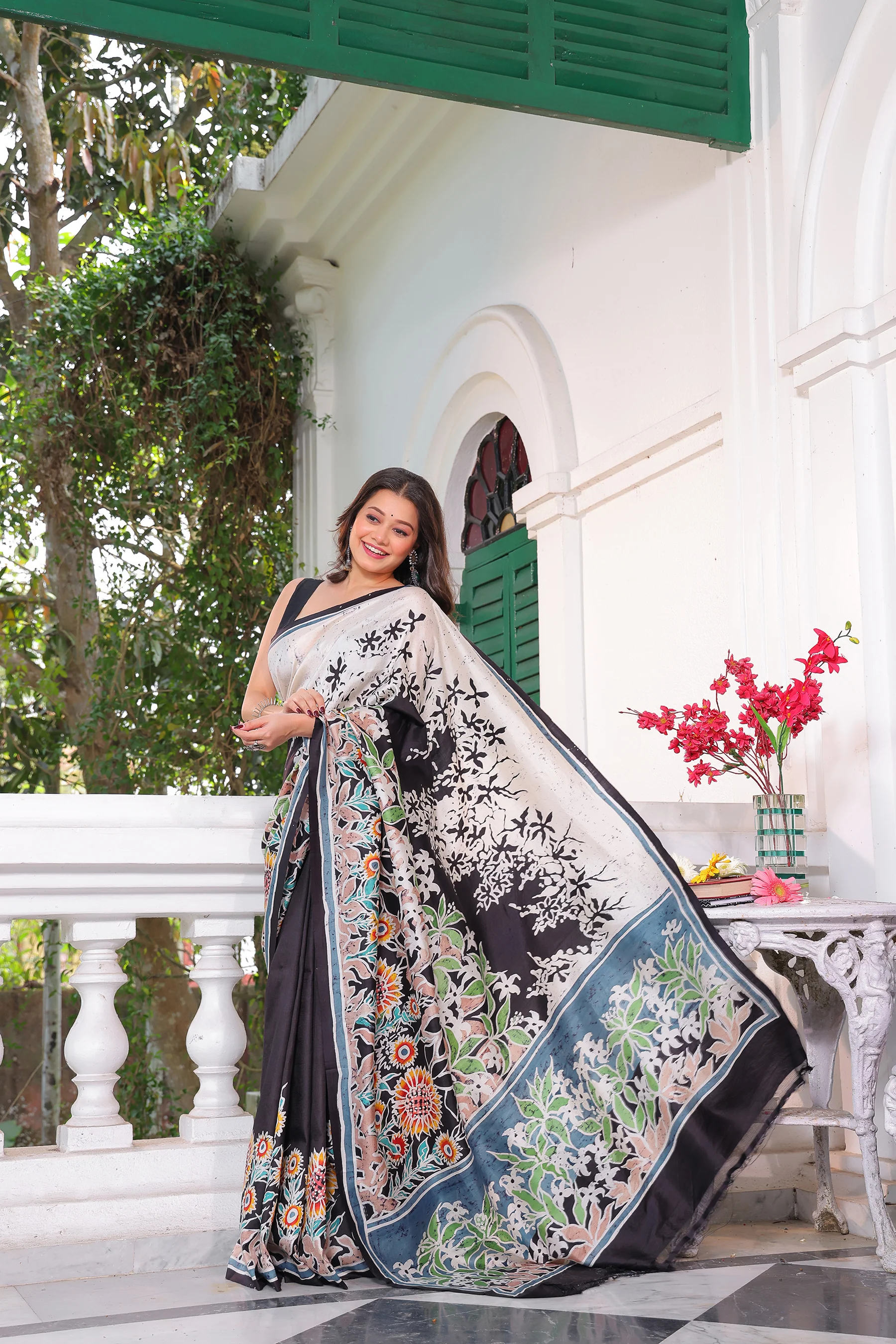
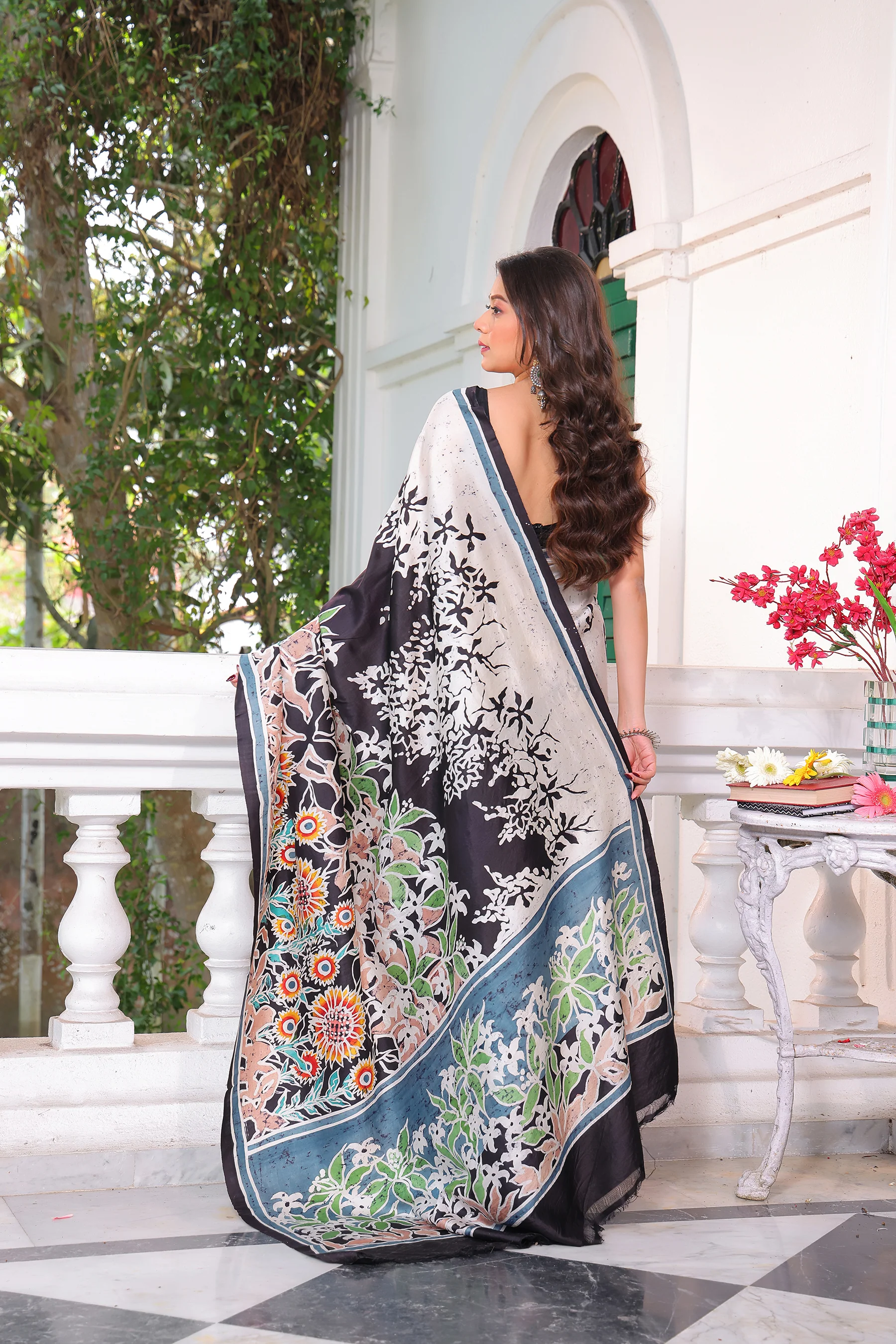
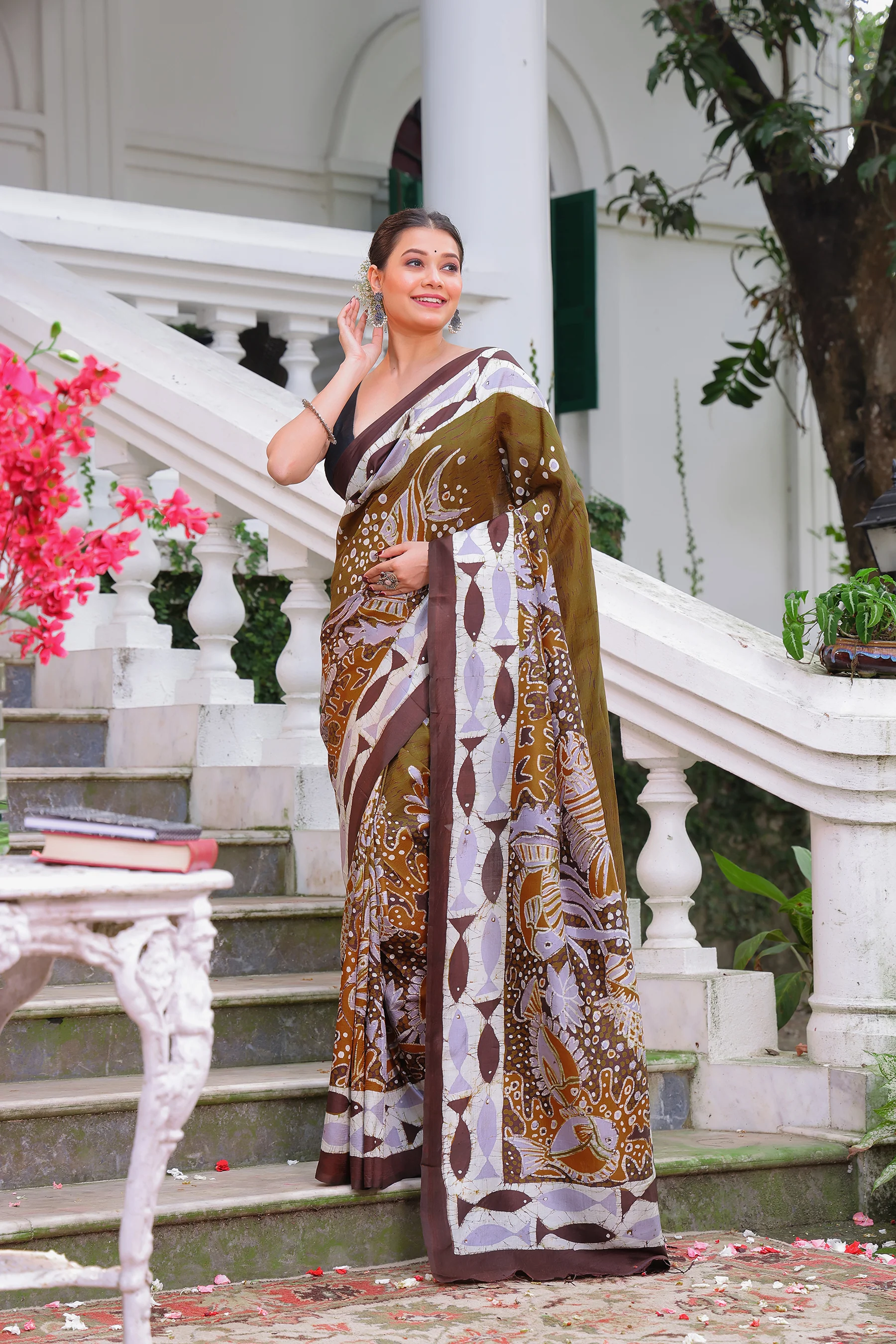
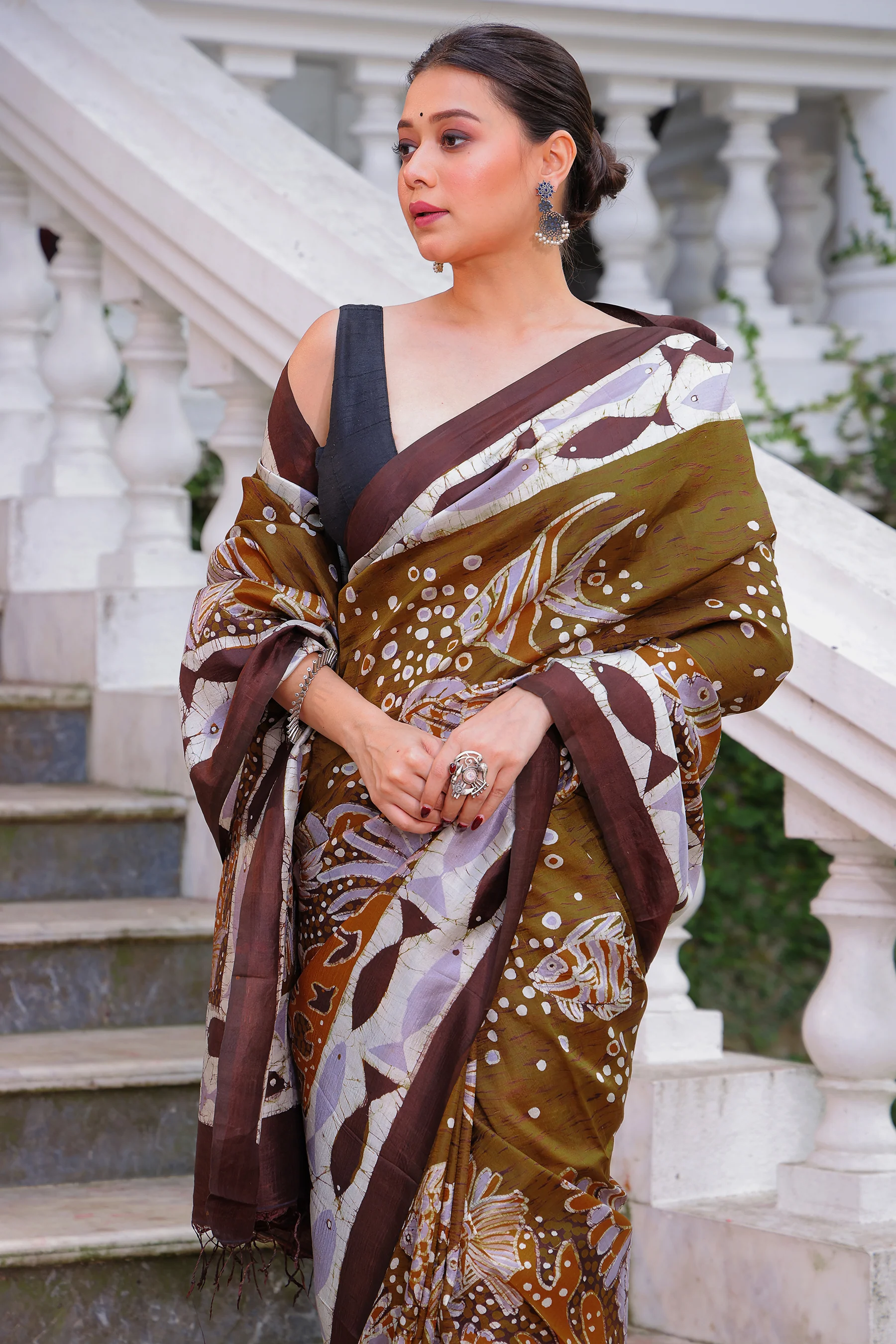
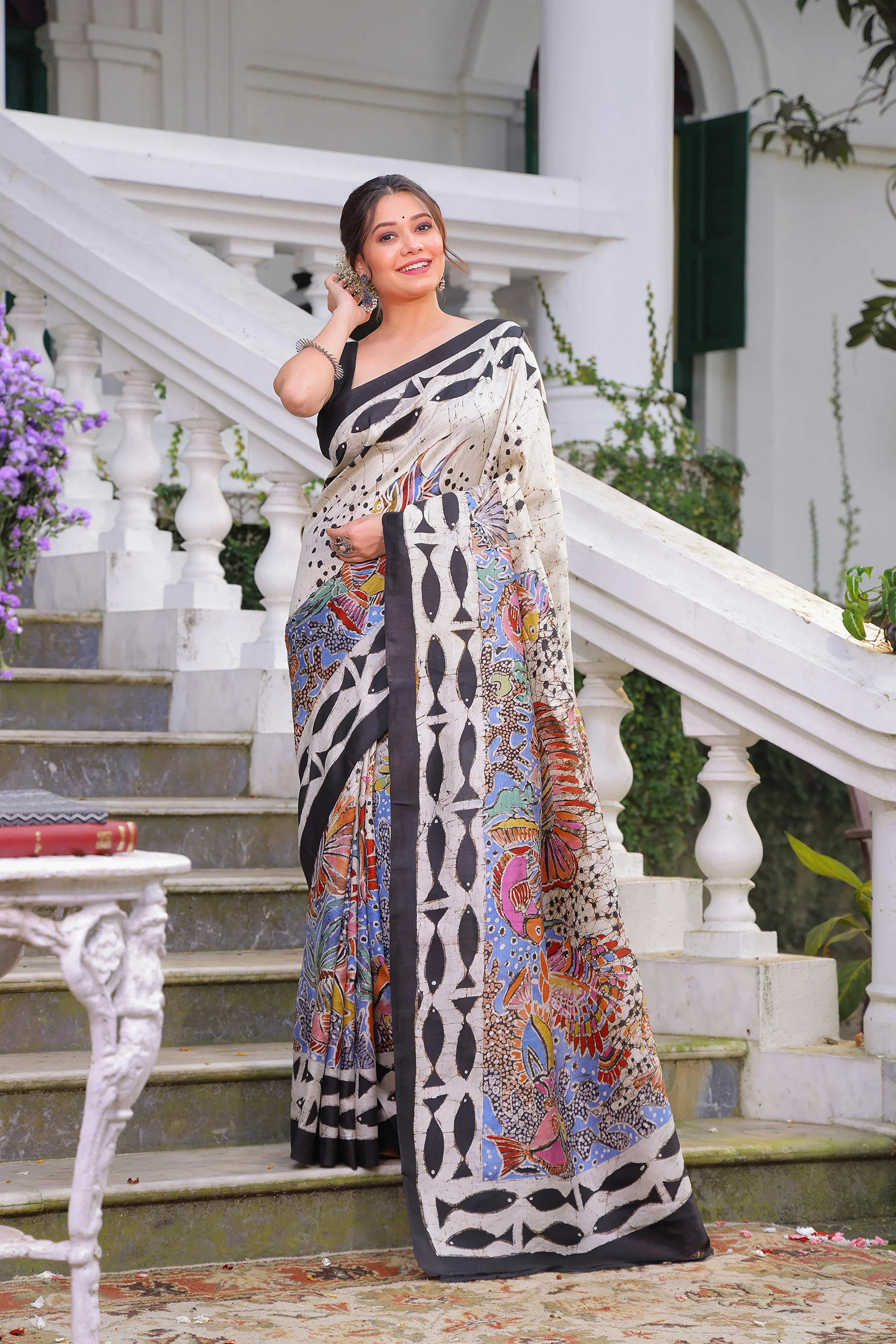
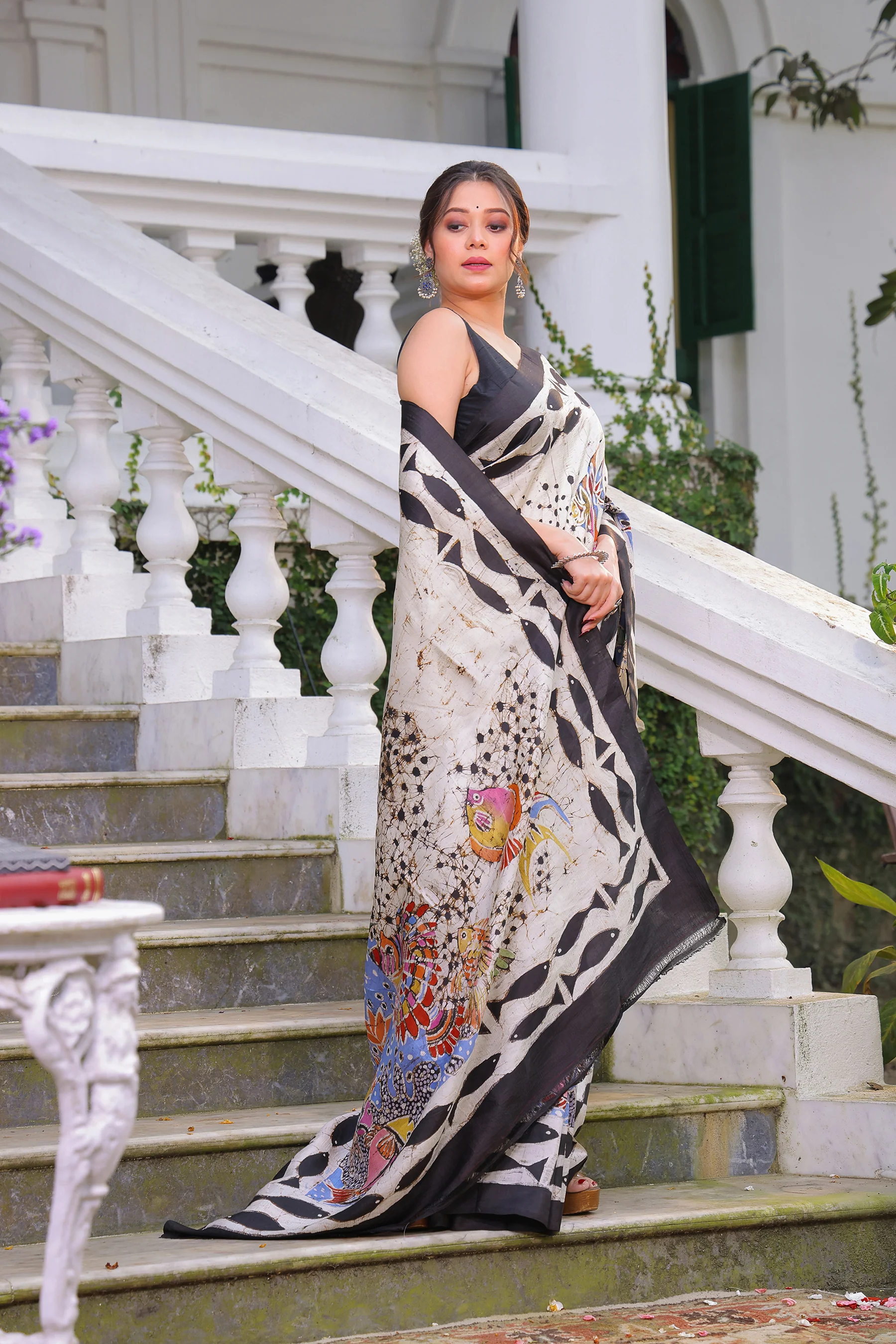
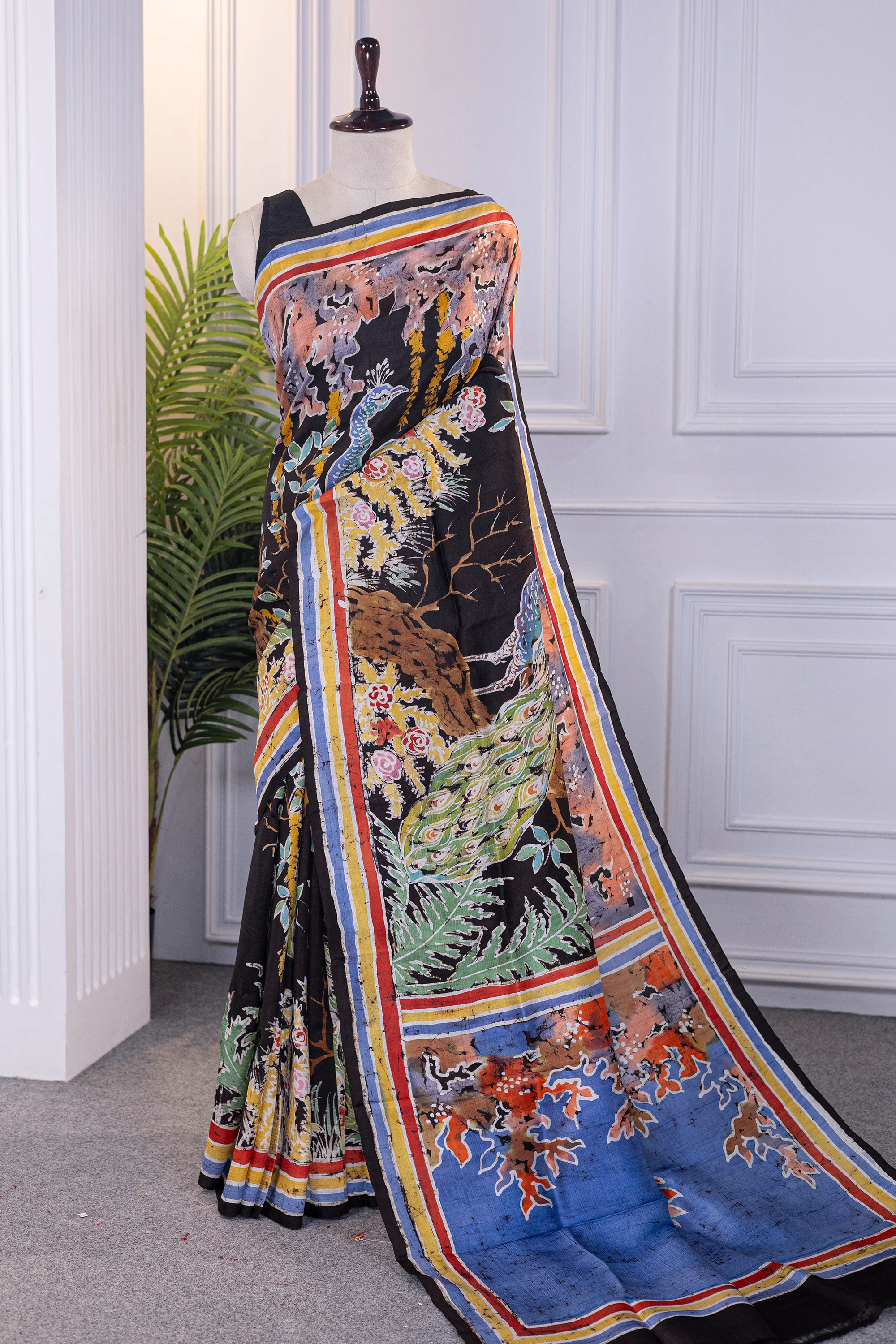
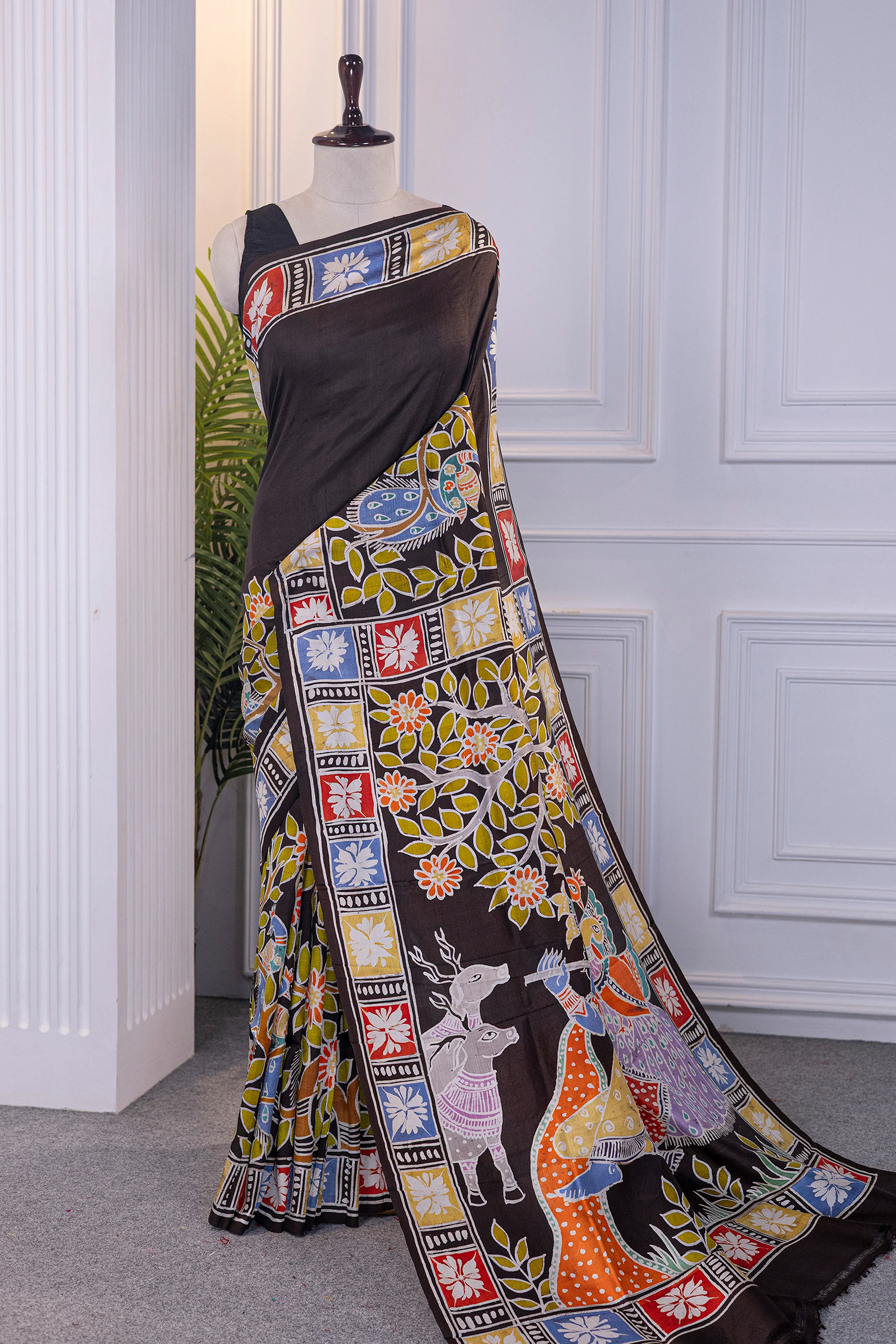
A Silk Batik saree showcases the ancient art of Batik dyeing on the rich and lustrous base of pure silk. This combination results in a saree that is artistic, luxurious, and one-of-a-kind, making it perfect for those who love handcrafted heritage fashion.
🌾 Fabric: Pure Silk
-
Type: Usually mulberry or Tussar silk, depending on the region.
-
Texture: Smooth, soft, and naturally lustrous.
-
Feel: Drapes beautifully with a fluid fall and rich sheen.
-
Look: Elevates Batik prints with a glowing, elegant finish.
🎨 Technique: Batik Print
-
Origin: Batik is a wax-resist dyeing technique, believed to have originated in Indonesia but widely practiced in India (especially in West Bengal, Odisha, and Madhya Pradesh).
-
Process:
-
Artisans apply hot wax to the fabric using brushes or styluses to create designs.
-
The fabric is dyed, and the wax prevents color from penetrating those areas.
-
Wax is removed by boiling, leaving behind unique, crackled patterns.
-
-
Designs: Abstract patterns, florals, tribal art, nature-inspired themes, or traditional motifs.
✨ Design Features
-
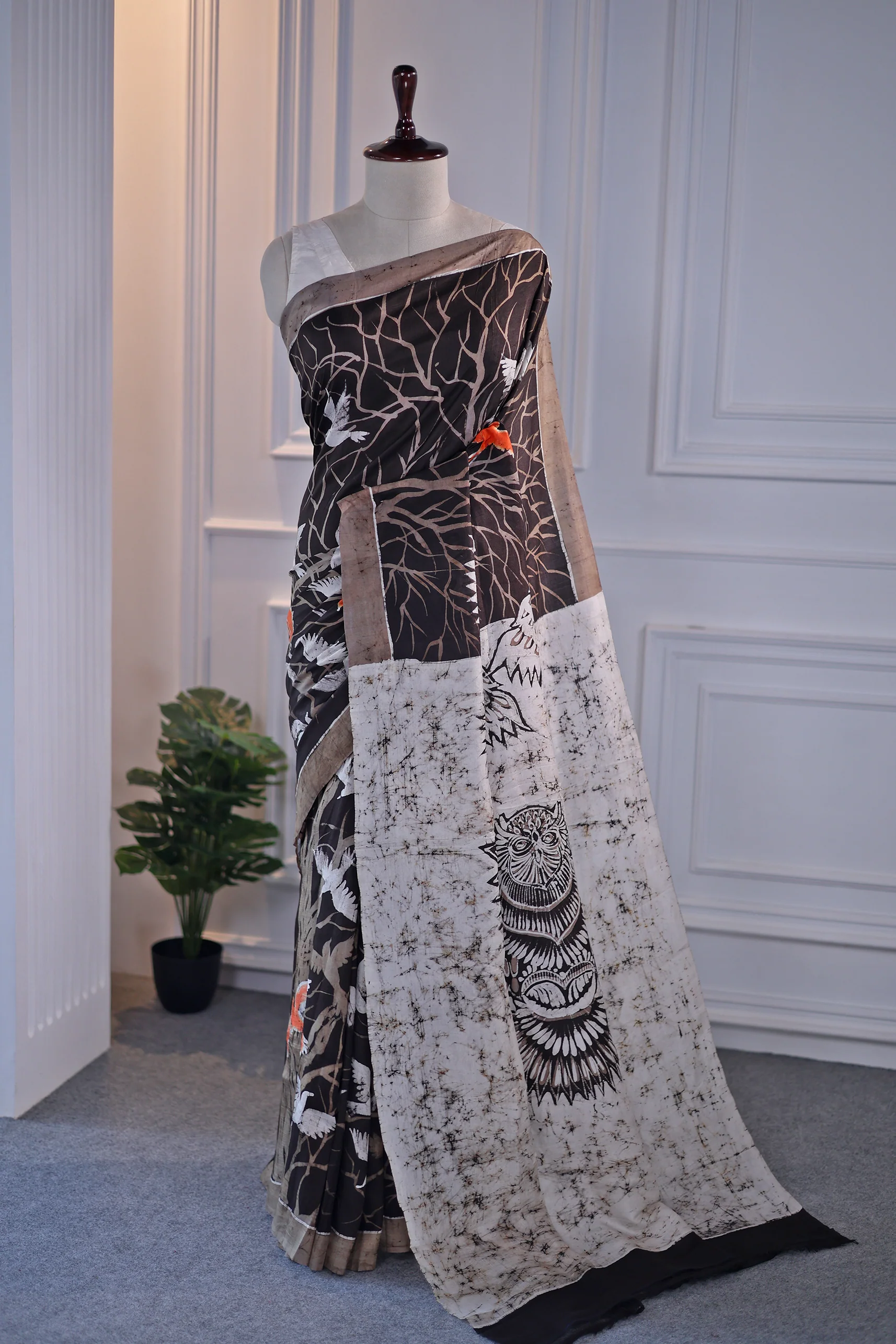
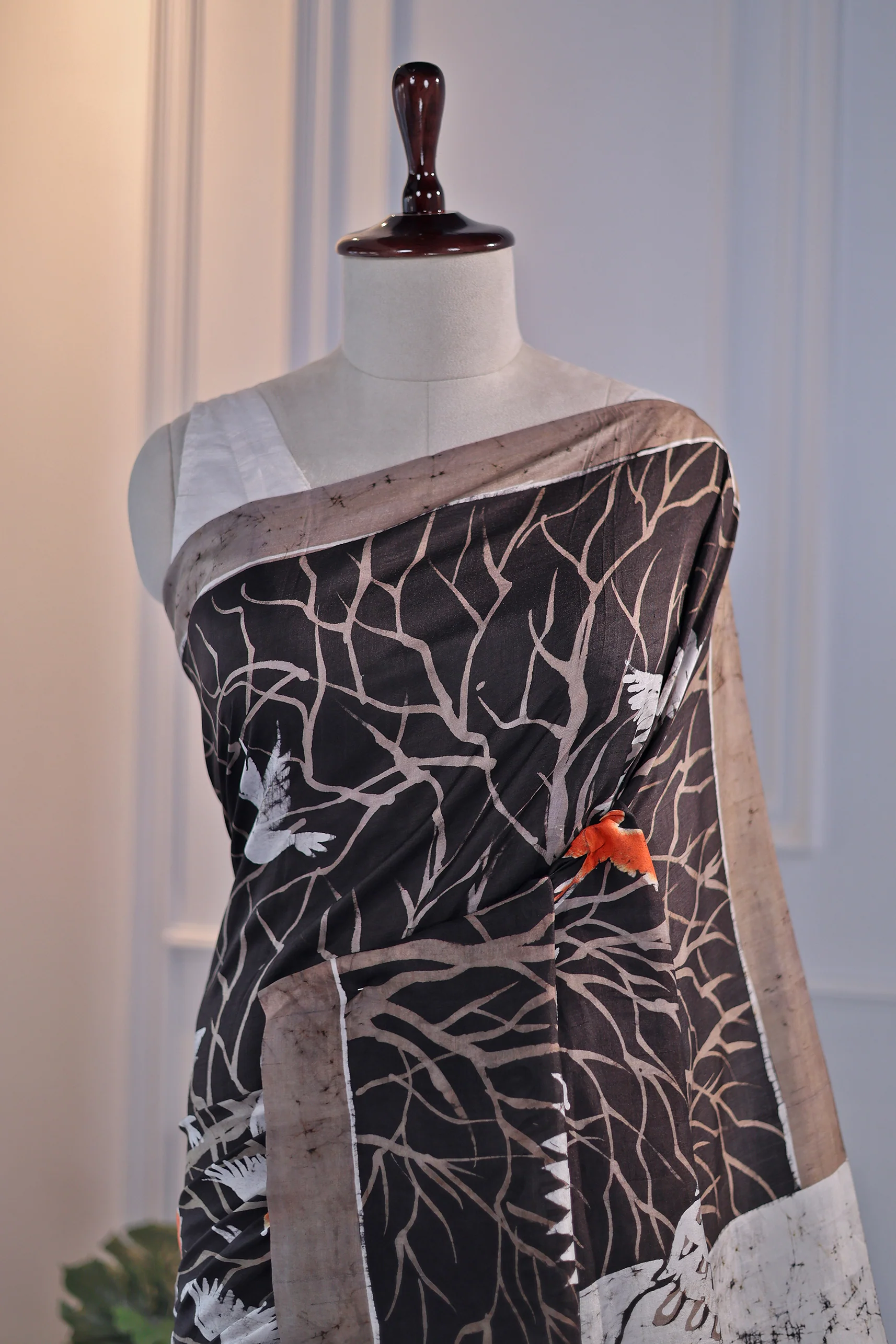
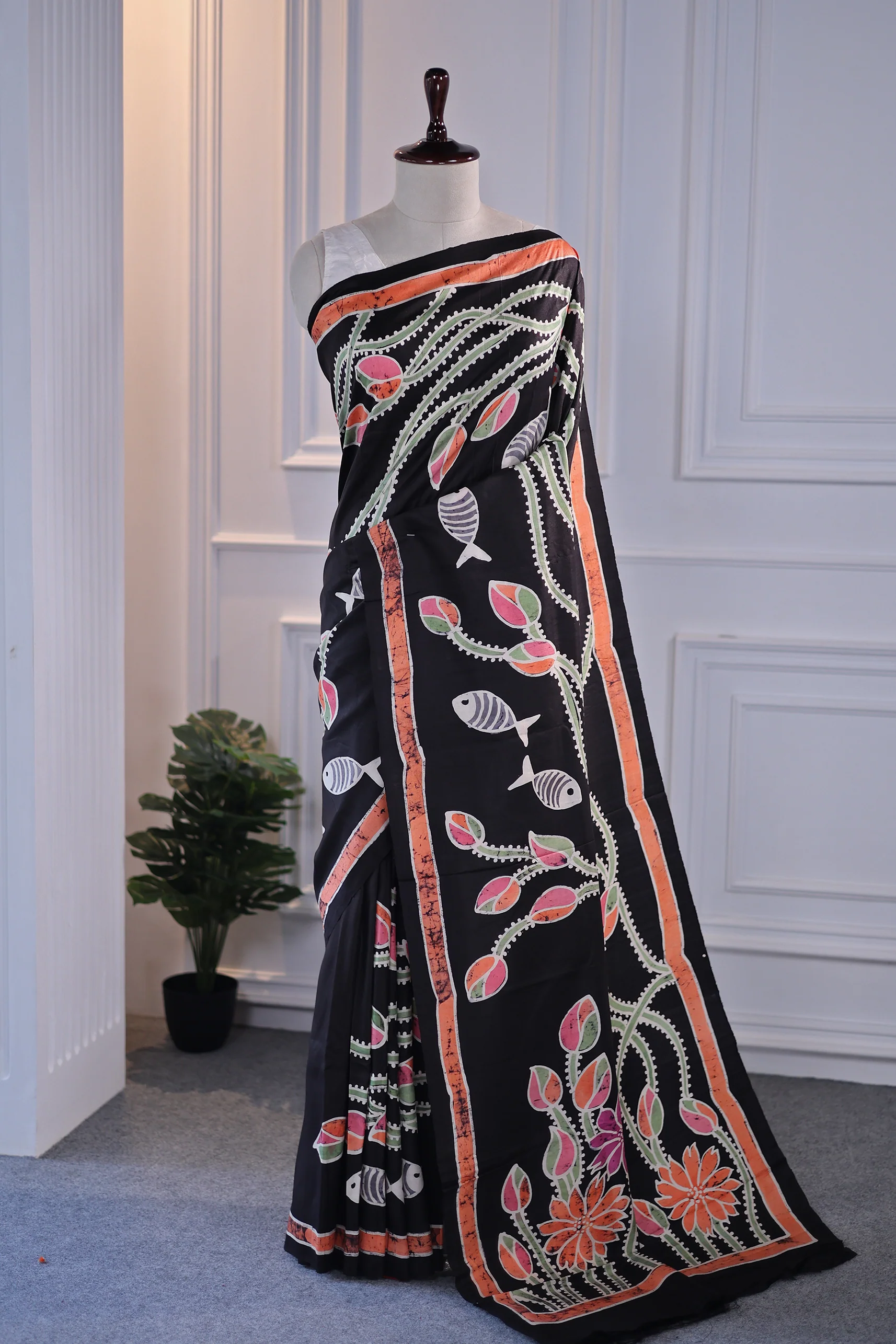
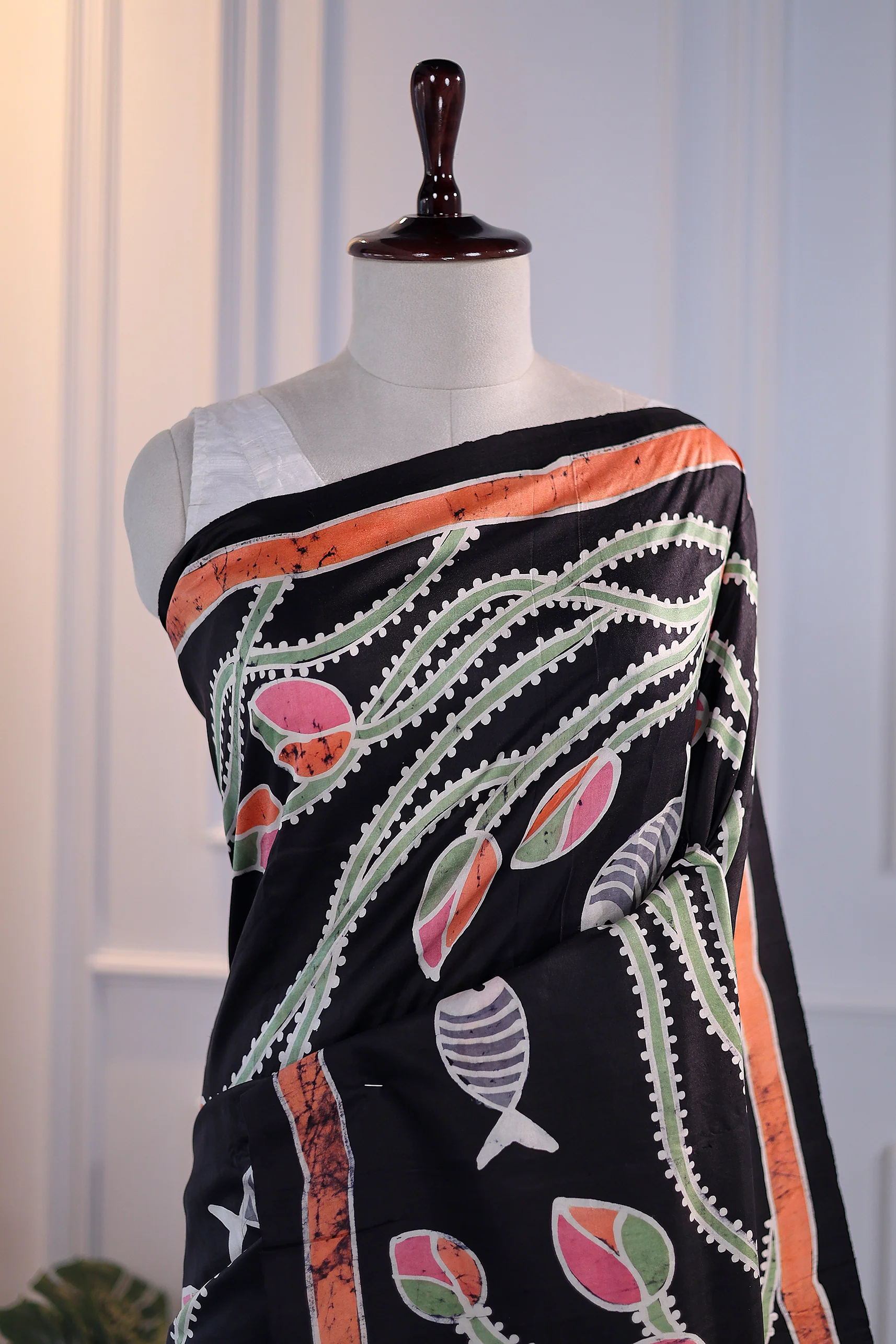
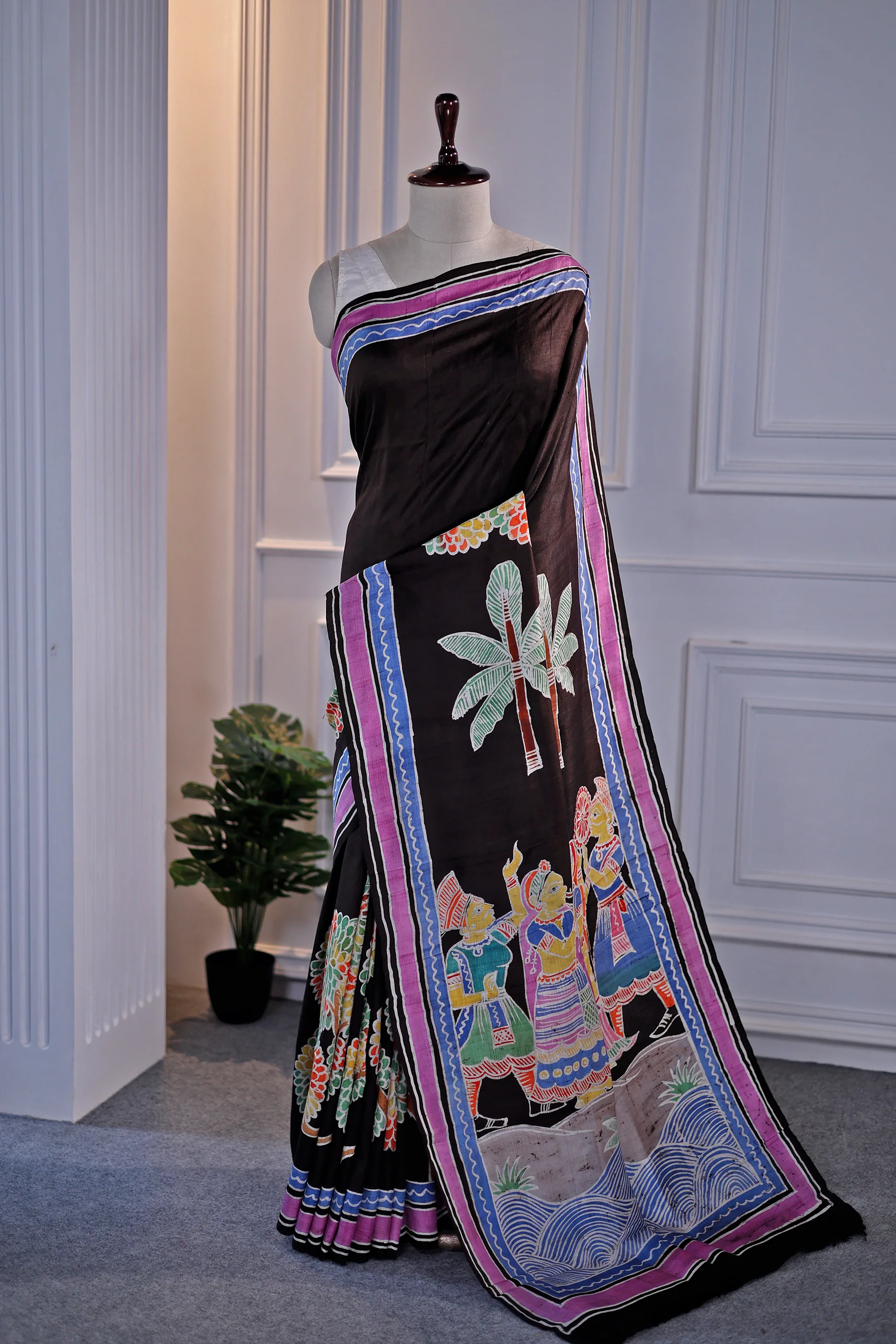
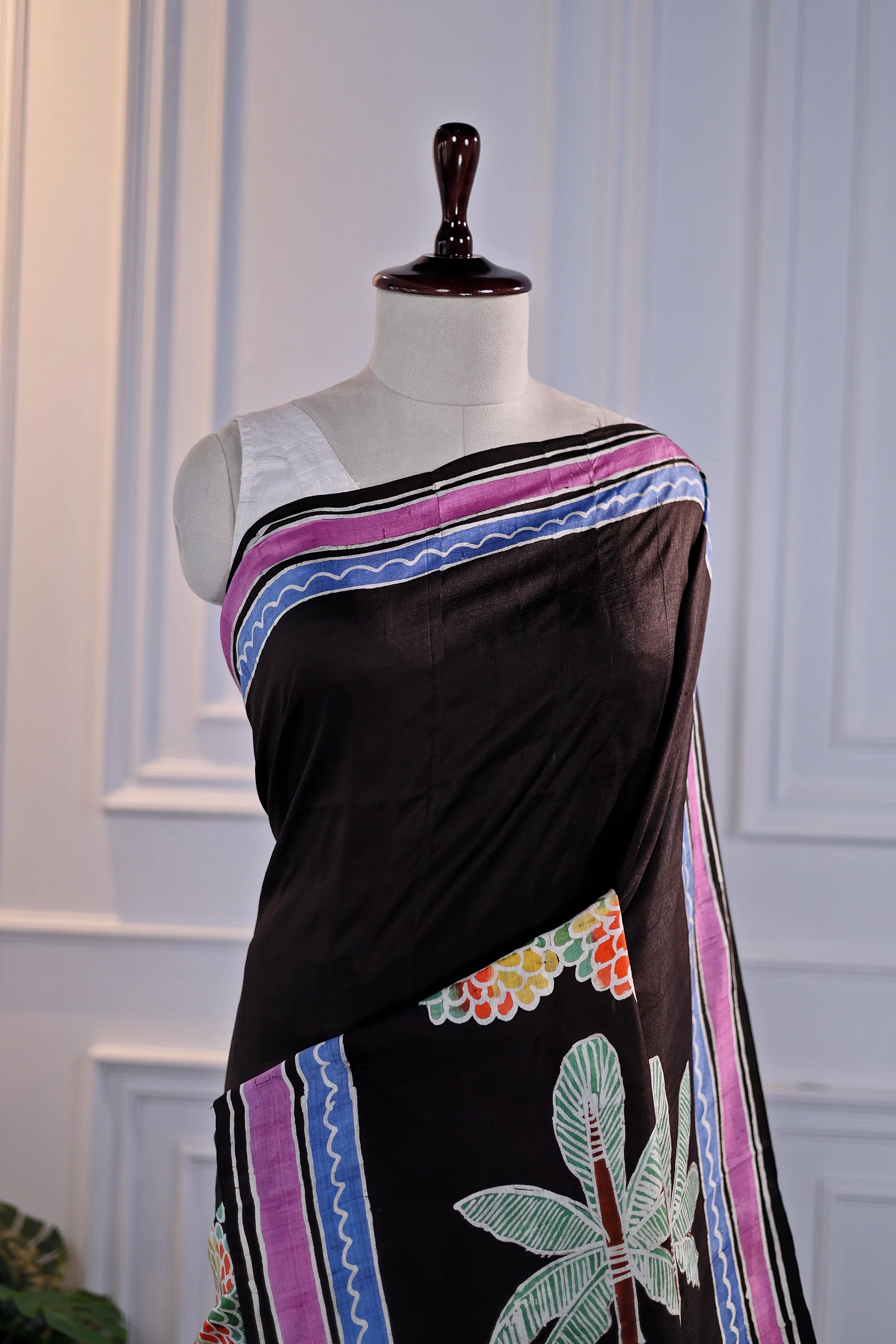
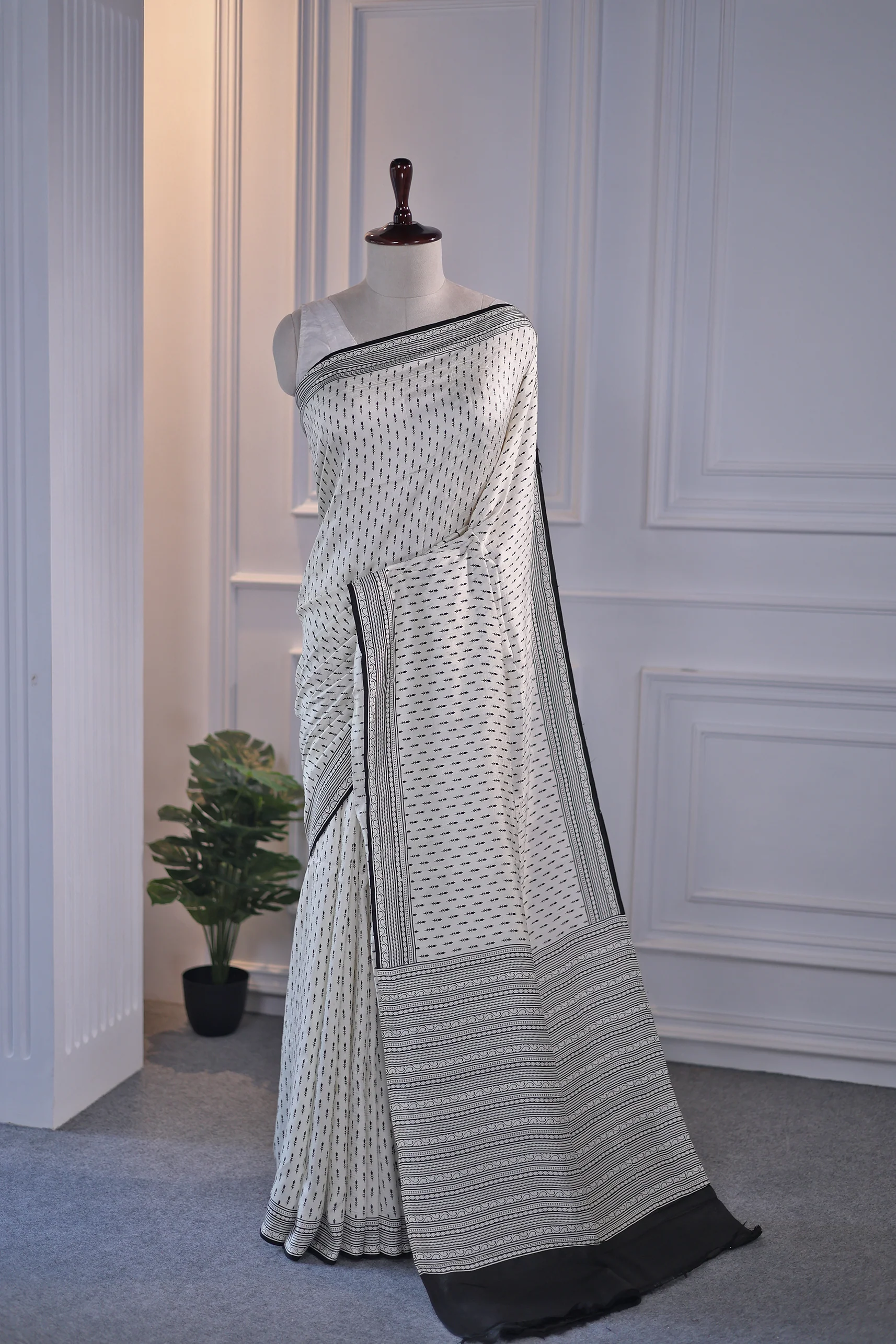
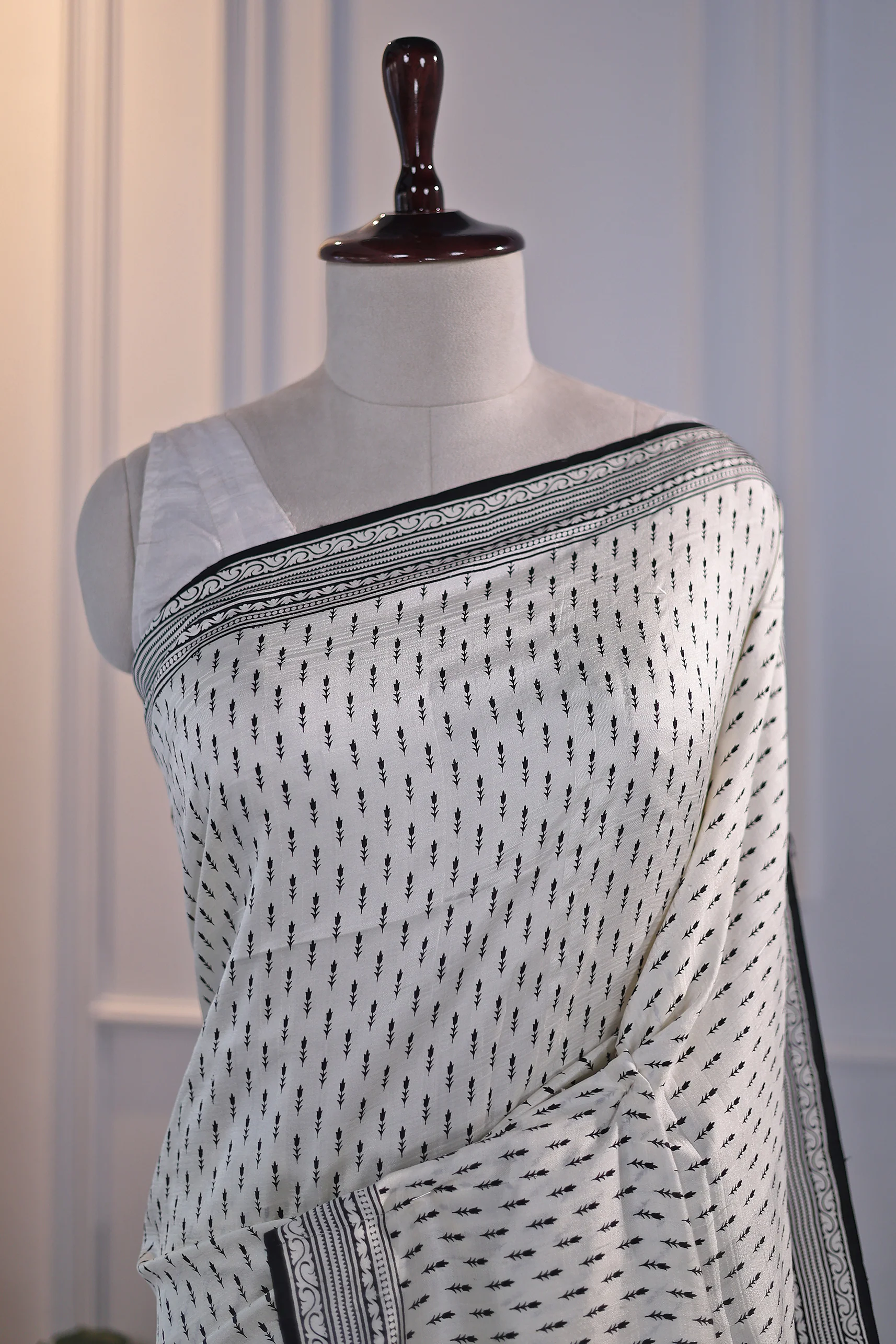
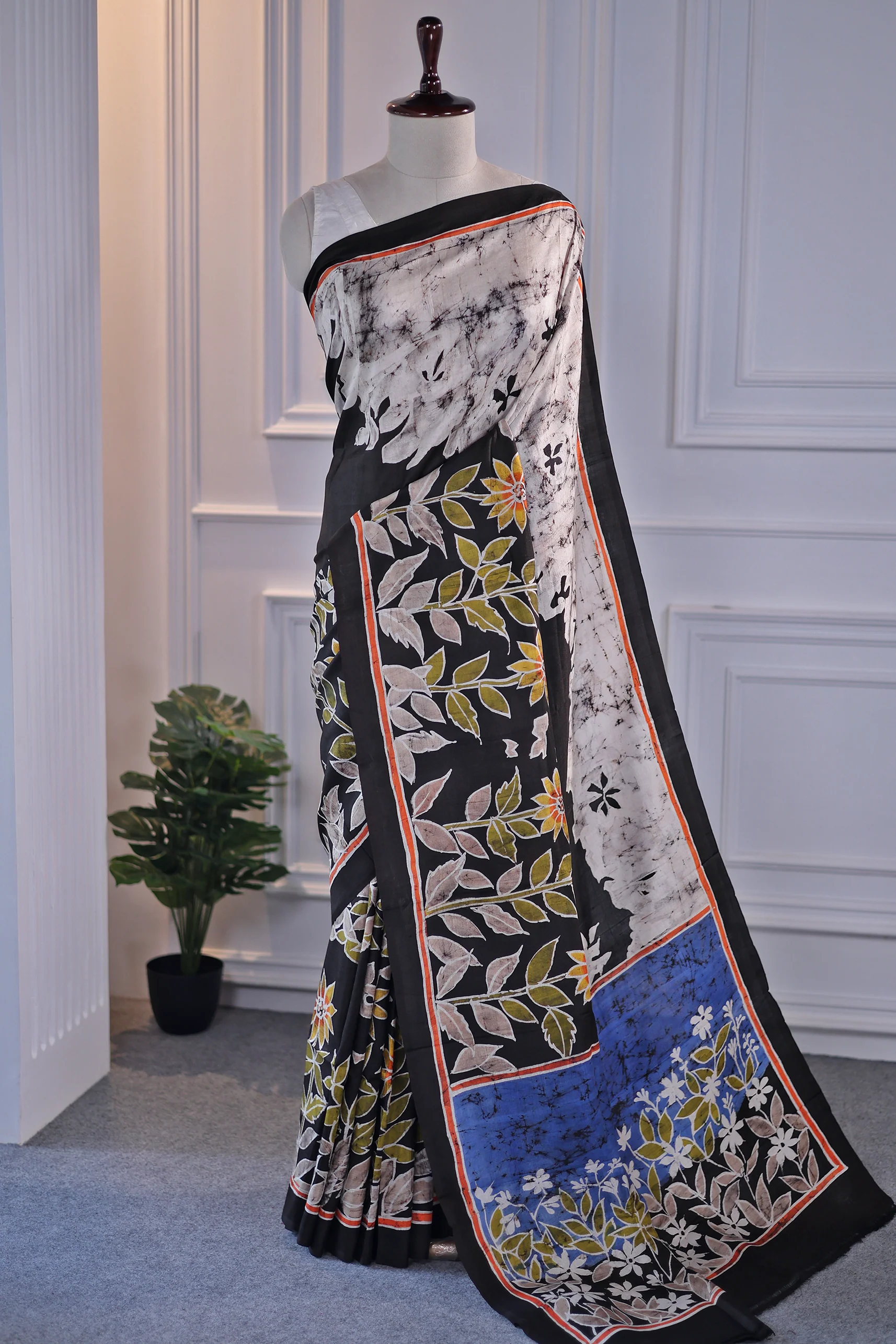
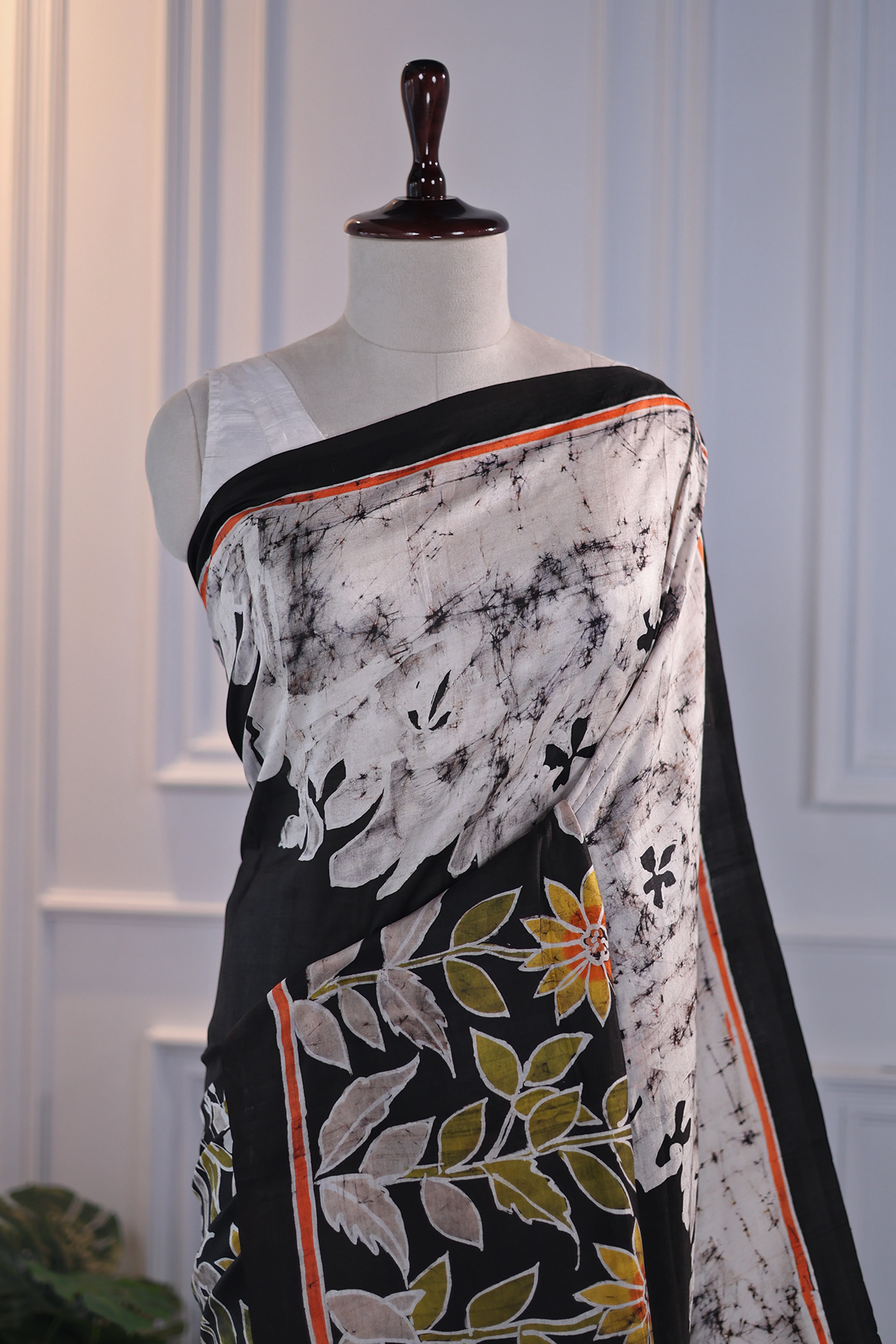
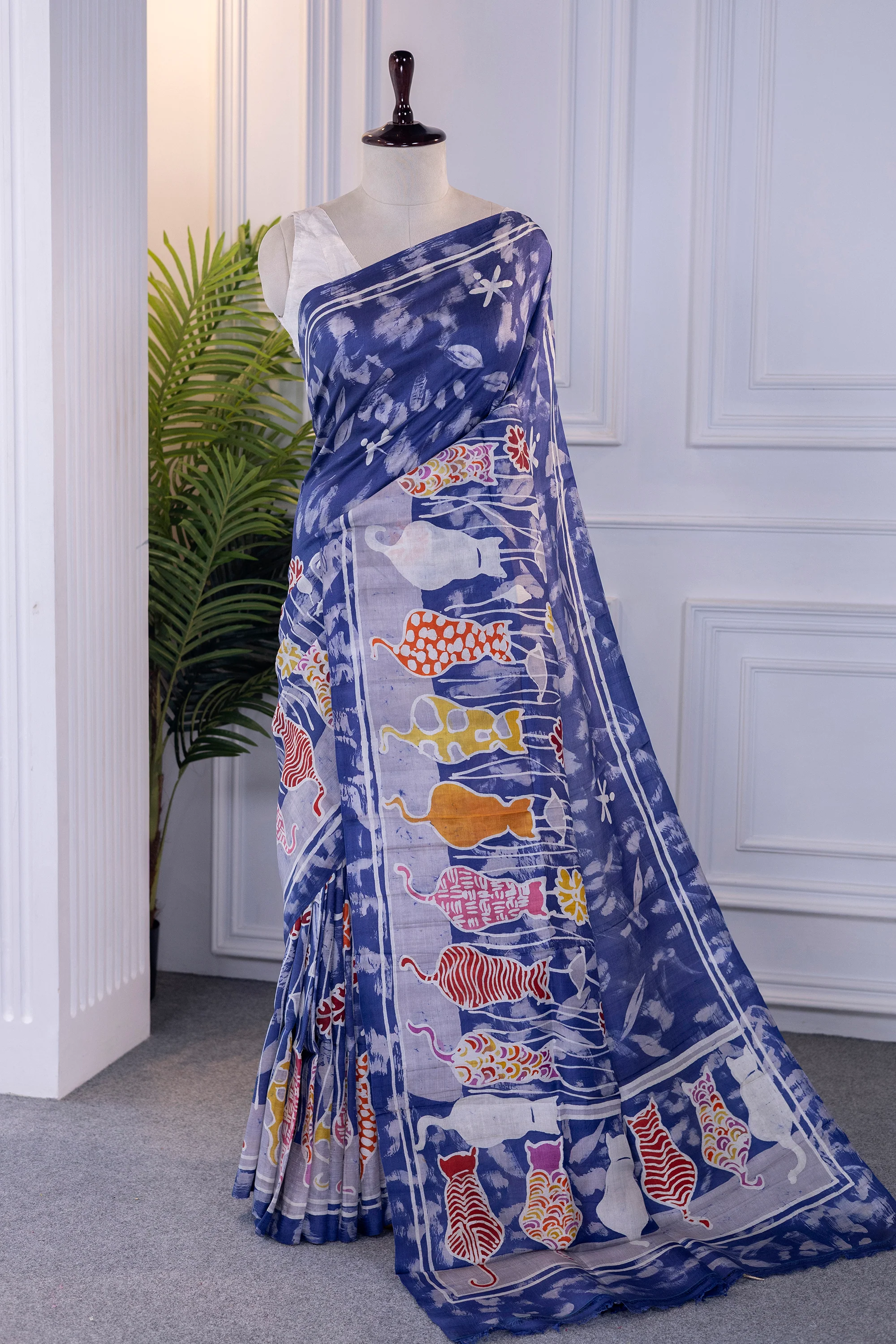
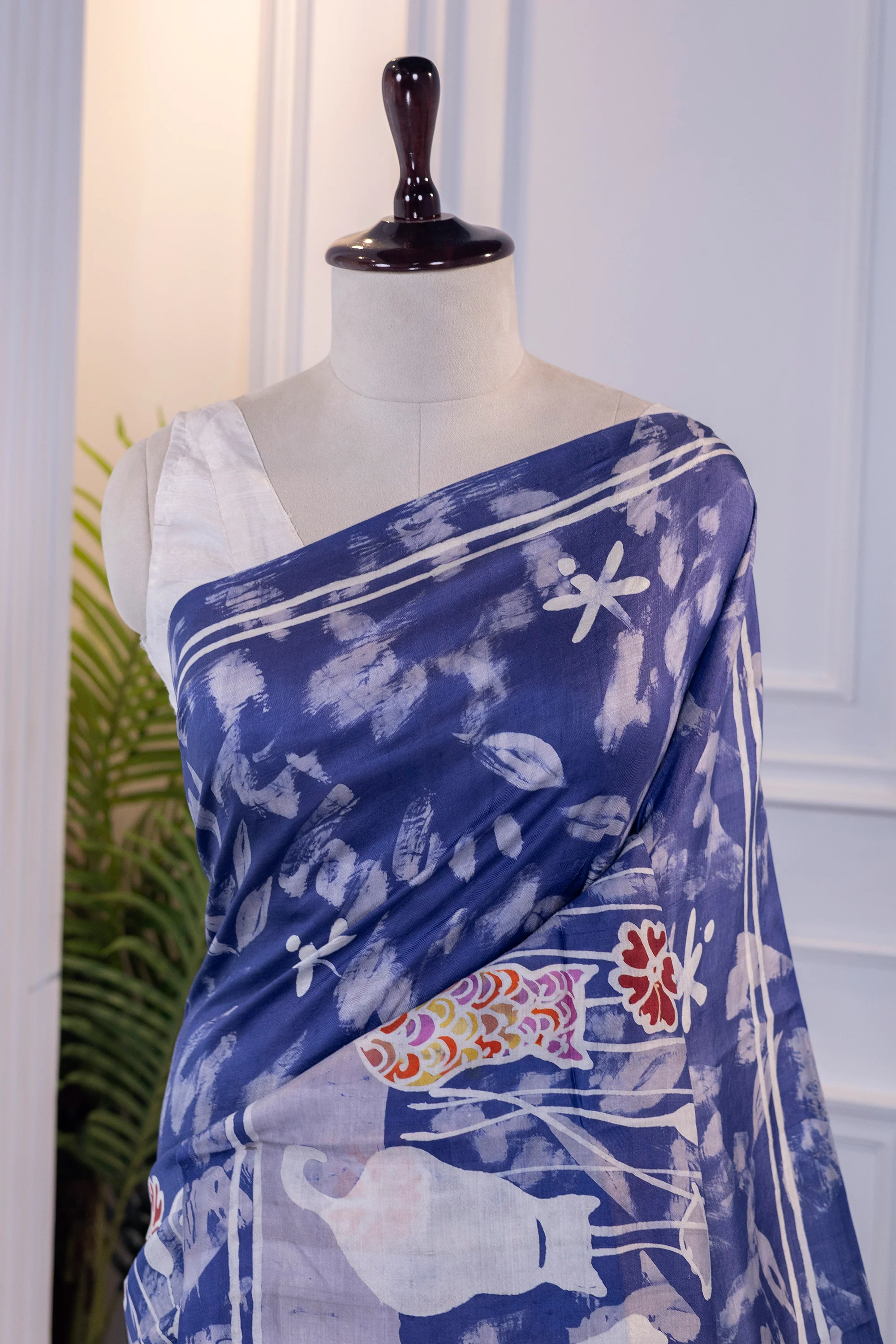
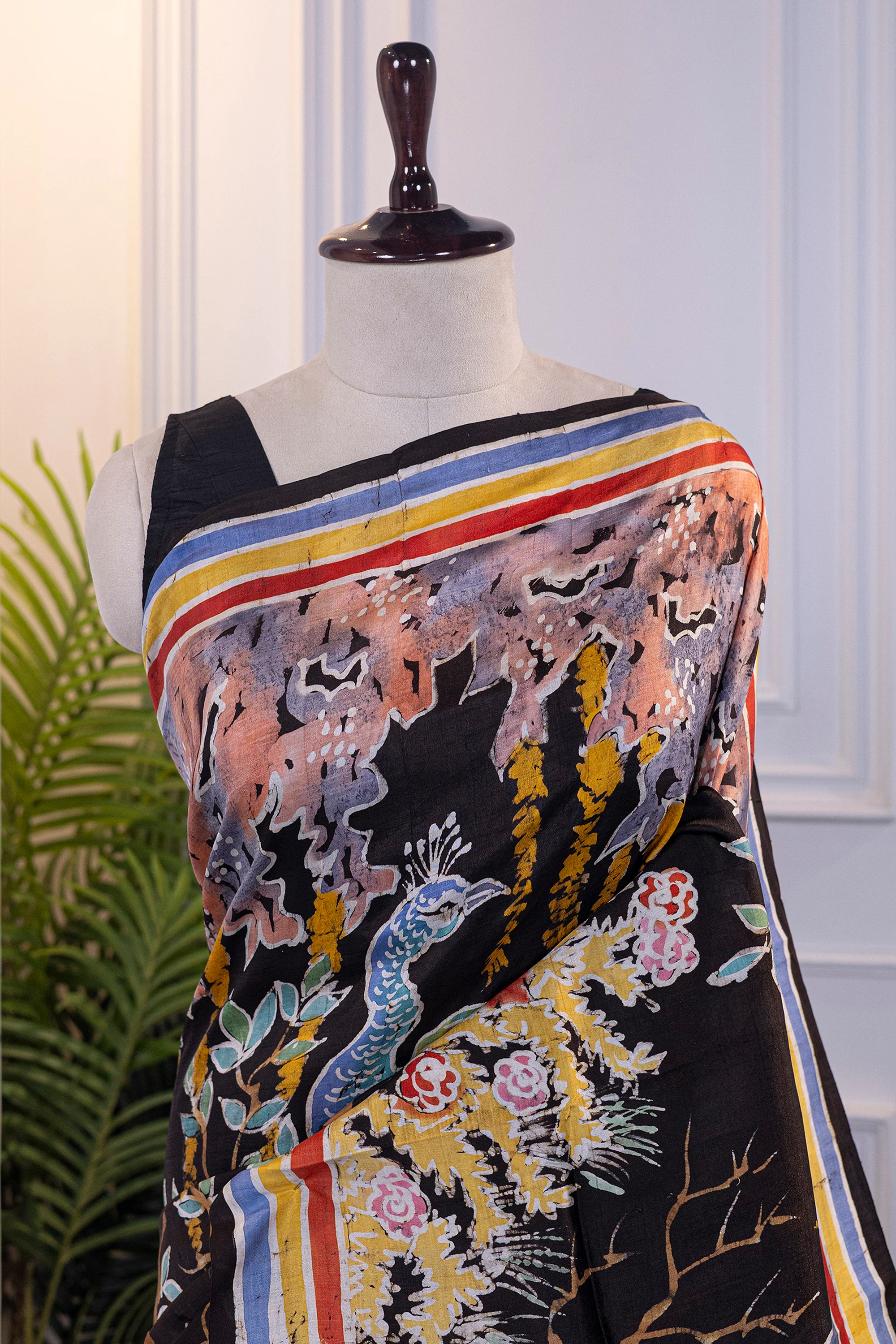
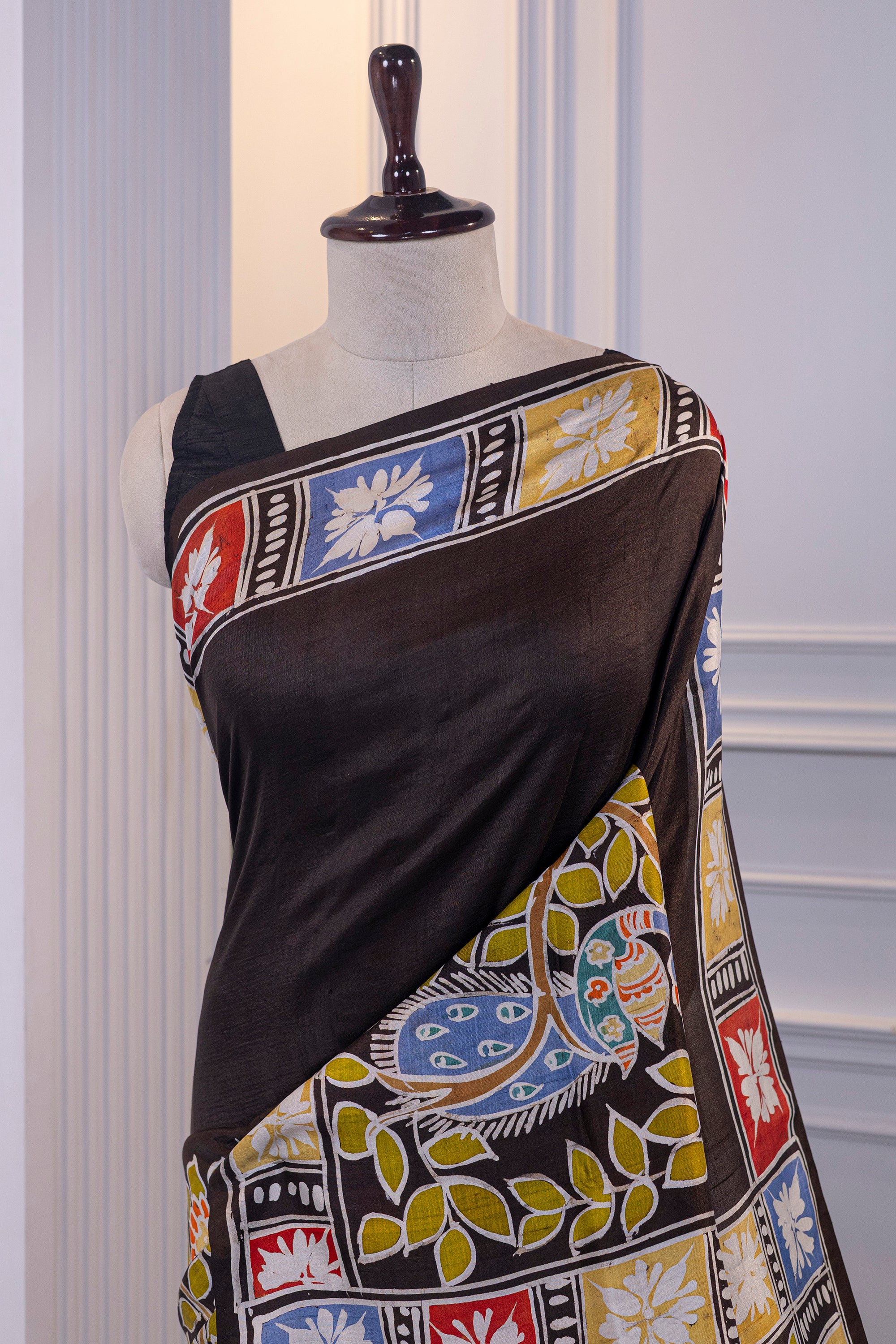
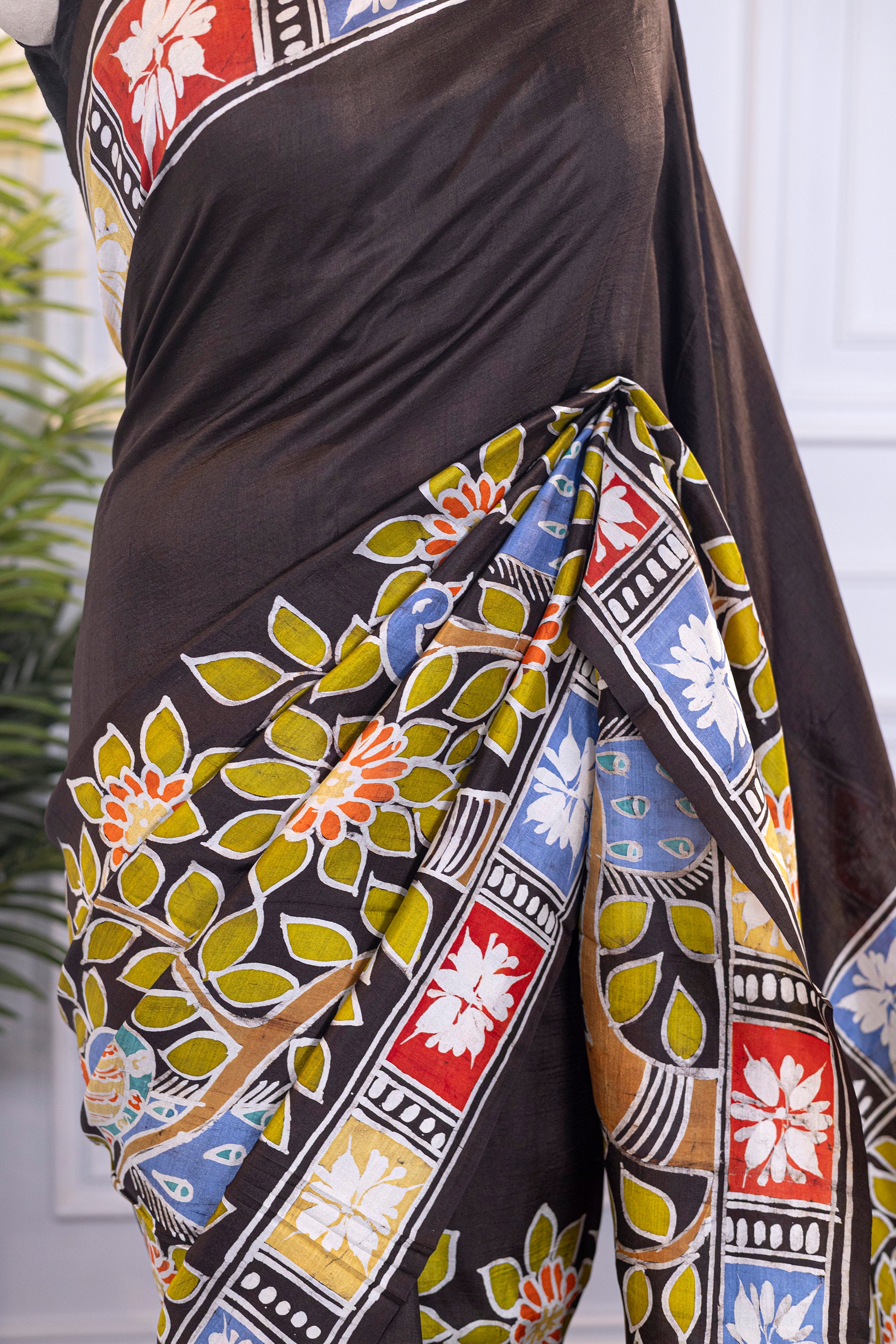
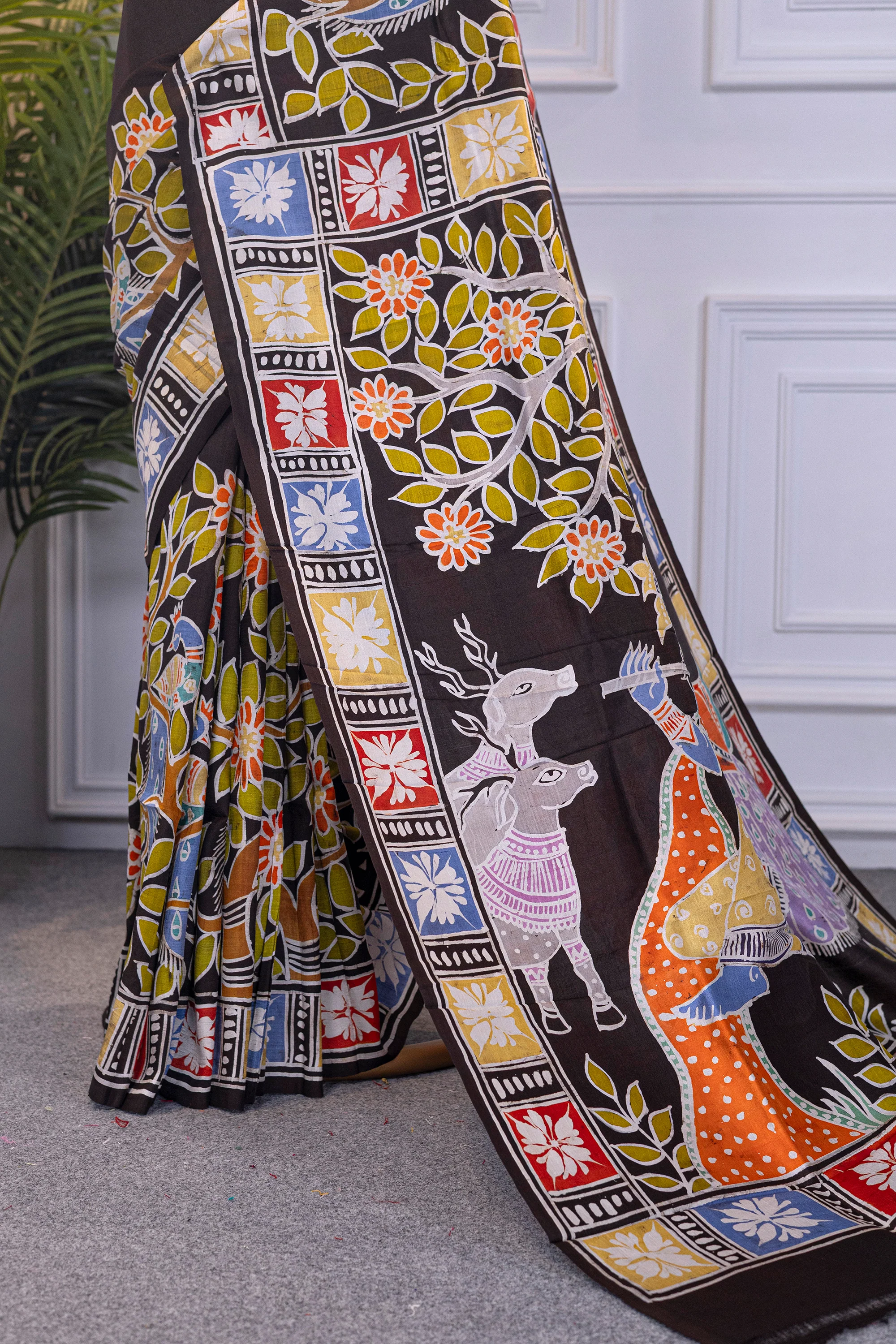
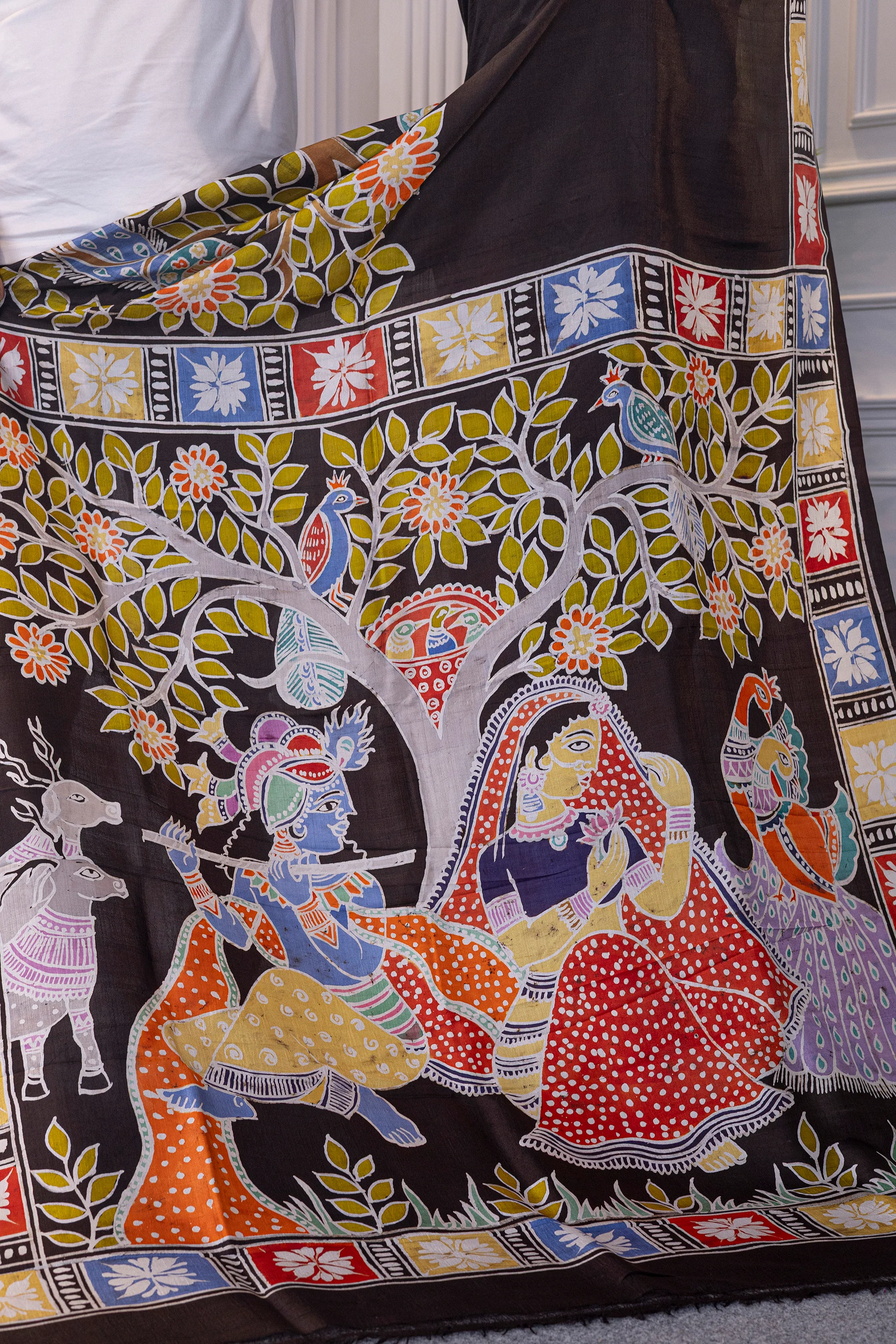
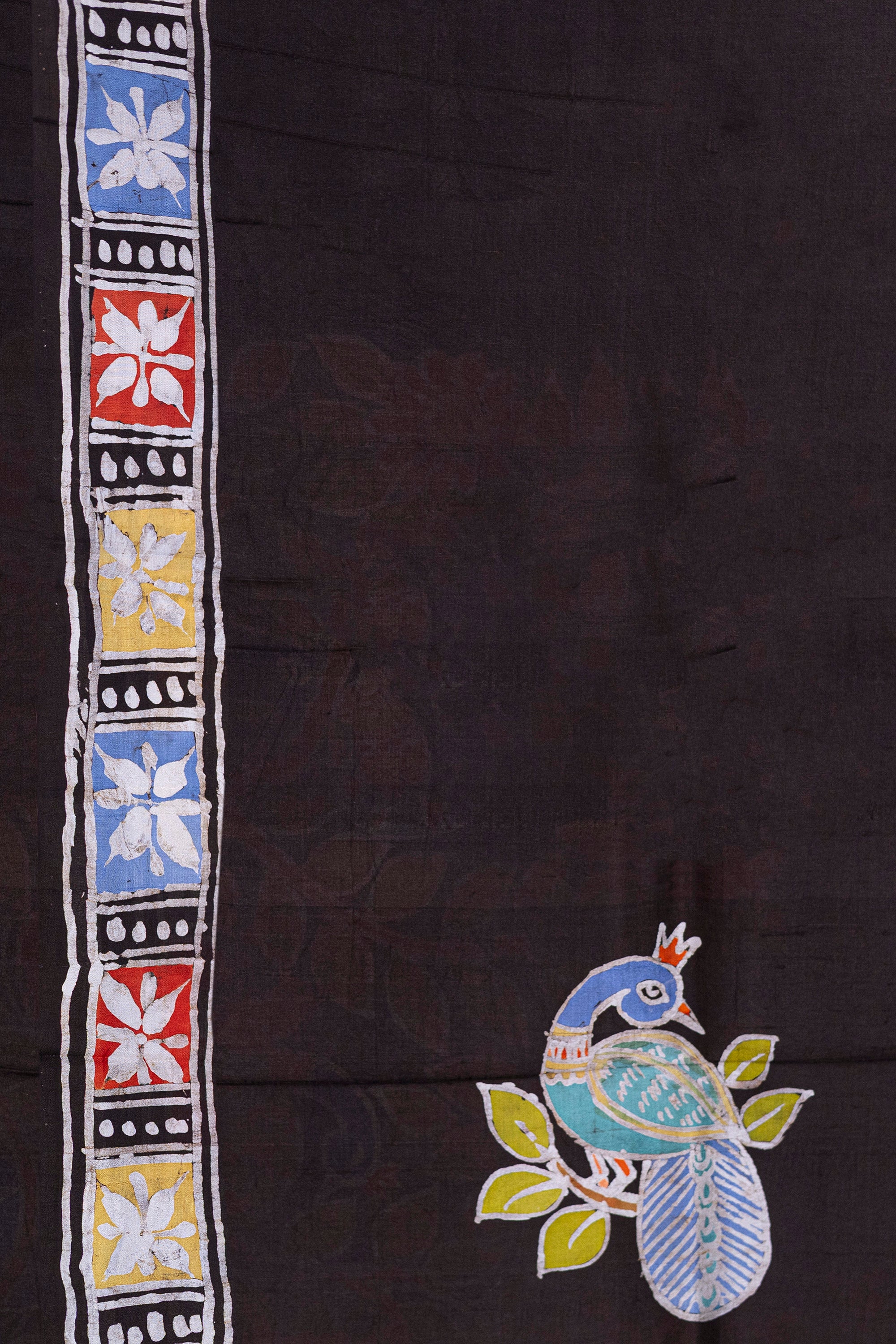
Patterns: Often hand-drawn and completely unique; includes vines, leaves, florals, figurines, or geometric elements.
-
Color Palette: Earthy tones (rust, indigo, mustard, maroon), pastels, or bold contrast shades.
-
Border & Pallu: May be plain or hand-dyed with denser Batik art on the pallu.
-
Uniqueness: Every piece is different due to the manual process.
🎉 Why Choose a Silk Batik Saree?
-
✅ Artisanal beauty – each saree is hand-dyed and full of character.
-
✅ Luxurious yet earthy – the softness of silk and rustic charm of Batik.
-
✅ Culturally rooted – preserves a centuries-old craft.
-
✅ Perfect for art lovers, festive wear, exhibitions, or cultural events.
📋 Quick Summary Table
| Feature | Details |
|---|---|
| Fabric | Pure silk (often mulberry or Tussar) |
| Dyeing Technique | Hand-done Batik (wax-resist dyeing) |
| Motifs | Florals, abstract, tribal, nature-inspired |
| Colors | Earthy, bold, or pastel tones |
| Texture | Smooth, lustrous, soft |
| Occasion | Cultural, festive, semi-formal, artistic gatherings |
| Specialty | Handcrafted, unique, heritage-rich |
Would you like a short product description or Instagram caption for showcasing a Silk Batik saree?
Details & Craftsmanship
Every detail has been carefully considered to bring you the perfect product.
Details & Craftsmanship
Every detail has been carefully considered to bring you the perfect product.
Details & Craftsmanship
Every detail has been carefully considered to bring you the perfect product.
Details & Craftsmanship
Every detail has been carefully considered to bring you the perfect product.
Details & Craftsmanship
Every detail has been carefully considered to bring you the perfect product.
Description
Here’s a detailed description of a Silk Batik Saree, combining artistic handcrafting with the elegance of pure silk:
🧵 Silk Batik Saree – Overview
A Silk Batik saree showcases the ancient art of Batik dyeing on the rich and lustrous base of pure silk. This combination results in a saree that is artistic, luxurious, and one-of-a-kind, making it perfect for those who love handcrafted heritage fashion.
🌾 Fabric: Pure Silk
-
Type: Usually mulberry or Tussar silk, depending on the region.
-
Texture: Smooth, soft, and naturally lustrous.
-
Feel: Drapes beautifully with a fluid fall and rich sheen.
-
Look: Elevates Batik prints with a glowing, elegant finish.
🎨 Technique: Batik Print
-
Origin: Batik is a wax-resist dyeing technique, believed to have originated in Indonesia but widely practiced in India (especially in West Bengal, Odisha, and Madhya Pradesh).
-
Process:
-
Artisans apply hot wax to the fabric using brushes or styluses to create designs.
-
The fabric is dyed, and the wax prevents color from penetrating those areas.
-
Wax is removed by boiling, leaving behind unique, crackled patterns.
-
-
Designs: Abstract patterns, florals, tribal art, nature-inspired themes, or traditional motifs.
✨ Design Features
-
Patterns: Often hand-drawn and completely unique; includes vines, leaves, florals, figurines, or geometric elements.
-
Color Palette: Earthy tones (rust, indigo, mustard, maroon), pastels, or bold contrast shades.
-
Border & Pallu: May be plain or hand-dyed with denser Batik art on the pallu.
-
Uniqueness: Every piece is different due to the manual process.
🎉 Why Choose a Silk Batik Saree?
-
✅ Artisanal beauty – each saree is hand-dyed and full of character.
-
✅ Luxurious yet earthy – the softness of silk and rustic charm of Batik.
-
✅ Culturally rooted – preserves a centuries-old craft.
-
✅ Perfect for art lovers, festive wear, exhibitions, or cultural events.
📋 Quick Summary Table
| Feature | Details |
|---|---|
| Fabric | Pure silk (often mulberry or Tussar) |
| Dyeing Technique | Hand-done Batik (wax-resist dyeing) |
| Motifs | Florals, abstract, tribal, nature-inspired |
| Colors | Earthy, bold, or pastel tones |
| Texture | Smooth, lustrous, soft |
| Occasion | Cultural, festive, semi-formal, artistic gatherings |
| Specialty | Handcrafted, unique, heritage-rich |
Would you like a short product description or Instagram caption for showcasing a Silk Batik saree?