The Story
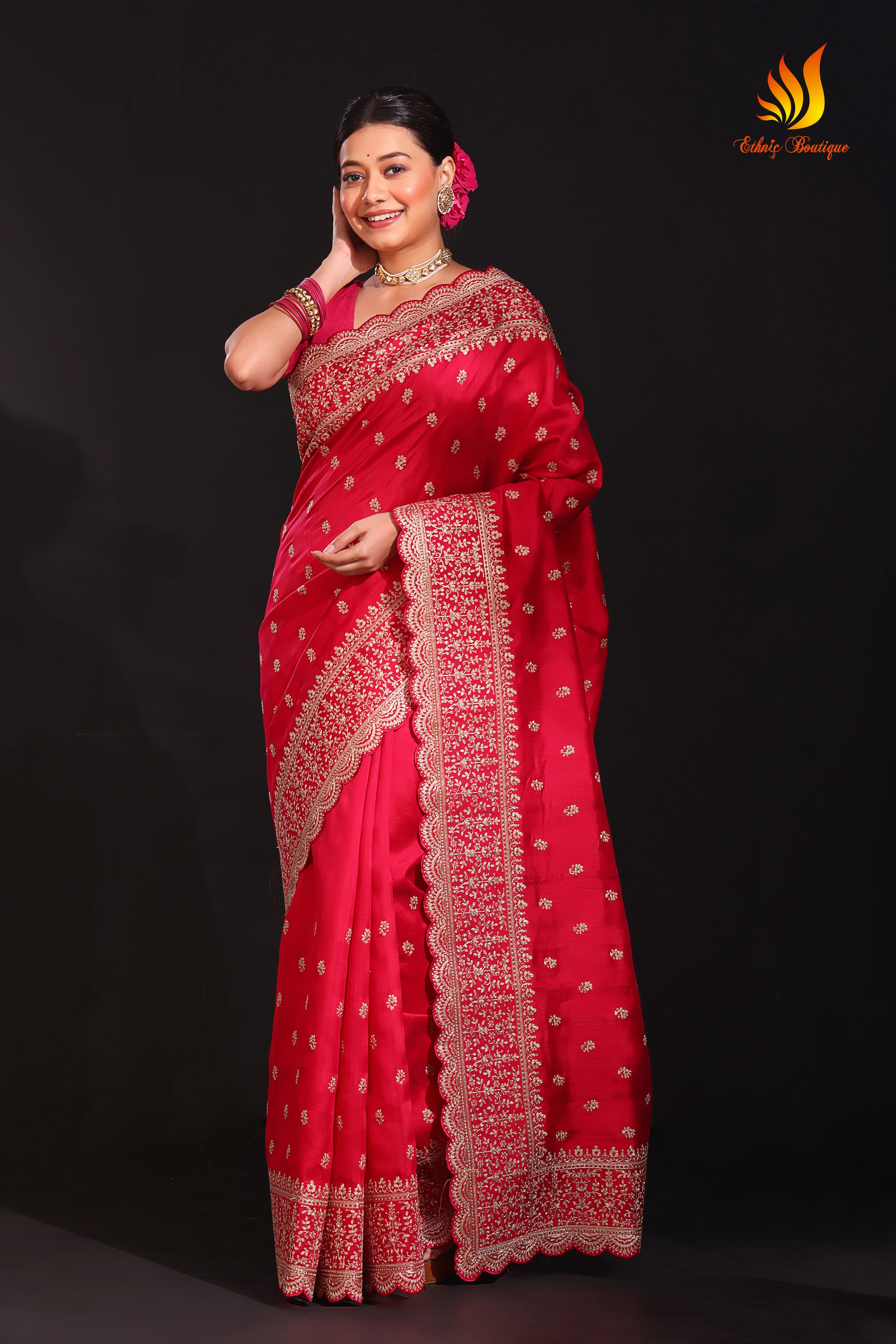
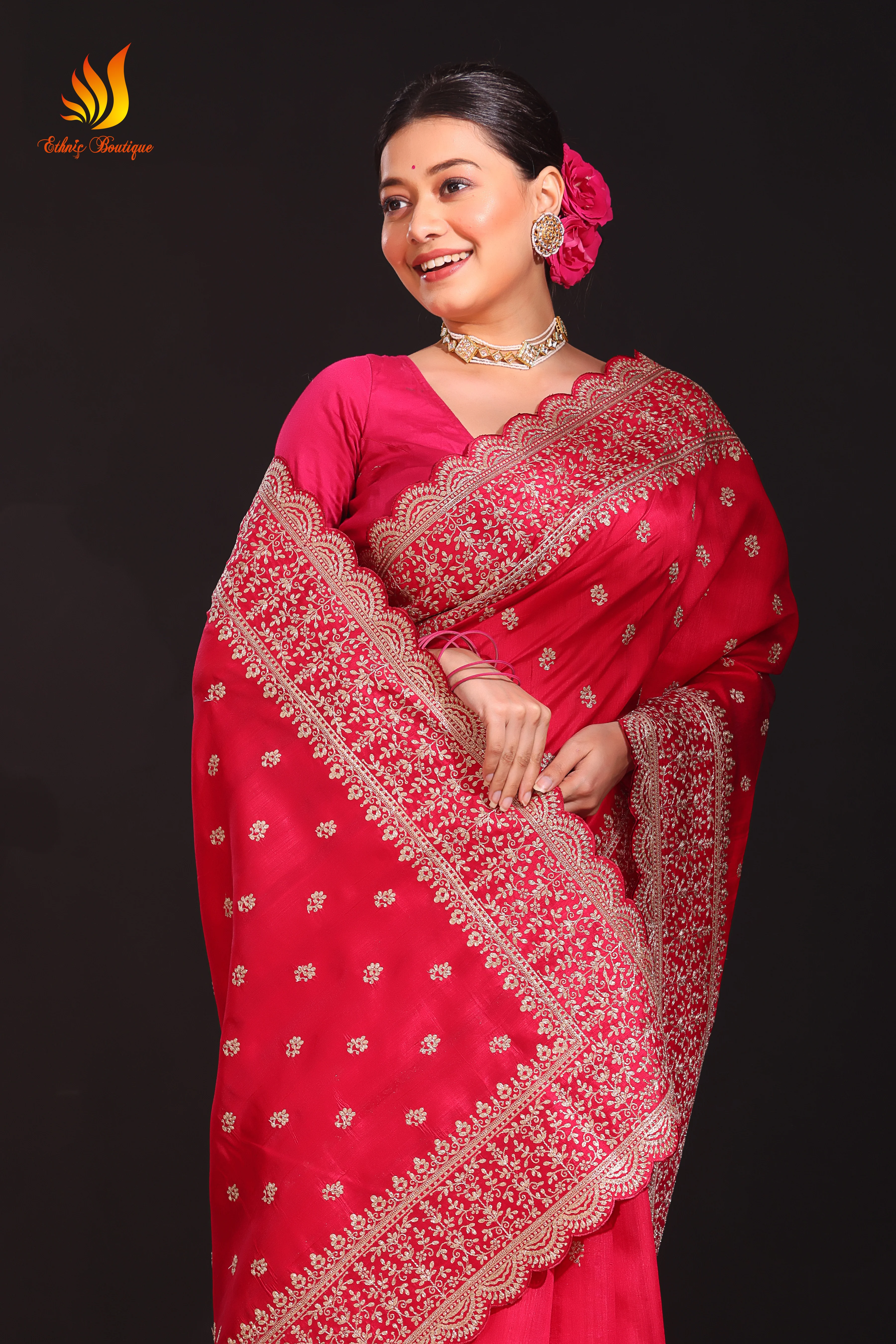
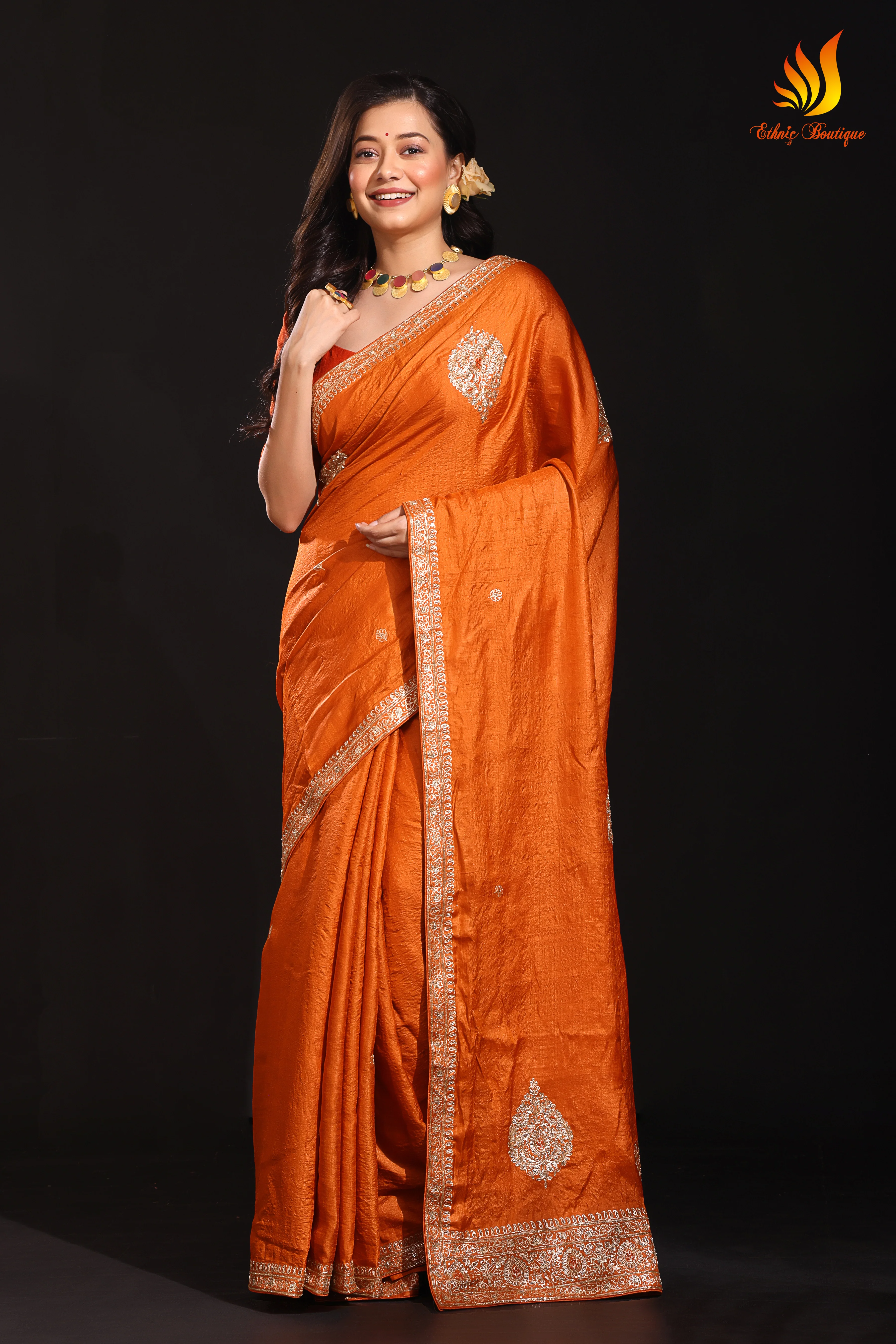
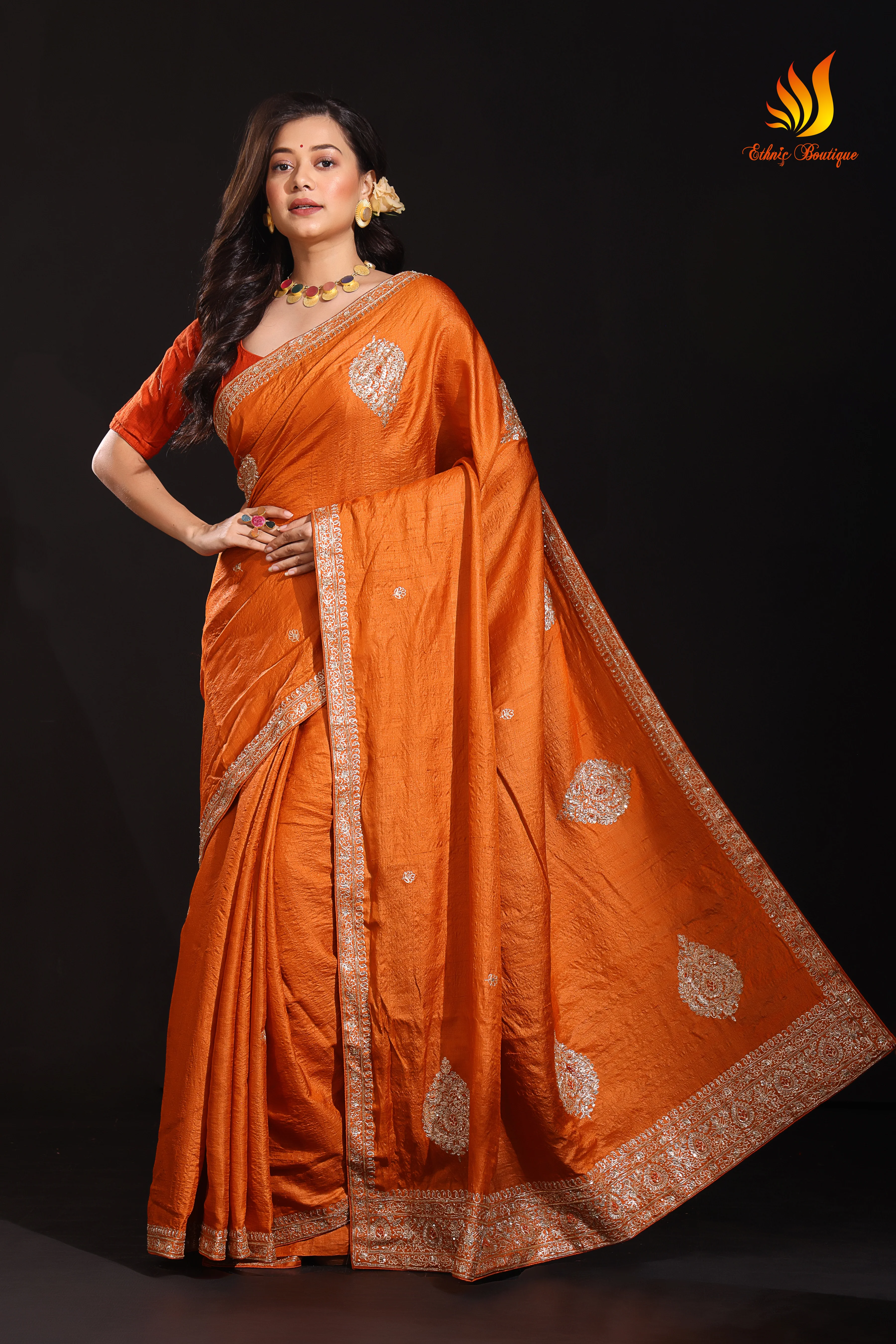
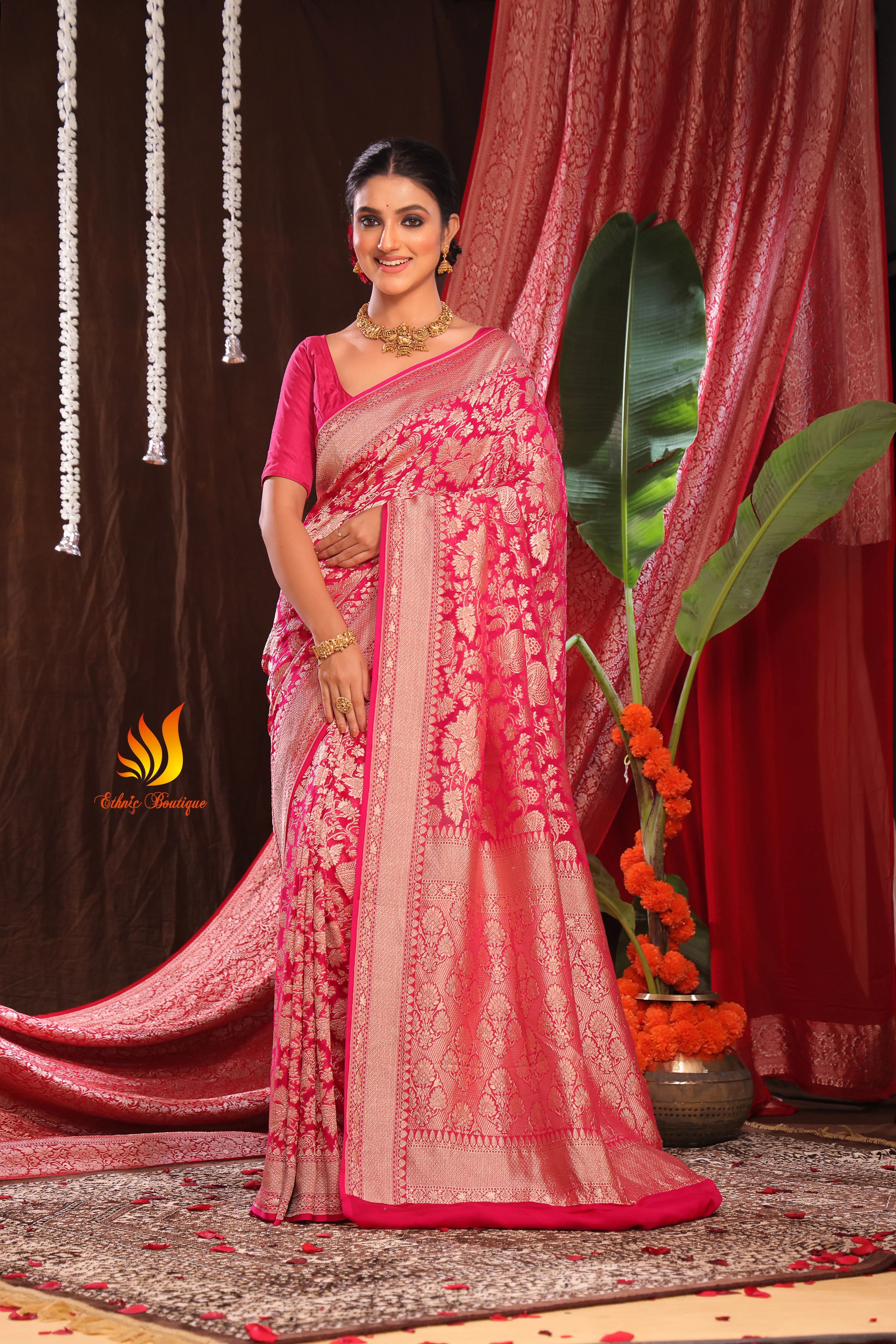
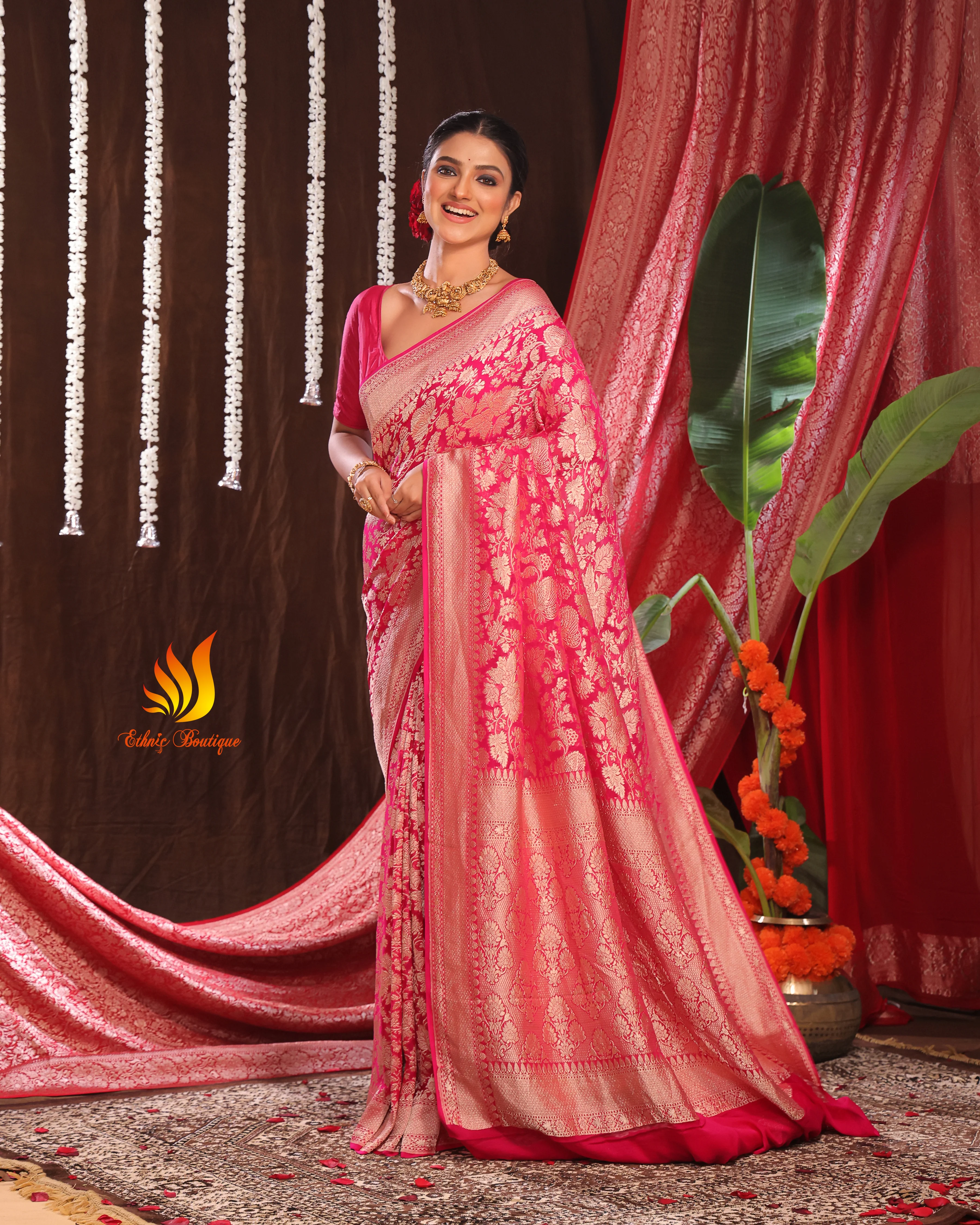
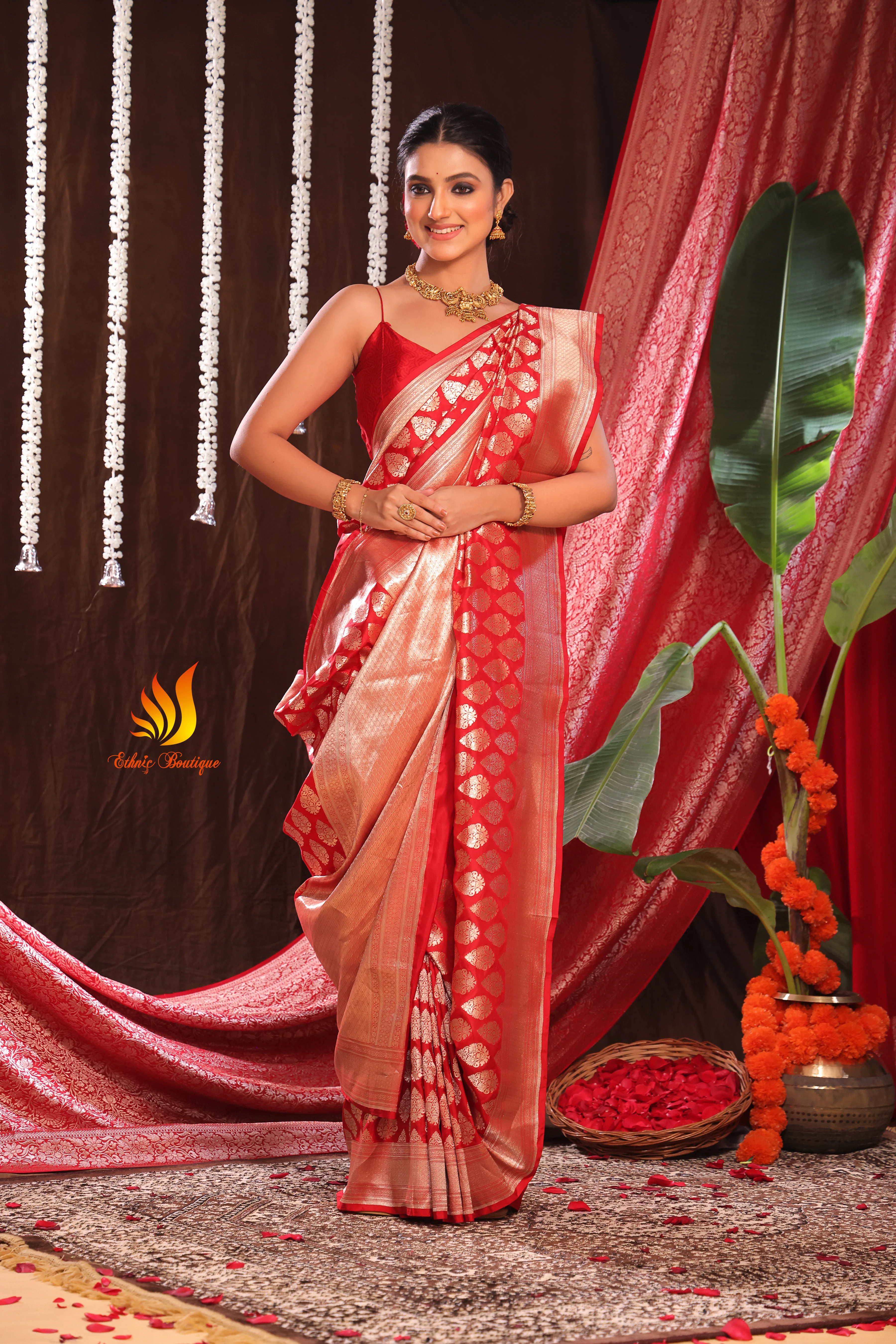
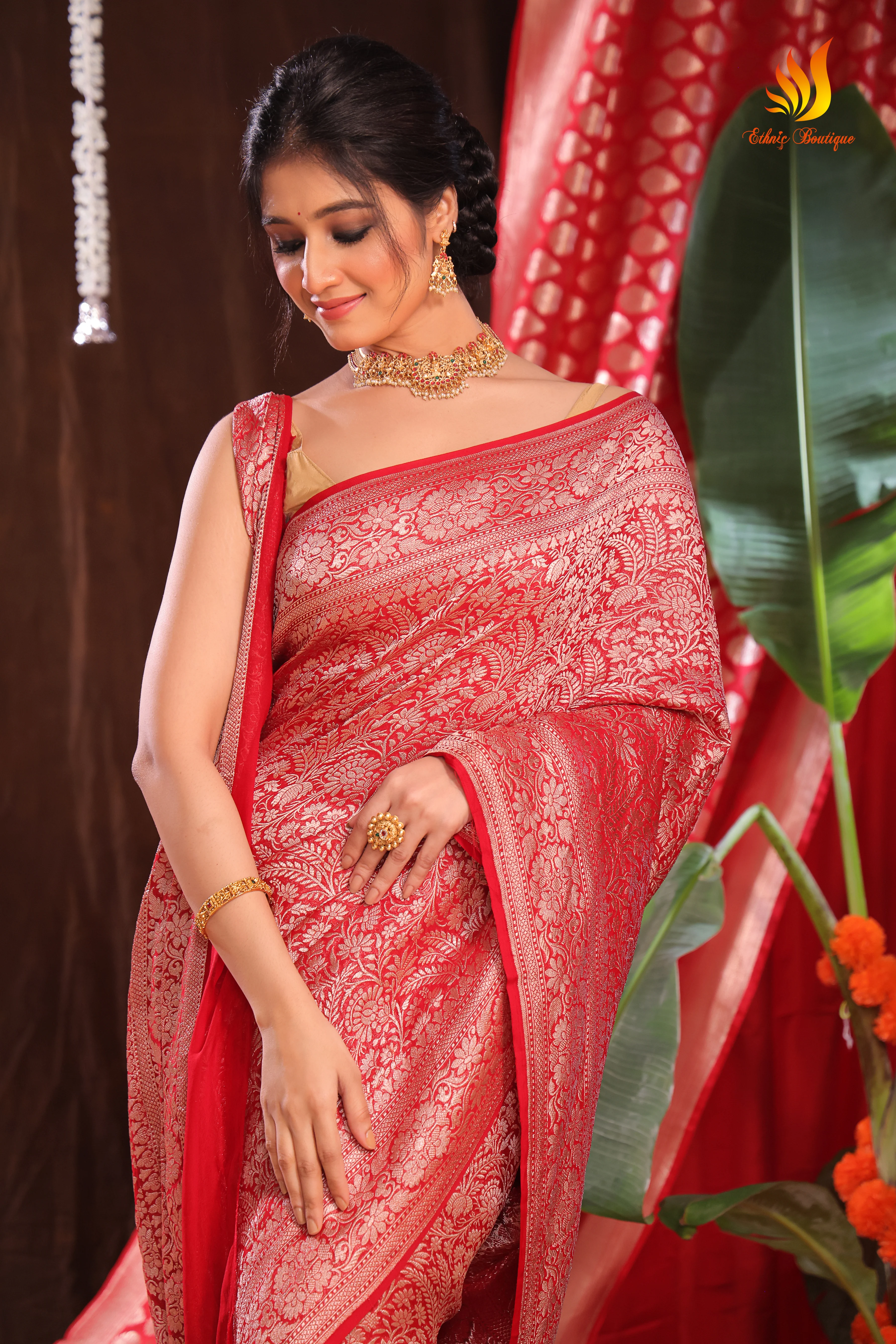
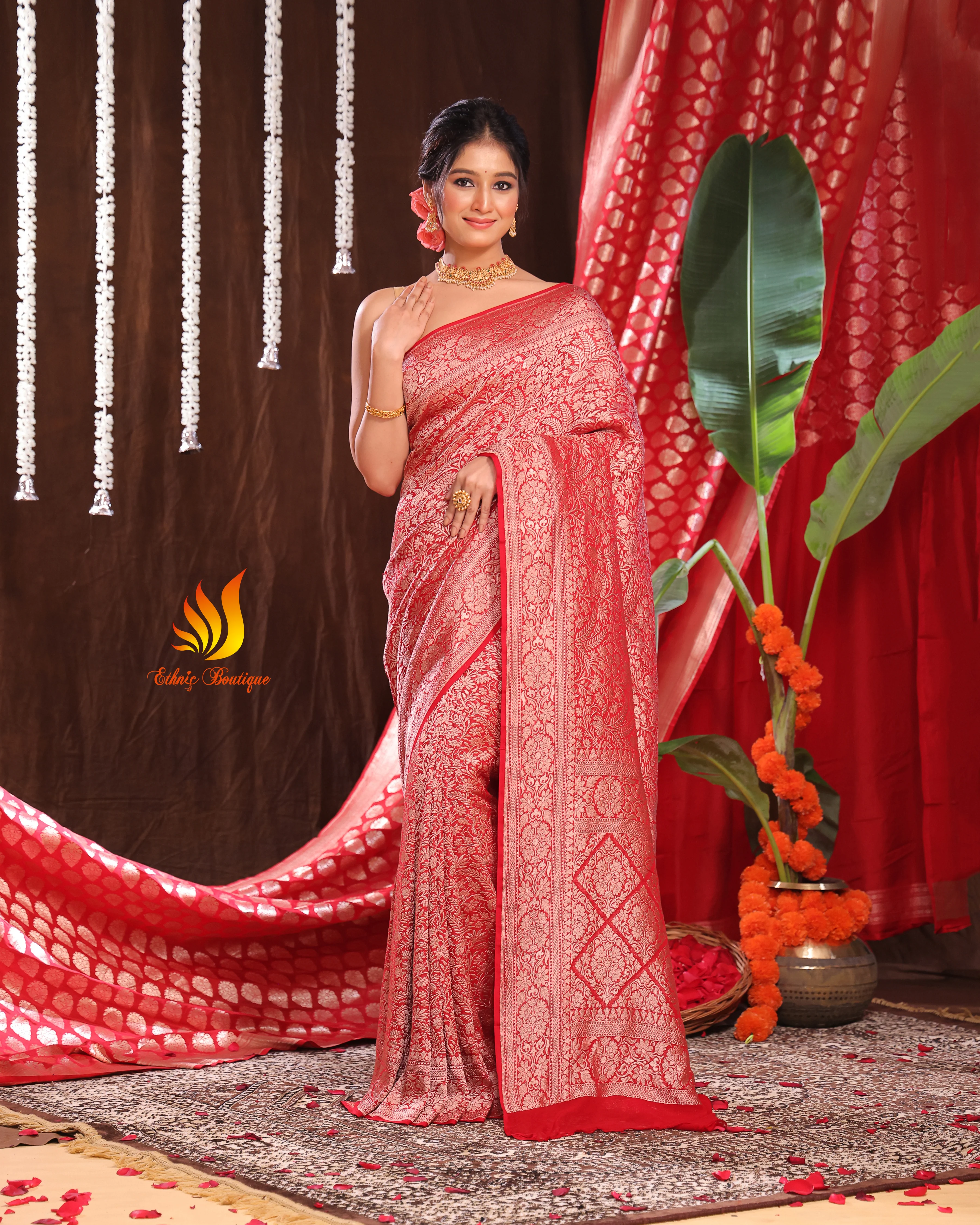
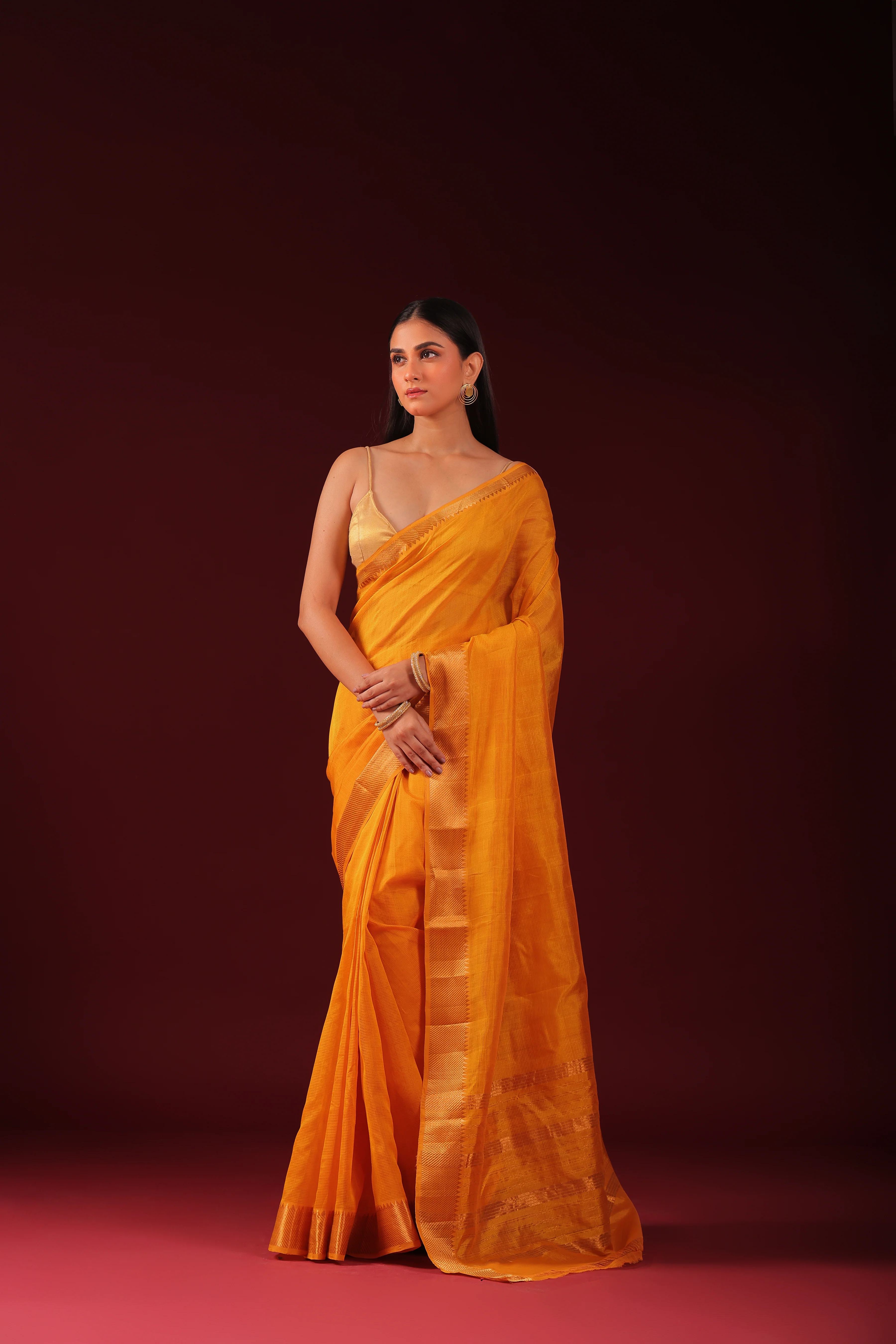
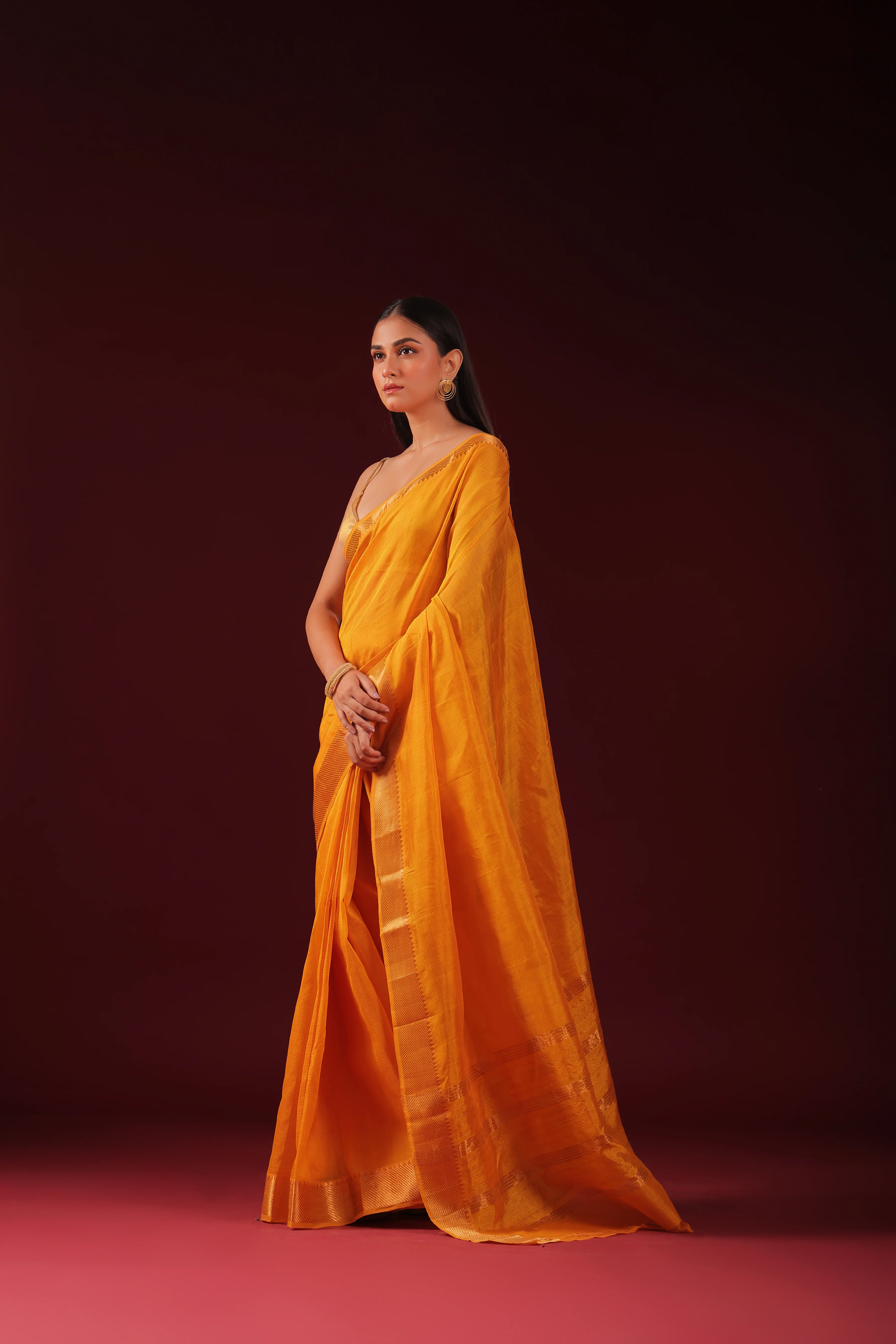
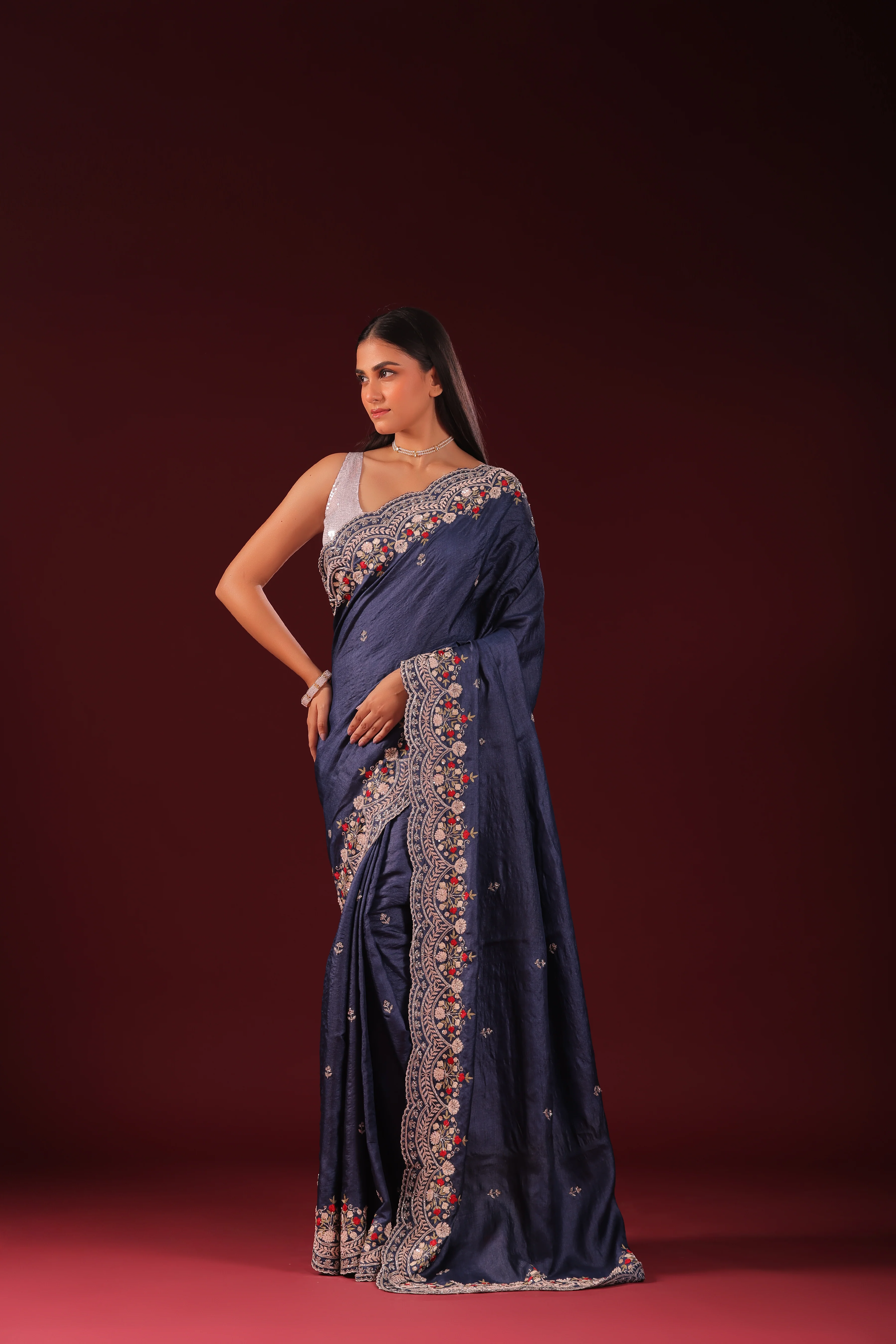
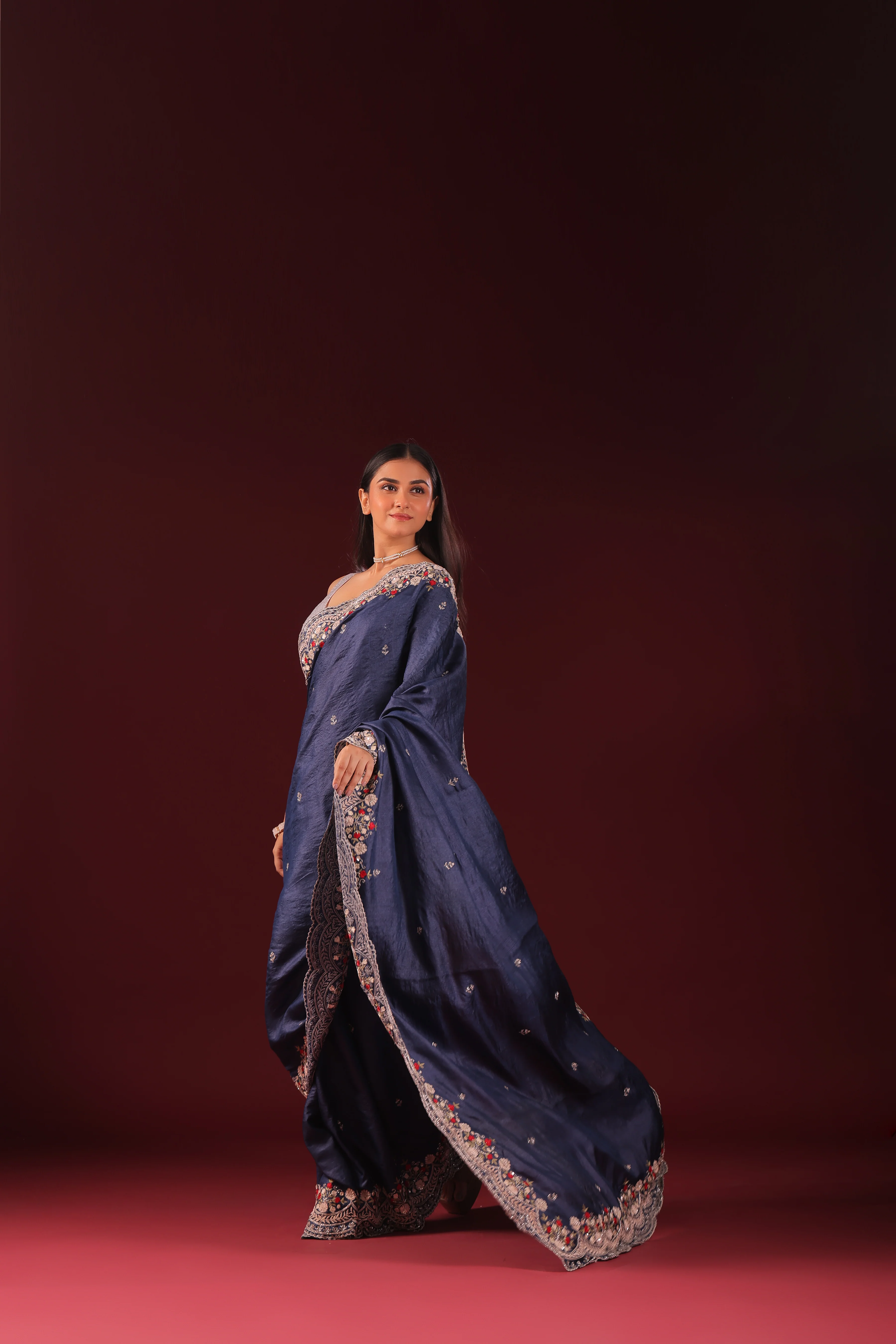
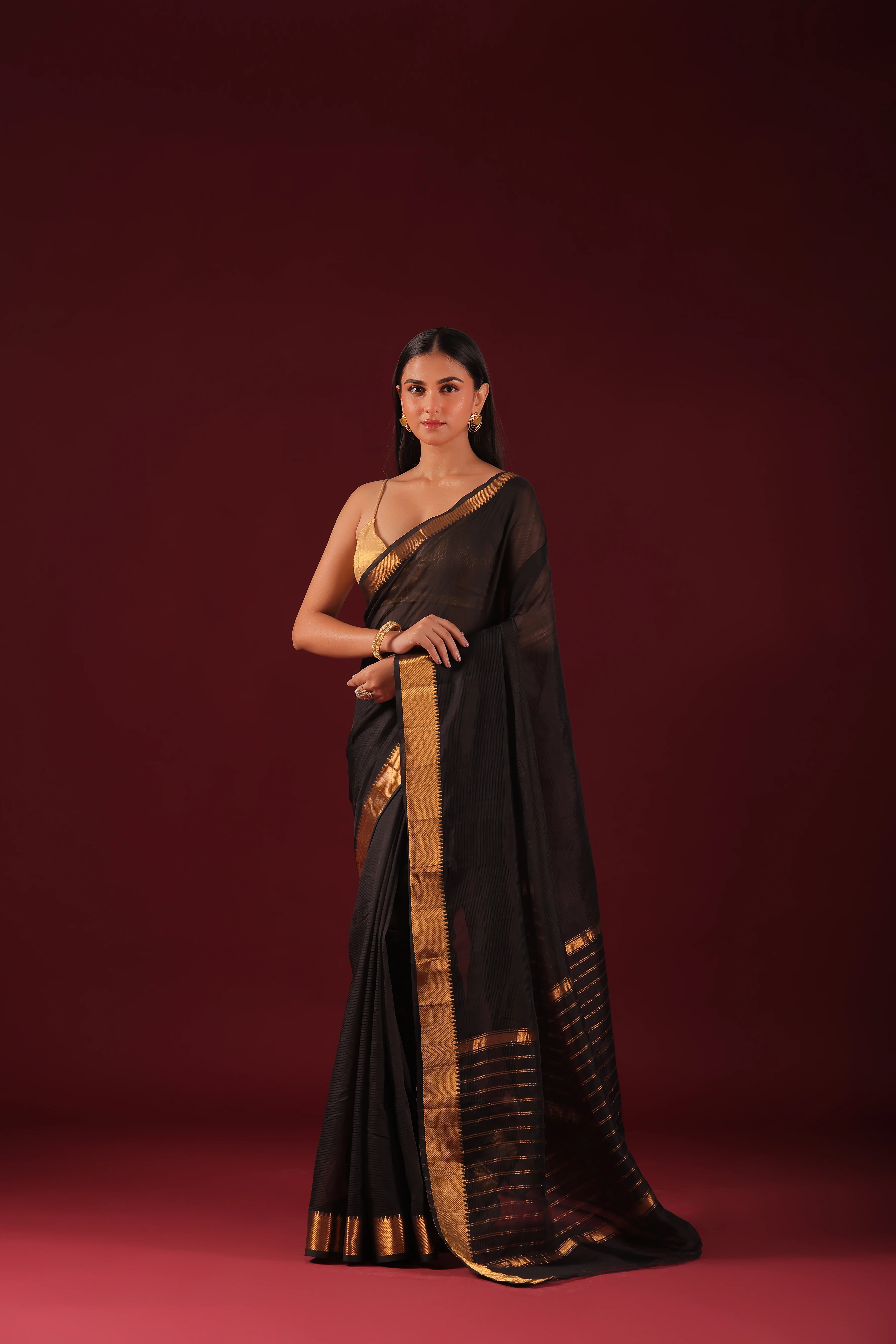
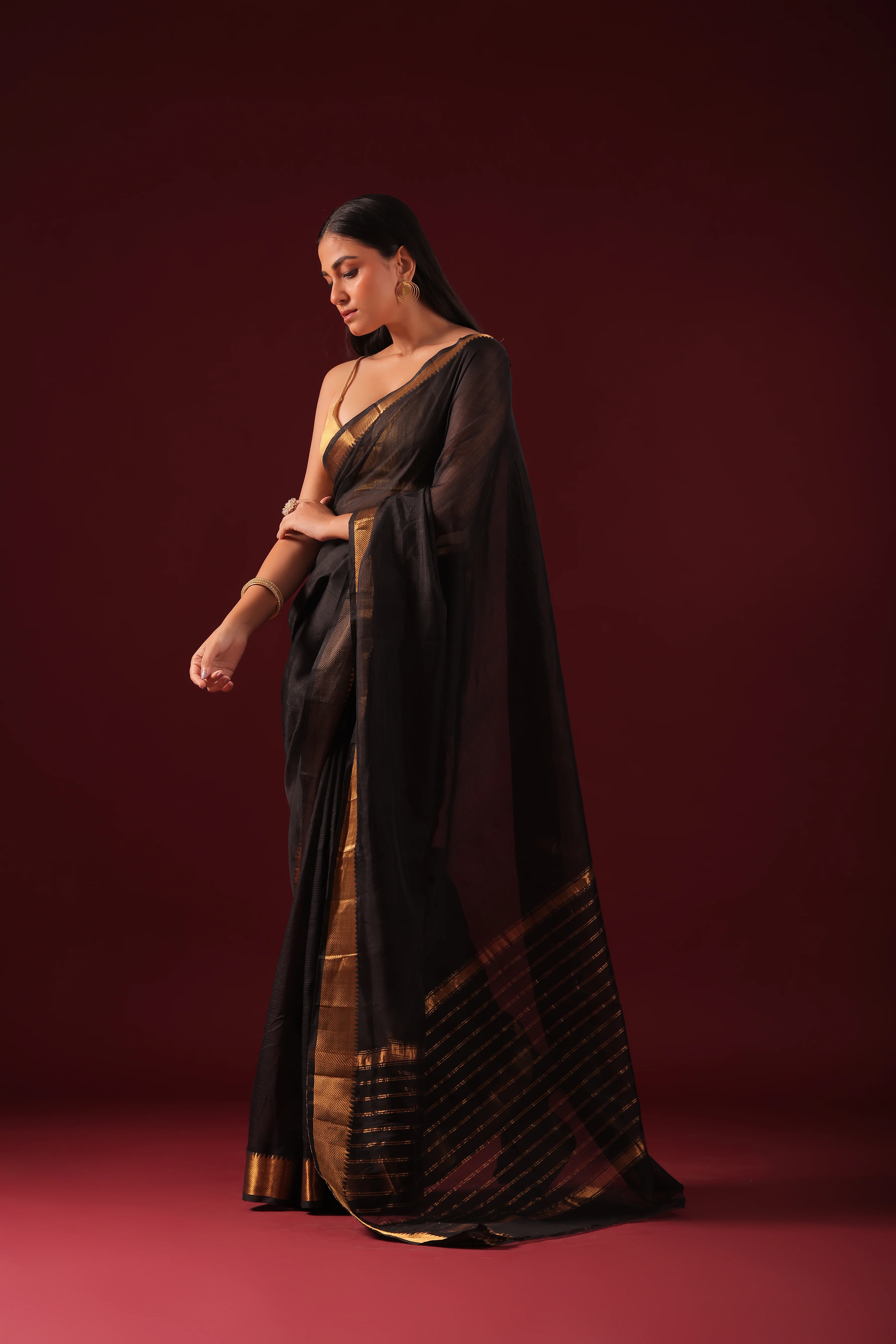
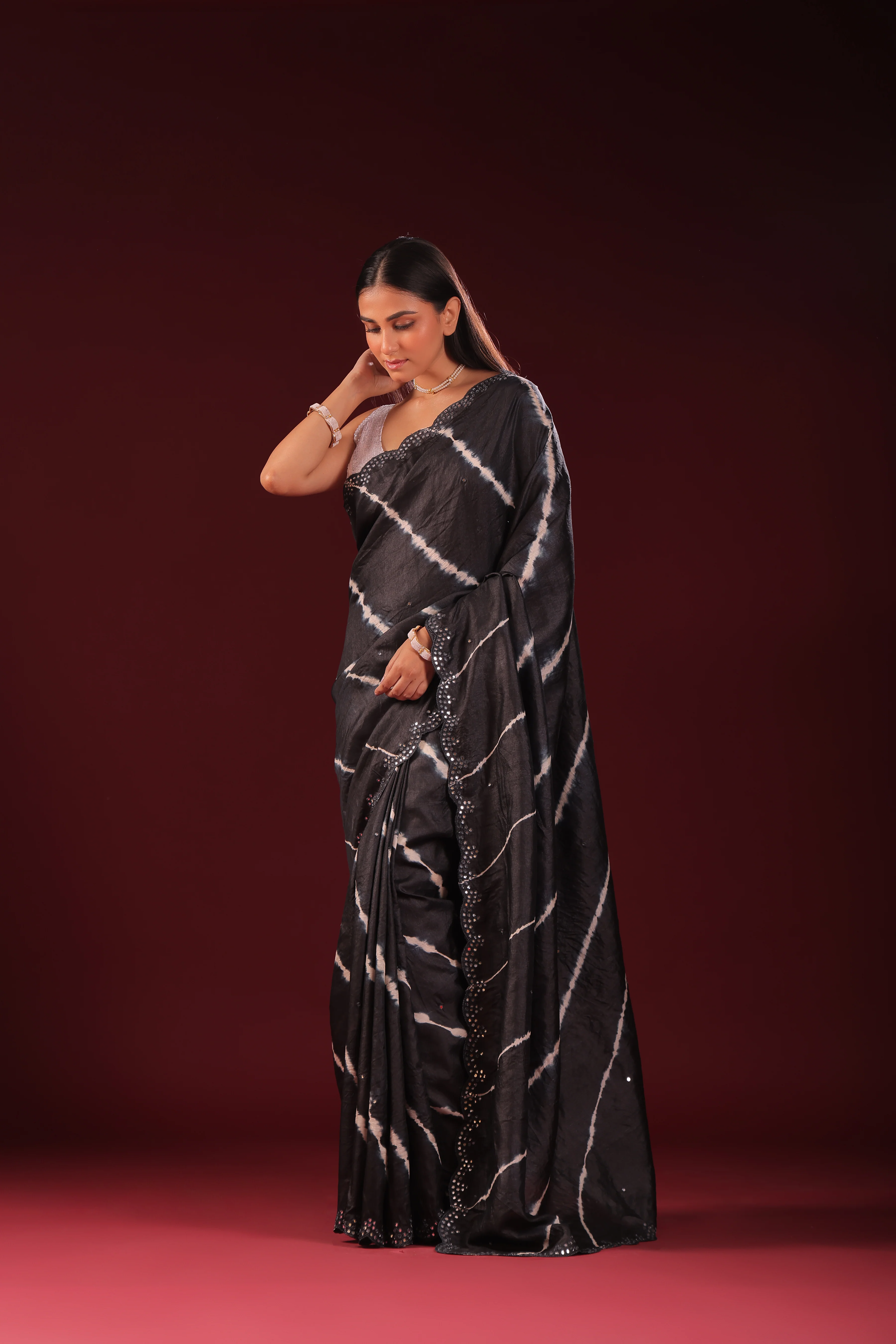
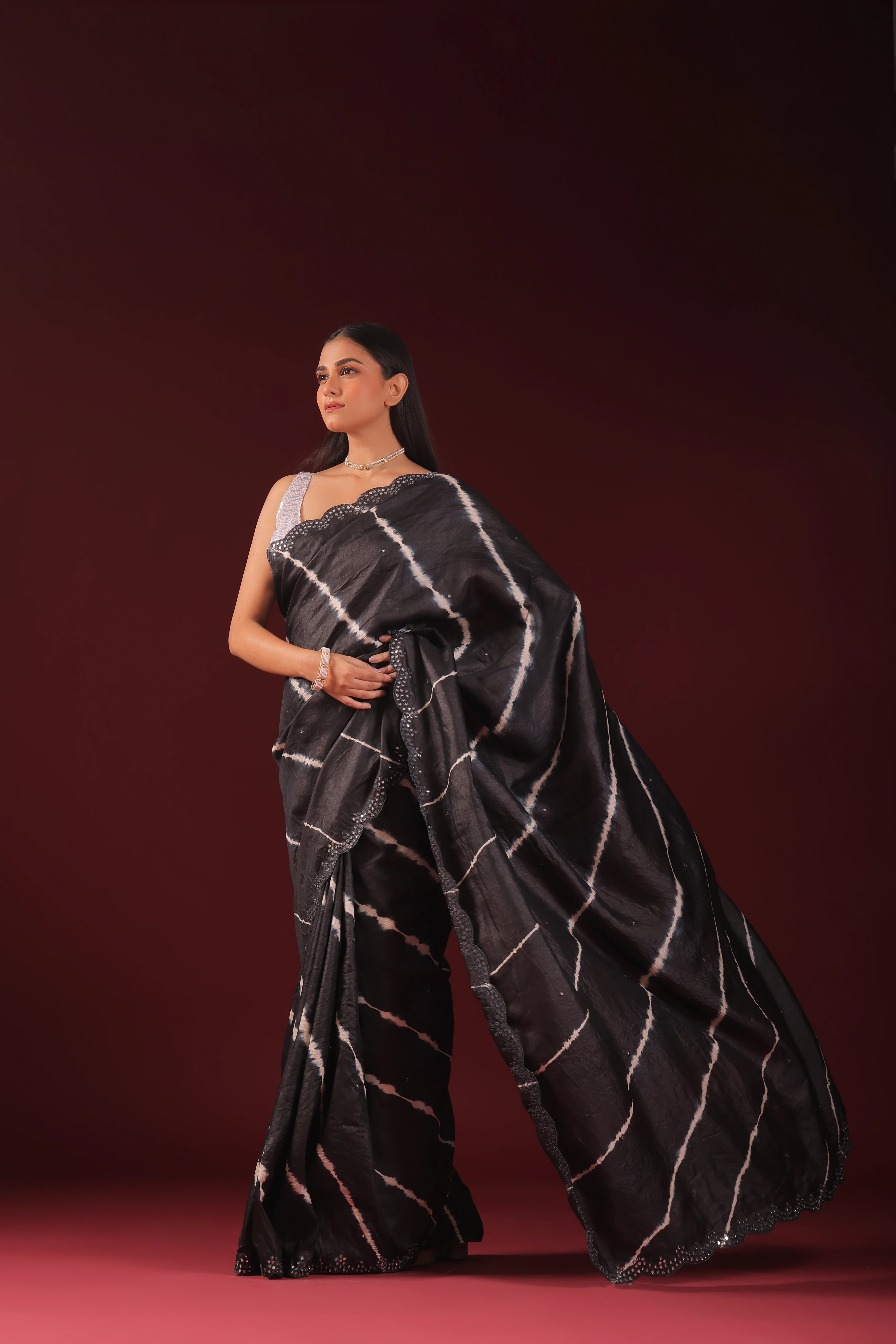
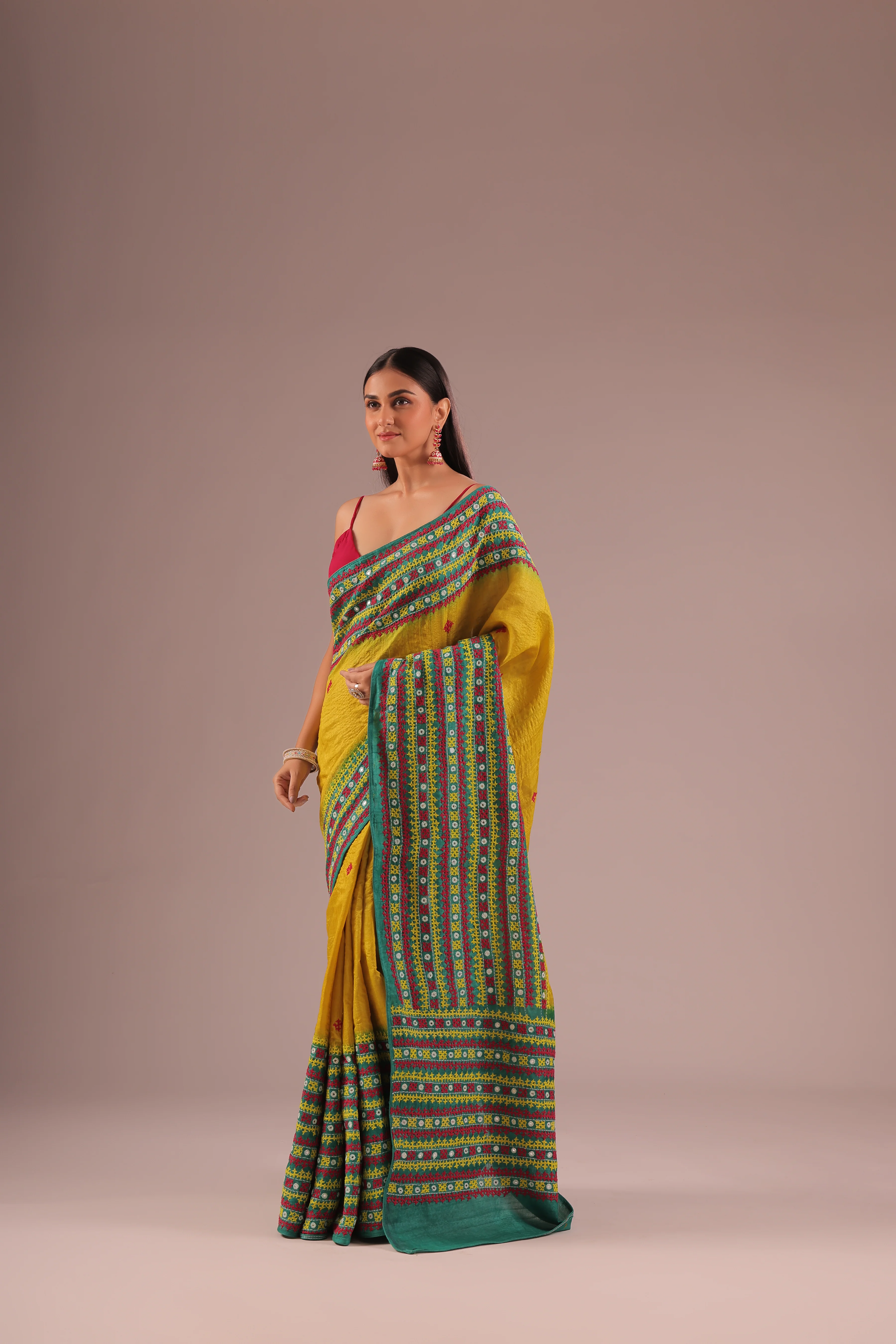
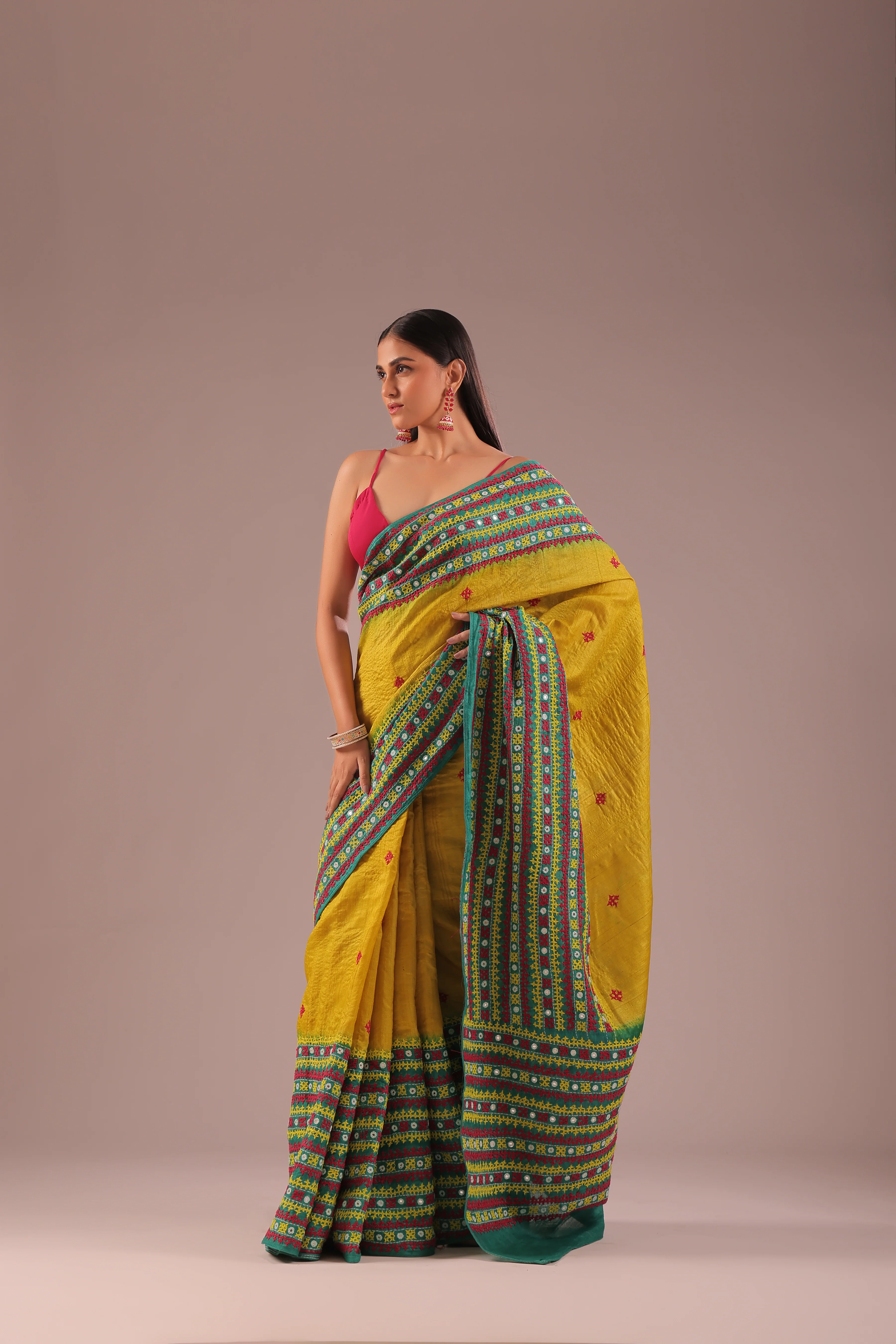
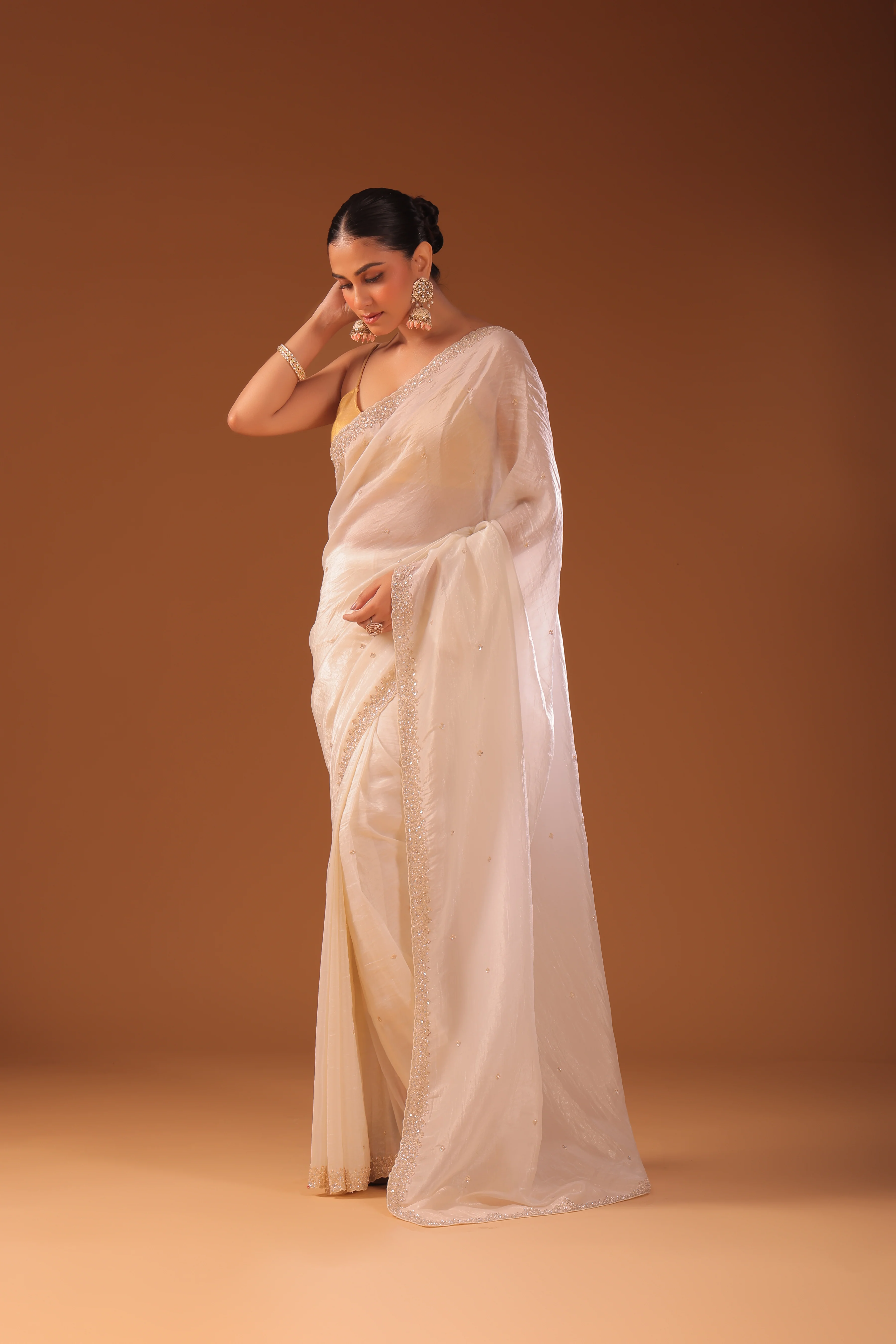
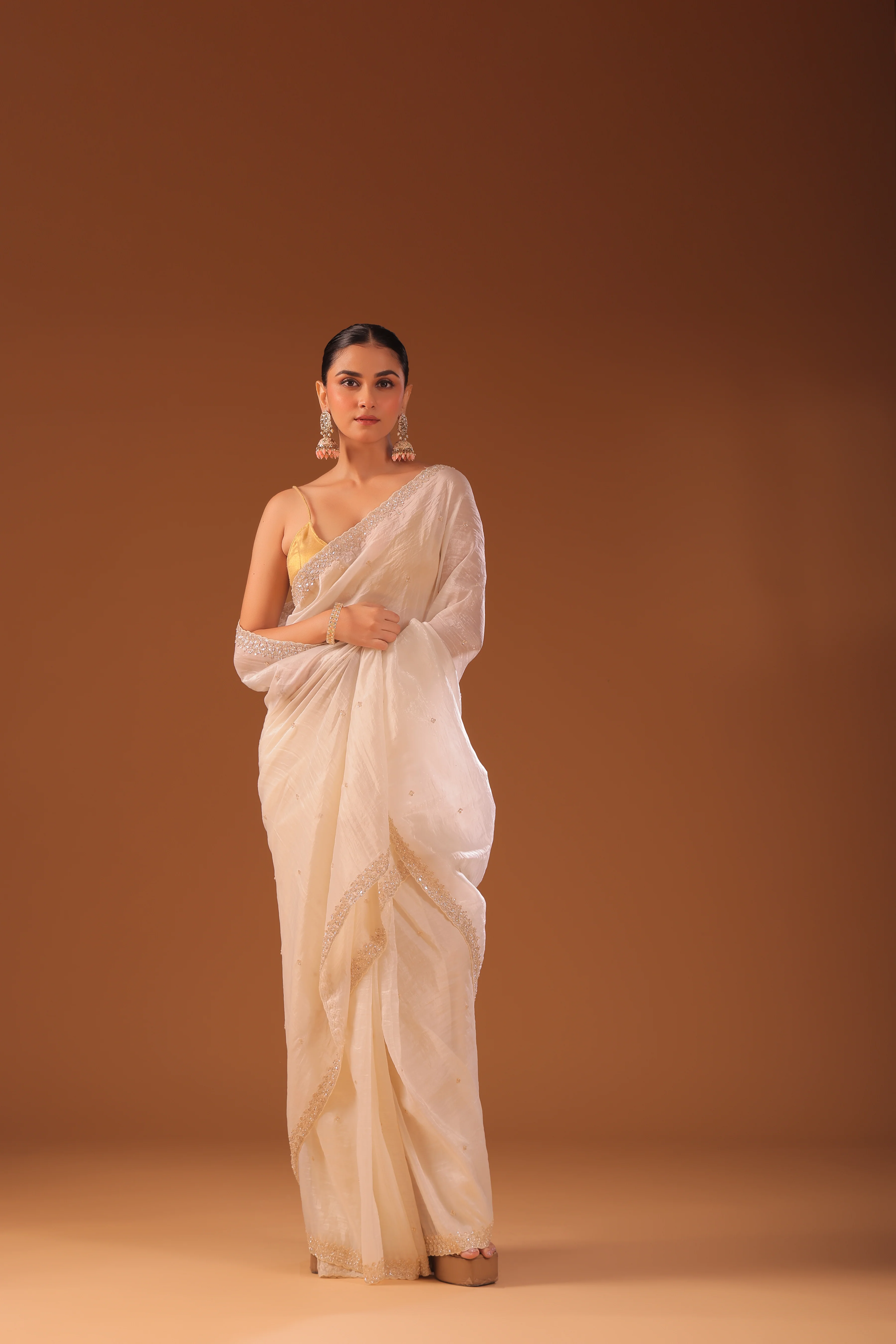
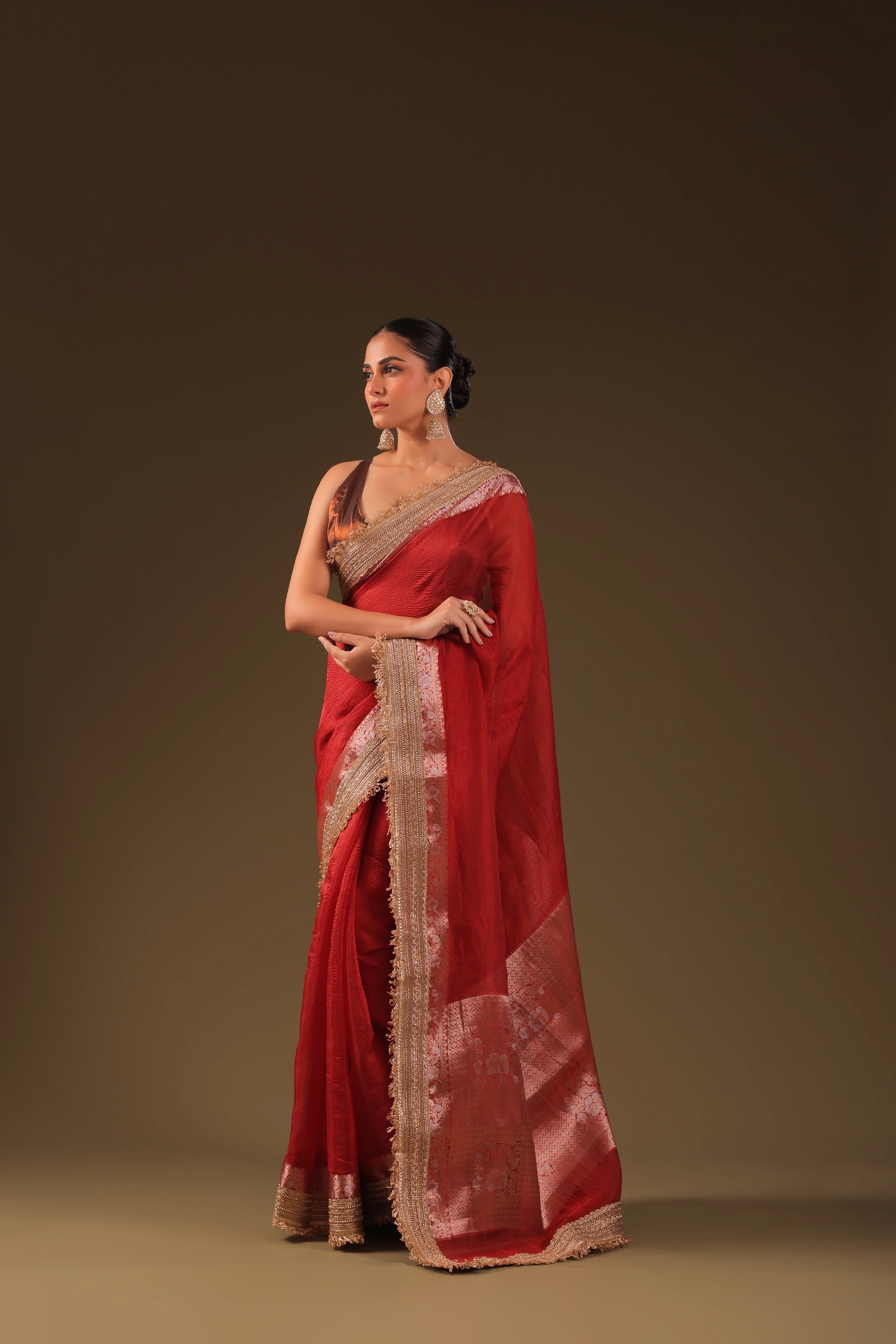
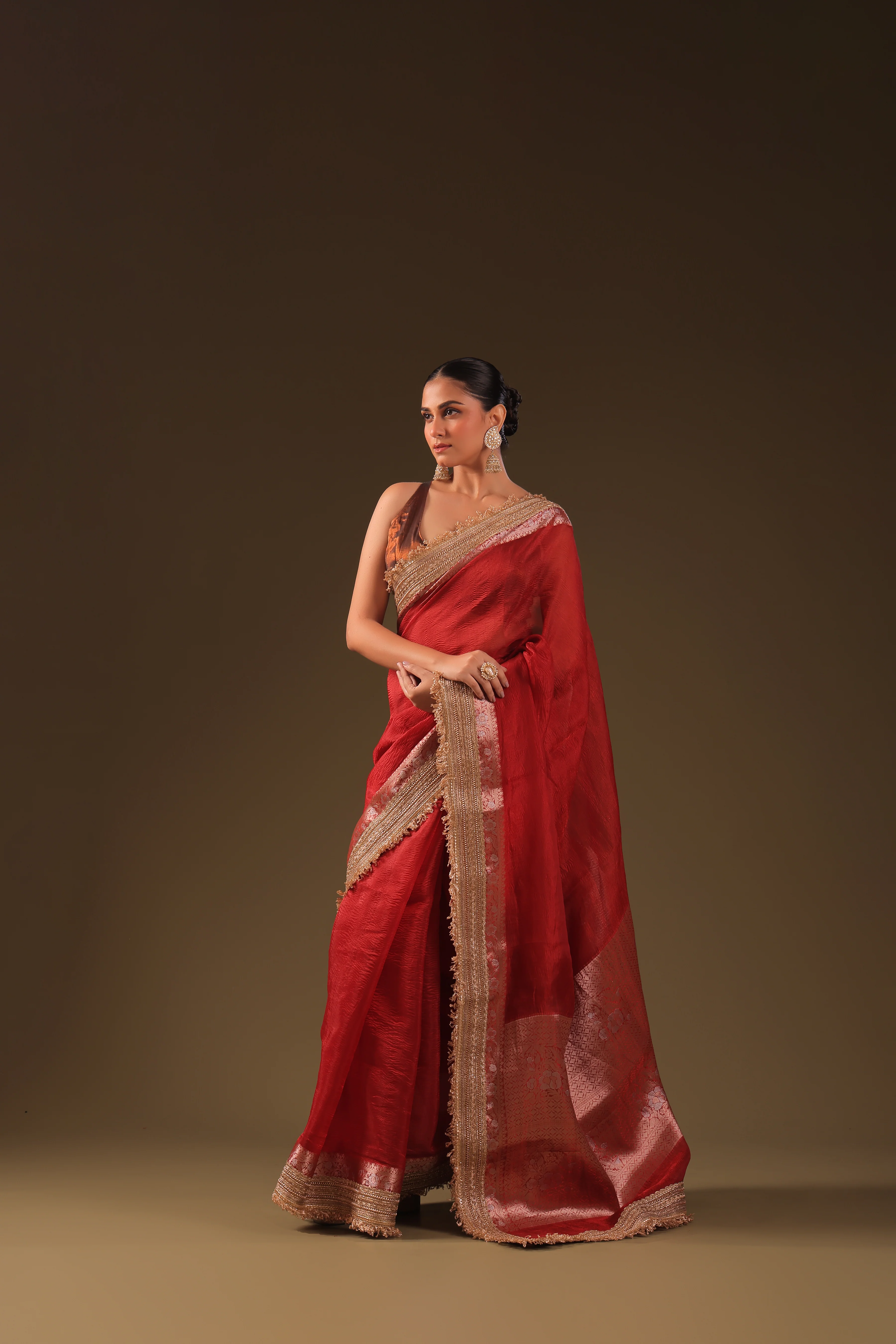
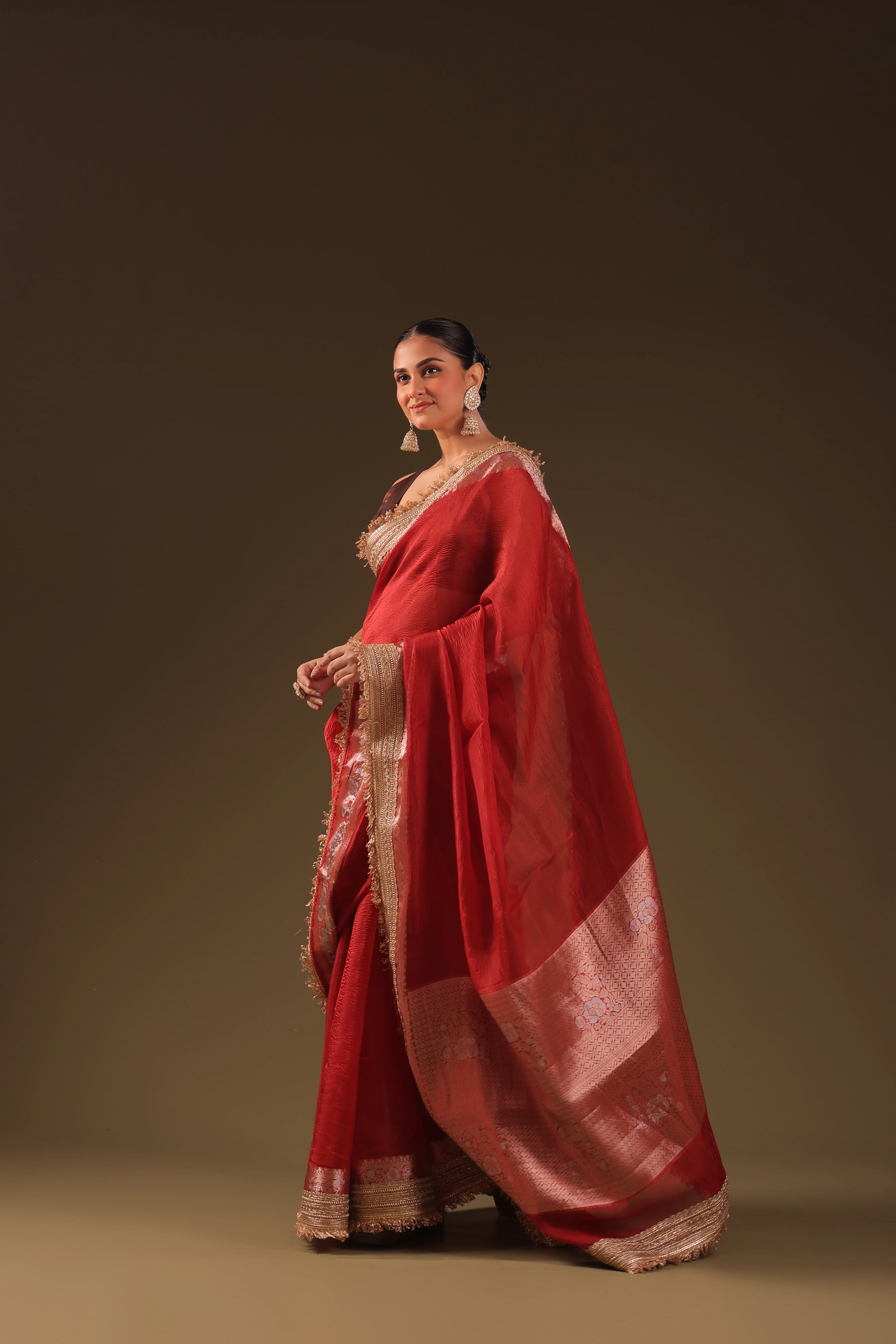
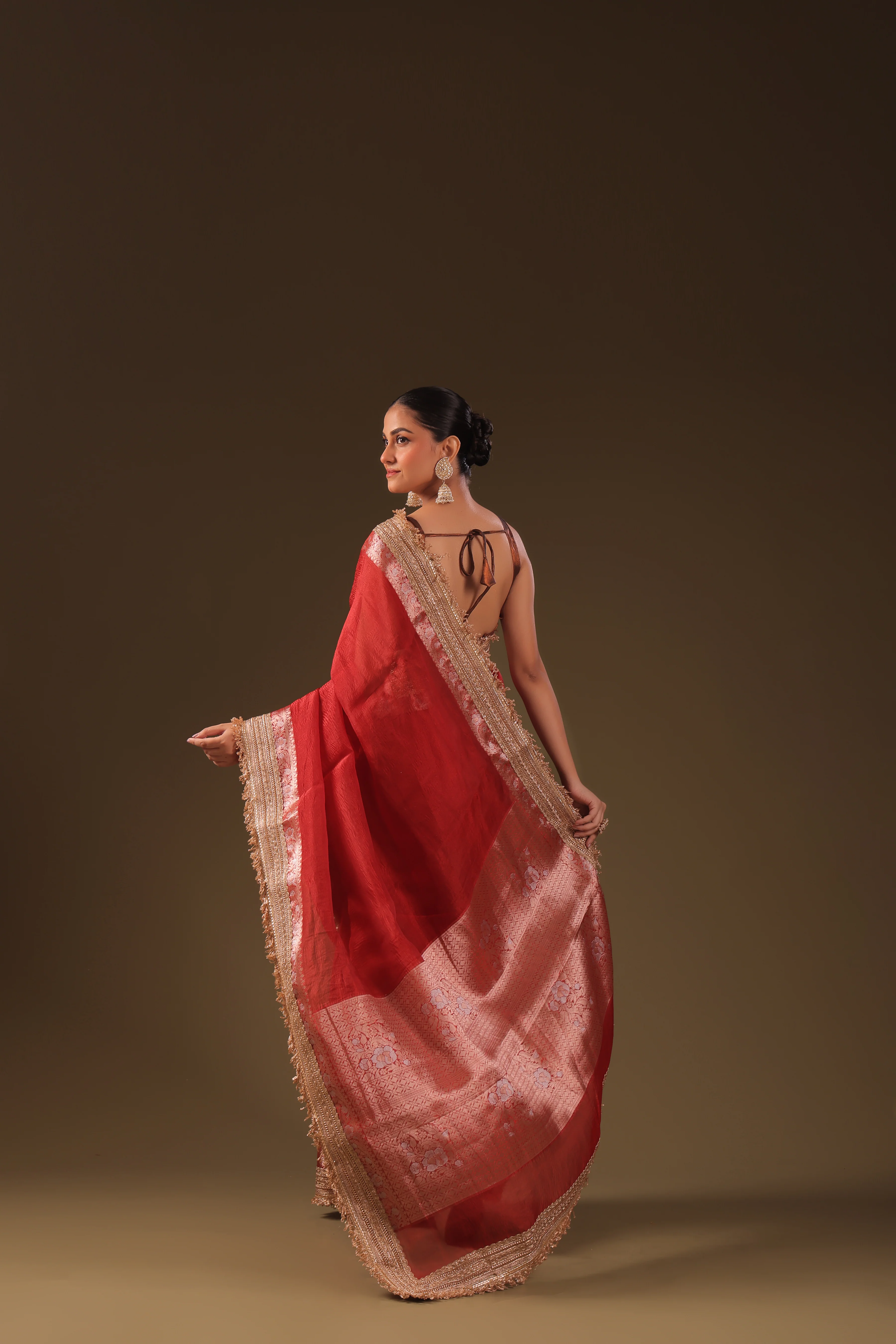
A Pure Tissue Banarasi refers to a type of Banarasi saree that is made using pure silk and a technique known as "tissue weaving." Banarasi sarees, originating from the city of Varanasi (Banaras) in India, are renowned for their intricate patterns, rich silk fabric, and fine weaving. The "Pure Tissue" aspect refers specifically to the use of very fine, lightweight, and lustrous silk threads, often with a slight metallic finish, to create an elegant, shimmering effect.
Key features of Pure Tissue Banarasi sarees:
-
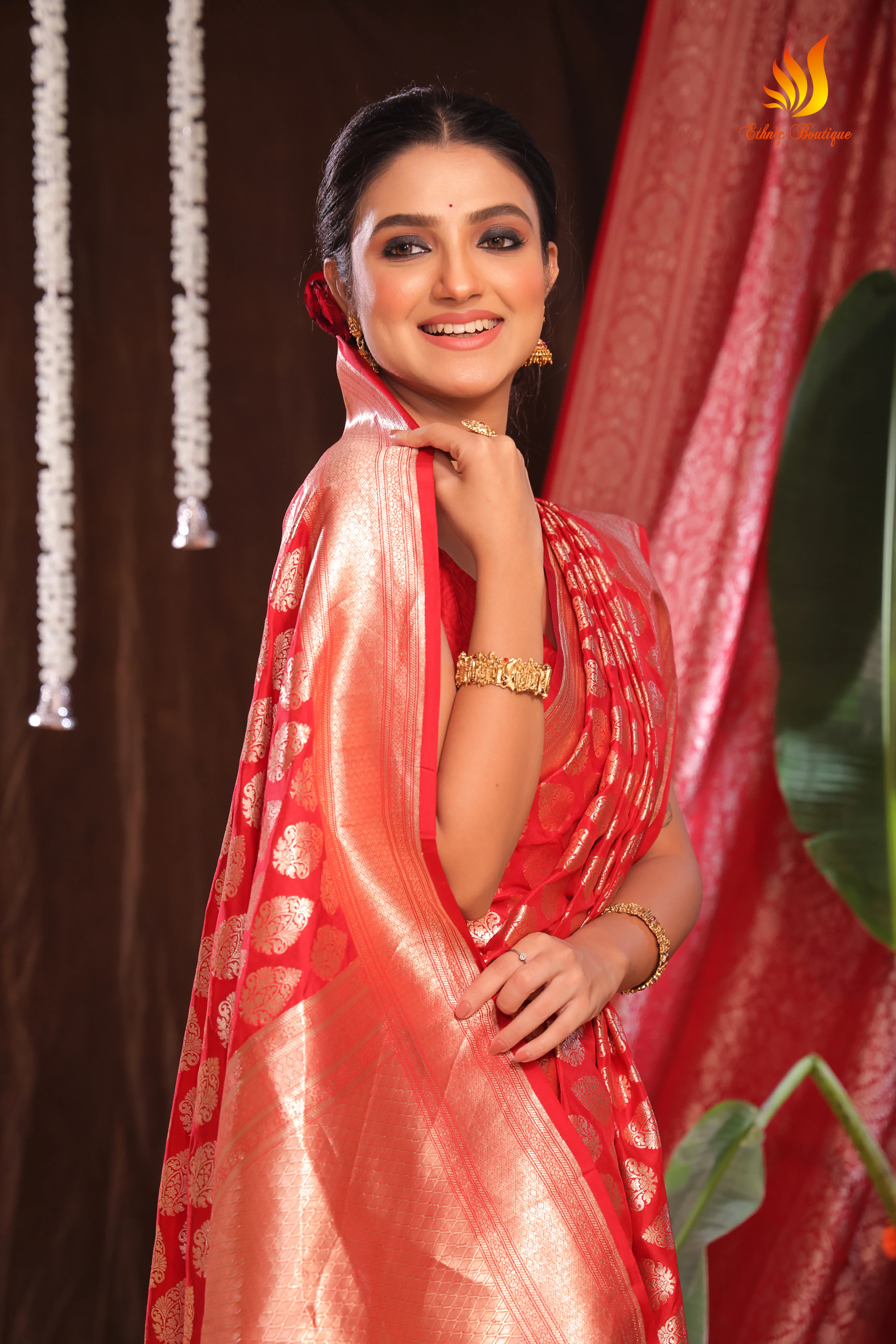
Fabric: The tissue used is typically made from a combination of pure silk and gold or silver threads, which contribute to its sheen and luxurious appearance.
-
Weaving Technique: The sarees are woven using traditional handloom methods, with a focus on intricate designs such as floral patterns, paisleys, and Mughal motifs.
-
Designs: Often, Pure Tissue Banarasi sarees feature elaborate borders and pallus (the end part of the saree), which are heavily embellished with metallic threads.
-
Occasions: These sarees are typically worn for special occasions such as weddings, festivals, or formal events, owing to their luxurious and festive appeal.
-
Colors: Pure Tissue Banarasi sarees come in a wide range of colors, but the metallic threads used in the fabric often give the saree a radiant or shimmering look, especially under light.
-
Care: As they are made from delicate and luxurious silk, these sarees require careful handling, often needing dry cleaning to maintain their appearance.
Pure Tissue Banarasi sarees are known for their timeless beauty and are considered a staple in bridal and ceremonial wear.
Details & Craftsmanship
Every detail has been carefully considered to bring you the perfect product.
Details & Craftsmanship
Every detail has been carefully considered to bring you the perfect product.
Details & Craftsmanship
Every detail has been carefully considered to bring you the perfect product.
Description
A Pure Tissue Banarasi refers to a type of Banarasi saree that is made using pure silk and a technique known as "tissue weaving." Banarasi sarees, originating from the city of Varanasi (Banaras) in India, are renowned for their intricate patterns, rich silk fabric, and fine weaving. The "Pure Tissue" aspect refers specifically to the use of very fine, lightweight, and lustrous silk threads, often with a slight metallic finish, to create an elegant, shimmering effect.
Key features of Pure Tissue Banarasi sarees:
-
Fabric: The tissue used is typically made from a combination of pure silk and gold or silver threads, which contribute to its sheen and luxurious appearance.
-
Weaving Technique: The sarees are woven using traditional handloom methods, with a focus on intricate designs such as floral patterns, paisleys, and Mughal motifs.
-
Designs: Often, Pure Tissue Banarasi sarees feature elaborate borders and pallus (the end part of the saree), which are heavily embellished with metallic threads.
-
Occasions: These sarees are typically worn for special occasions such as weddings, festivals, or formal events, owing to their luxurious and festive appeal.
-
Colors: Pure Tissue Banarasi sarees come in a wide range of colors, but the metallic threads used in the fabric often give the saree a radiant or shimmering look, especially under light.
-
Care: As they are made from delicate and luxurious silk, these sarees require careful handling, often needing dry cleaning to maintain their appearance.
Pure Tissue Banarasi sarees are known for their timeless beauty and are considered a staple in bridal and ceremonial wear.